Tree Care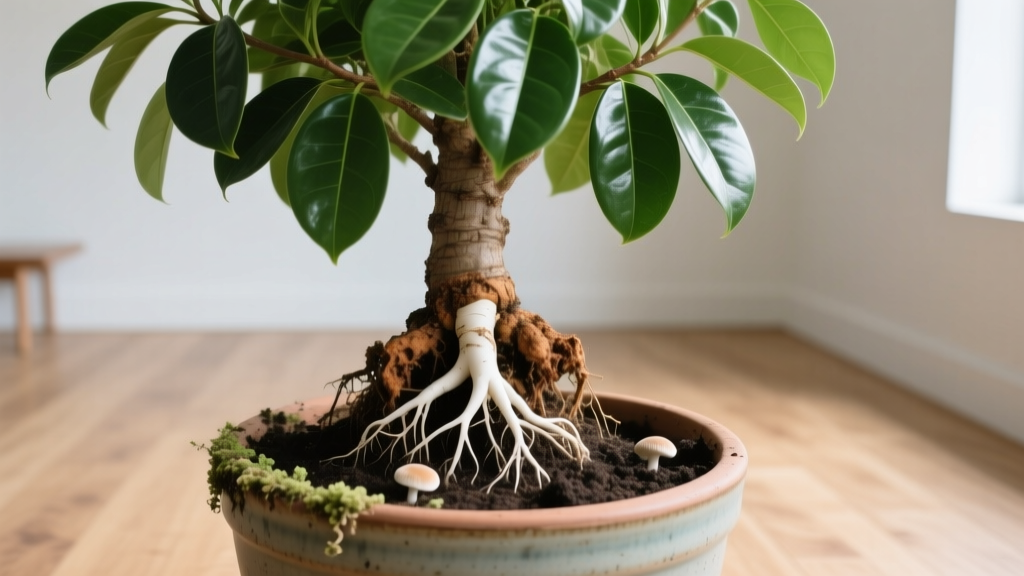
Money Tree Roots: How to Spot Rot and Repot Successfully
The Pachira aquatica, universally known as the money tree, is a staple in indoor landscaping and beginner garden collections. While most growers obsess over the aesthetic of the braided trunk and the spread of its palmate leaves, the true indicator of the plant's vitality lies entirely out of sight. Money tree roots are highly susceptible to environmental stress, specifically hypoxia (oxygen deprivation) caused by overwatering and dense soil matrices. Understanding the subterranean biology of your money tree is the single most critical factor in keeping it alive for decades.
The Anatomy of Pachira Aquatica Roots
To care for a money tree, you must understand its natural root architecture. In its native Central and South American wetland habitats, the money tree develops two distinct root structures:
- The Tuberous Base (Caudex): The thick, swollen base of the trunk acts as a water and nutrient reservoir. This adaptation allows the plant to survive seasonal droughts. In potted environments, this base is highly prone to rot if buried too deeply in moisture-retaining soil.
- Fibrous Feeder Roots: These are the thin, branching roots that extend outward from the caudex. They are responsible for the actual uptake of water and dissolved minerals. They require high oxygen levels to function and will suffocate quickly in anaerobic conditions.
⚠️ The Braided Trunk Trap: Commercial money trees are often braided tightly and bound with rubber bands, wire, or twine at the soil line. As the trunk expands, these bindings girdle the vascular tissue, restricting the flow of carbohydrates down to the roots. Always inspect the base of a newly purchased money tree and carefully snip away any hidden bindings to prevent secondary root starvation.
Healthy vs. Rotting Roots: A Diagnostic Matrix
Root rot in money trees is typically caused by Pythium or Phytophthora water molds, which thrive in stagnant, waterlogged soil. According to the Royal Horticultural Society (RHS), these pathogens destroy root tissue, turning it into mush and preventing water uptake, which ironically causes the plant to show signs of drought stress (wilting and crispy leaf edges) despite being overwatered.
| Diagnostic Feature | Healthy Money Tree Roots | Rotting / Compromised Roots |
|---|---|---|
| Color | Crisp white, pale tan, or light brown (older roots) | Dark brown, black, or translucent orange |
| Texture | Firm, slightly wiry, snaps cleanly when bent | Mushy, slimy, outer sheath slips off easily |
| Odor | Earthy, neutral, smells like fresh forest soil | Foul, sulfurous, rotting cabbage or swamp smell |
| Canopy Symptoms | Firm green leaves, active new growth at nodes | Yellowing lower leaves, black stem spots, leaf drop |
The 6-Step Root Rescue and Repotting Protocol
If your diagnostic matrix indicates root rot, immediate surgical intervention is required. Do not attempt to 'dry out' the plant in its current waterlogged soil; the pathogens will continue to consume the remaining healthy tissue.
Step 1: Extraction and Inspection
Gently tip the pot sideways and slide the root ball out. Never pull the plant by its braided trunk, as this can snap the fragile caudex. Use your fingers to gently tease away the wet soil, exposing the entire root network.
Step 2: Surgical Pruning
Using bypass pruners sterilized with 70% isopropyl alcohol, snip away every black, brown, or mushy root. Cut back to firm, white tissue. If the rot has reached the main tuberous base, use a sterilized craft knife to carve away the soft, rotting wood until you reach hard, pale tissue. Sterilize your blades between every single cut to avoid cross-contaminating healthy tissue.
Step 3: Fungicidal Treatment
Dip the pruned root system in a fungicidal bath to kill remaining water mold spores. A highly effective, commercially available option is Physan 20 (mixed at 1 tablespoon per gallon of water) or a Bonide Liquid Copper Fungicide solution. Soak the roots for exactly 15 minutes.
Step 4: Air Drying and Callusing
Remove the plant from the bath and let it sit on a wire rack in a shaded, well-ventilated area for 2 to 4 hours. This allows the cut ends of the roots to callus over, preventing immediate re-infection when they touch the new soil.
Step 5: Soil Matrix Formulation
Standard bagged 'indoor potting soil' is a death sentence for money tree roots due to its high peat moss content and poor drainage. Mix a custom, high-porosity aroid matrix:
- 40% Orchid Bark: Provides large air pockets and structural support.
- 30% Pumice or Perlite: Ensures rapid drainage and prevents soil compaction.
- 20% Coco Coir: Retains just enough moisture for the feeder roots without staying soggy.
- 10% Worm Castings: Provides a gentle, slow-release organic nutrient base.
Step 6: Pot Selection and Planting
Select a pot that is only 1 to 2 inches wider in diameter than the pruned root ball. A pot that is too large will hold excess soil volume that stays wet for weeks. Ensure the pot has at least one large drainage hole. Plant the money tree so that the top of the tuberous base is slightly exposed above the soil line, never burying the trunk.
Watering Framework Based on Root Mass Volume
Once repotted, your watering habits must adapt to the reduced root mass. The University of Florida IFAS Extension notes that Pachira aquatica prefers deep, infrequent watering cycles that mimic tropical downpours followed by dry periods.
💡 The XLUX Moisture Meter Rule: Stop guessing soil moisture by lifting the pot or sticking your finger in the dirt. Purchase an analog soil moisture meter (like the XLUX Soil Moisture Meter, typically under $15). Insert the probe 4 inches deep into the soil near the root zone. Only water when the meter reads a 2 or 3 (dry). If it reads 4 or higher, walk away.
When the meter indicates it is time to water, use the bottom-watering technique. Place the nursery pot (inside its decorative cache pot) into a basin filled with 2 inches of room-temperature water. Let the money tree wick moisture upward through the drainage holes for 30 minutes. This encourages the roots to grow downward toward the moisture source, building a stronger, more resilient root architecture.
Seasonal Root Dormancy and Winter Care
Money trees are tropical and do not possess a true winter dormancy, but their metabolic rate slows significantly when indoor temperatures drop and daylight hours shorten. During the winter months (November through February), the root system's demand for water drops by up to 50%. You must proportionally reduce your watering frequency. Continuing a summer watering schedule in the winter is the primary cause of sudden, fatal root rot in indoor money trees.
Frequently Asked Questions
Can a money tree survive if all its roots have rotted away?
Yes, but it requires treating the plant as a cutting rather than a potted tree. If the tuberous base and trunk are still firm, cut off all rotting roots, treat the base with rooting hormone (like Bonide Bontone II), and place the bare trunk in a jar of filtered water. Change the water every 3 days. New white roots will typically emerge from the base nodes within 4 to 6 weeks.
Why are my money tree roots growing out of the bottom drainage holes?
Roots escaping the drainage holes indicate one of two things: the plant is severely pot-bound and has run out of internal space, or the soil inside the pot is too dry and the roots are foraging for ambient humidity. Check the internal soil moisture with a probe. If the soil is dry and the roots are thick and white, it is time to upsize the pot by one size.
Should I cut the aerial roots growing from the braided trunk?
No. Aerial roots are a sign of a healthy, actively growing Pachira aquatica attempting to absorb ambient humidity. They do not harm the plant. If you find them aesthetically displeasing, you can carefully snip them flush with the trunk using sterilized shears, but leaving them intact provides supplementary moisture uptake.