
Tree Care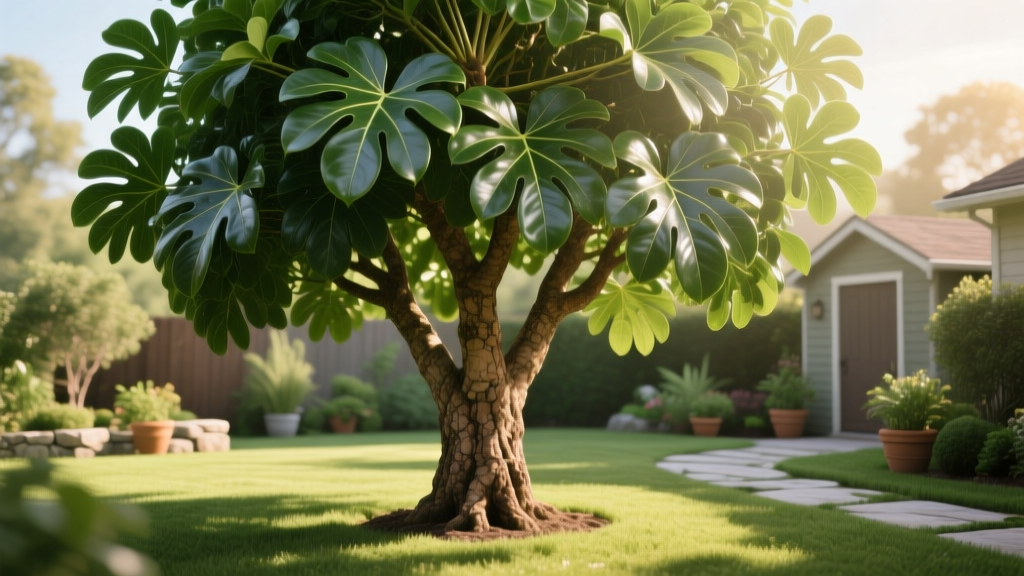
How Big Does a Money Tree Get? Size Control & Pruning Guide
The Genetic Ceiling: Maximum Dimensions by Species
When homeowners ask, "how big does a money tree get?" the answer depends entirely on the species in question and its growing environment. The horticultural industry commonly labels two entirely different plants as "money trees," and their genetic growth limits vary drastically.
The classic braided money tree found in most nurseries is Pachira aquatica, a tropical wetland tree native to Central and South America. The second is the Jade plant (Crassula ovata), a succulent often called the "money plant" or "money tree" in Feng Shui traditions. According to the Missouri Botanical Garden, understanding your specific species is the first step in predicting and managing its mature size.
| Species | Indoor Max Height | Outdoor Max Height (Zones 10-12) | Canopy Spread | Annual Growth Rate |
|---|---|---|---|---|
| Pachira aquatica (Braided) | 6 to 8 feet | Up to 60 feet | 4 to 6 feet | 12 to 24 inches |
| Crassula ovata (Jade) | 3 to 5 feet | 8 to 10 feet | 2 to 4 feet | 2 to 5 inches |
For the remainder of this guide, we will focus strictly on Pachira aquatica, as it is the primary species requiring active size management and structural pruning in residential settings.
Environmental Factors That Dictate Indoor Growth
A Pachira aquatica will only reach its 8-foot indoor maximum if specific environmental thresholds are met. If your tree is stunted or growing exceptionally fast, it is reacting to one of three primary variables:
1. Container Volume and Root Binding
Money trees are highly responsive to pot size. A tree planted in a standard 10-inch nursery pot will naturally restrict its own canopy to roughly 3 to 4 feet due to root binding. To push a money tree past the 6-foot mark, you must up-pot it into a container that is at least 20 to 24 inches in diameter. Ensure the new pot has a minimum of four 1/2-inch drainage holes to prevent the anaerobic soil conditions that lead to Phytophthora root rot.
2. Light Intensity (Foot-Candles)
While often sold as "low-light" plants, money trees require bright, indirect light to sustain vertical growth without etiolation (stretching). For optimal growth, aim for 1,500 to 3,000 foot-candles. You can measure this using a digital lux meter like the Dr.meter LX1330B (set to the 2,000 lux range, positioned at the top of the canopy). If light drops below 500 foot-candles, the tree will halt vertical expansion and shed lower leaves to conserve energy.
3. Nutrient Availability
To support rapid vegetative growth, feed your Pachira aquatica with a high-nitrogen liquid fertilizer. A professional-grade option like Dyna-Gro Foliage-Pro (9-3-6 NPK ratio) provides the exact macronutrient profile needed for broadleaf tropicals. Apply at half-strength (1/2 teaspoon per gallon of water) every 14 days during the active spring and summer growing season.
Practical Size Control: How to Keep Your Money Tree Compact
If your goal is to maintain a manageable 3-to-4-foot houseplant, you must implement a strict pruning and root-management regimen. The University of Minnesota Extension emphasizes that proper pruning cuts are vital for preventing disease entry, a rule that applies just as strictly to indoor tropicals as it does to outdoor shade trees.
Warning: Sap Bleed and Pathogen Entry
Never prune a money tree during the winter dormancy period or when the soil is bone dry. A dehydrated tree will struggle to form a callus over the pruning wound, leaving the central vascular cambium exposed to fungal spores. Always water the tree 24 hours before making structural cuts.
Never prune a money tree during the winter dormancy period or when the soil is bone dry. A dehydrated tree will struggle to form a callus over the pruning wound, leaving the central vascular cambium exposed to fungal spores. Always water the tree 24 hours before making structural cuts.
Step-by-Step Canopy Reduction
- Sanitize Your Tools: Wipe the blades of a high-quality bypass pruner (such as the Felco F-2 Classic) with 70% isopropyl alcohol. Do not use anvil pruners, as they crush the soft, herbaceous stems of the Pachira.
- Identify the Node: Locate a healthy leaf node (the small bump on the stem where a leaf emerges) roughly 1/4 inch below where you want the new growth to sprout.
- Execute the Cut: Make a clean, 45-degree angled cut sloping away from the node. This angle forces water to run off the cut surface rather than pooling on the open wound.
- Pinch New Shoots: When the pruned node produces two or three new shoots, pinch off the very tip of the dominant shoot with your fingernails. This breaks apical dominance and forces the tree to bush out laterally rather than growing vertically.
Root Pruning: The Secret to Long-Term Size Management
Canopy pruning only solves half the equation. If the root system continues to expand, the tree will eventually force top-heavy vertical growth. To keep a money tree in the same decorative pot for a decade without it outgrowing the space, you must perform root pruning every 24 to 36 months.
The 20% Root Reduction Technique
- Extraction: Gently slide the tree from its pot. If it is stuck, run a sterile Nisaku Hori Hori knife around the interior perimeter of the pot to sever clinging root hairs.
- Assessment: Identify the thick, tuberous water-storage roots at the base. Do not cut these. They are the tree's drought-survival mechanism.
- Reduction: Using sterile shears, trim away no more than 20% to 25% of the fine, fibrous feeder roots from the outer edges and bottom of the root ball.
- Repotting Medium: Do not reuse dense, peat-heavy commercial potting soil. Mix a custom, fast-draining aroid blend: 40% coco coir, 30% pine bark fines, 20% pumice, and 10% worm castings. This specific ratio provides the structural aeration that Pachira roots require to heal quickly post-pruning.
Troubleshooting: Stunted vs. Leggy Growth
Homeowners often confuse a naturally compact tree with a stunted one, or a bare trunk with a dying one. Use this diagnostic framework to assess your tree's current growth state:
| Symptom | Underlying Cause | Corrective Action |
|---|---|---|
| Long, thin stems with wide gaps between leaves (etiolation) | Insufficient light (below 500 foot-candles) | Move within 3 feet of a south-facing window or supplement with a 24W full-spectrum LED grow light for 12 hours daily. |
| Bare lower trunk with dense canopy only at the top | Natural aging and lower-leaf senescence | No action required. This is the natural growth habit of mature Pachira aquatica. You can air-layer the top to reset the trunk if desired. |
| Yellowing leaves dropping from the bottom up, no new growth | Chronic overwatering and root asphyxiation | Allow the top 3 inches of soil to dry completely. Use an XLUX soil moisture meter; only water when the meter reads 2 or below. |
Frequently Asked Questions
Will the braided trunk of my money tree grow taller?
No. The braided section of the trunk is formed from multiple young, flexible saplings woven together while their stems are still herbaceous. As the tree matures, these individual trunks will thicken and fuse (a process called inosculation), but the physical braid will not stretch or grow vertically. All future vertical height will come from the unbraided, green stems emerging from the top of the braid.
Can I cut my money tree all the way back to the trunk?
Yes, a technique known as "hard pruning" or "coppicing" is highly effective for overgrown money trees. You can sever all leafy branches back to the main trunk, leaving 2 to 3 inches of stub above the braid. As long as the tree is healthy and receives adequate light, dormant buds hidden beneath the bark will break and produce a flush of entirely new, compact foliage within 4 to 6 weeks.
How much does a fully mature, 6-foot money tree cost?
As of current nursery pricing, a standard 4-foot braided money tree in a 12-inch pot typically retails between $45 and $85. Specimen trees that have been professionally maintained at 6 to 8 feet in large 24-inch ceramic planters can range from $150 to over $300, depending on the thickness of the fused trunk base and the density of the canopy.

