Tree Care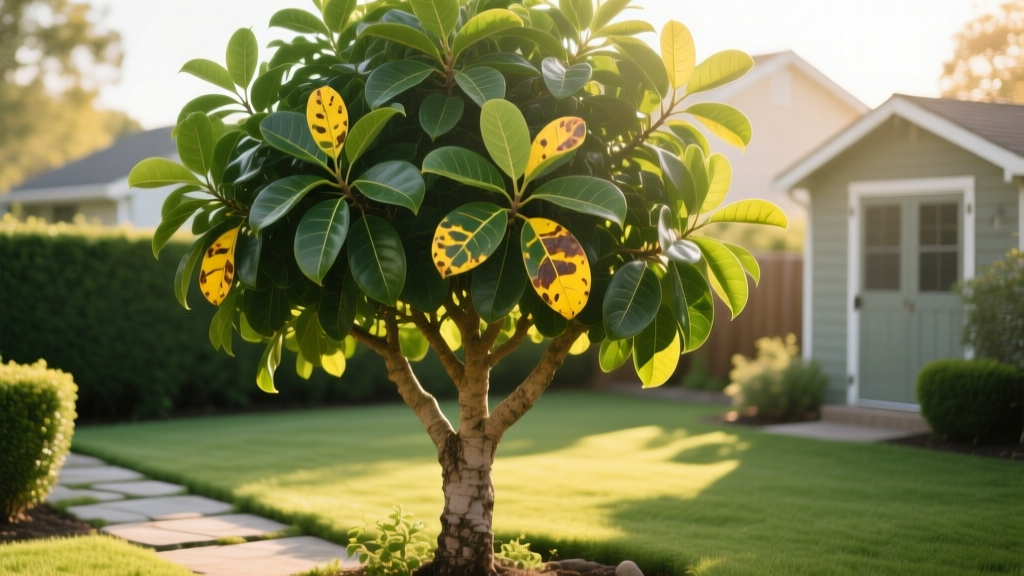
Money Tree Sunlight Issues: Fixing Leaf Burn, Drop, and Etiolation
The Pachira aquatica, commonly known as the money tree, is notoriously resilient, yet its most frequent point of failure indoors stems from mismanaged light exposure. Homeowners often misdiagnose light stress as a watering or pest issue, leading to a cascade of incorrect treatments that ultimately kill the plant. Understanding the precise photosynthetic requirements of this tropical wetland native is critical for long-term vitality. This diagnostic guide breaks down the exact physiological responses of money trees to light deficits and excesses, providing actionable, measurement-based solutions to correct your plant's environment.
The Ideal Money Tree Sunlight Baseline
Money trees thrive in bright, indirect light. In quantitative terms, they require between 1,500 and 3,000 lux (approximately 150 to 300 foot-candles) for basic maintenance, and up to 10,000 lux to support robust new growth and trunk thickening. Direct midday sun, which frequently exceeds 40,000 lux, will rapidly degrade chlorophyll and scorch the foliage.
Measurement Tool Recommendation
Do not rely on the 'finger test' or visual estimates for light. Purchase a dedicated digital lux meter (such as the Dr.meter LX1330B, typically priced around $25) or use a calibrated smartphone app like Korona Lux Meter. Measure the light at the exact height of the plant's canopy at noon on a clear day to get your peak reading.
According to the University of Minnesota Extension, placing tropical foliage plants in unfiltered south or west-facing windows without acclimatization is a primary cause of indoor plant decline. For a money tree, the optimal placement is 3 to 5 feet away from a south-facing window, or directly adjacent to an east-facing window where it will receive gentle, low-angled morning rays.
Diagnosing Too Much Sunlight (Photoinhibition & Sunburn)
When a money tree receives more photons than its photosynthetic apparatus can process, it undergoes photoinhibition. This is not merely 'sunburn'; it is the active destruction of chloroplasts to prevent oxidative stress.
- Bleached, Papery Centers: Unlike fungal leaf spot, which often presents with dark concentric rings, sun damage manifests as stark white or pale yellow patches in the center of the leaf that feel thin and papery.
- Crispy Margins with Yellow Halos: The edges of the leaves will desiccate rapidly, turning brown and brittle, often surrounded by a distinct yellow halo as the plant attempts to compartmentalize the damaged tissue.
- Upward Leaf Cupping: The leaves may fold or cup upward (taco-shape) to reduce their surface area and minimize light absorption.
The Window Glass Amplification Edge Case
A common failure mode occurs when money trees are placed near double-pane, low-E (low-emissivity) windows. While these windows block UV rays, they can sometimes reflect and concentrate infrared heat, creating localized microclimates that bake the foliage even if the visible light levels seem acceptable. If your plant is suffering from unexplained scorching despite being 4 feet from the glass, use an infrared thermometer to check the leaf surface temperature. If it reads above 85°F (29°C), you must install a 50% density voile sheer curtain or move the plant laterally out of the direct thermal beam.
Diagnosing Too Little Sunlight (Etiolation & Chronic Decline)
Insufficient light forces the money tree to stretch its cellular structure in a desperate search for photons, a process known as etiolation. This compromises the structural integrity of the braided trunks and starves the root system of the carbohydrates required for water uptake.
- Increased Internodal Spacing: The distance between leaves on the stem becomes noticeably elongated, giving the plant a 'leggy' or sparse appearance.
- Micro-Phyllation: New leaves emerge significantly smaller, thinner, and paler than the mature foliage, lacking the deep waxy cuticle of healthy growth.
- Asymmetrical Canopy Lean: The trunk will physically bend toward the nearest light source, risking the snapping of the braided base under the uneven weight distribution.
The Overwatering Trap in Low Light
The most critical insight for money tree care is that low light drastically reduces transpiration. A money tree in a dim corner uses a fraction of the water that one in bright light uses. Homeowners who maintain their standard 'once-a-week' watering schedule in low-light conditions will inevitably drown the roots. The resulting root rot (Phytophthora or Pythium pathogens) causes yellowing leaves and mushy stems, which owners then misdiagnose as a 'lack of nutrients' or 'pests.' According to Better Homes & Gardens, adjusting water volume to match ambient light levels is the single most effective way to prevent money tree mortality.
Sunlight Stress vs. Watering Stress: A Diagnostic Matrix
Because light and water are inextricably linked in plant physiology, use this matrix to isolate the root cause of your money tree's decline.
| Symptom | Primary Cause (Light) | Secondary Cause (Water/Soil) | Corrective Action |
|---|---|---|---|
| Yellowing lower leaves dropping uniformly | Chronic low light (senescence) | Soil staying wet >14 days | Move to 2,000+ lux; reduce water volume by 50%. |
| Crispy brown leaf edges | Direct sun scorch / low humidity | Underwatering / salt buildup | Filter light with sheers; flush soil with distilled water. |
| Bleached, white leaf patches | Acute photoinhibition (UV burn) | N/A | Relocate 3 feet back from south/west windows immediately. |
| Mushy base, black stem lesions | Severe low light (no transpiration) | Acute root rot from overwatering | Unpot, trim rot, repot in 60/20/20 soil/bark/perlite mix. |
| Leggy stems, tiny pale new leaves | Etiolation (< 500 lux) | N/A | Supplement with 6500K LED grow light (2000+ lumens). |
Seasonal Acclimatization Protocol
Moving a money tree outdoors for the summer or bringing it indoors for the winter requires a strict acclimatization protocol to prevent shock. Sudden shifts of even 10,000 lux will trigger massive leaf abscission (dropping).
- Days 1-3: Move the plant to its new environment but keep it in deep shade or a dim room. Allow the stomata to adjust to the new humidity and temperature gradients.
- Days 4-7: Introduce the plant to dappled light or a heavily filtered window for 2 hours in the morning, returning it to its baseline spot for the rest of the day.
- Days 8-14: Increase the filtered light exposure by 1 hour daily. Monitor the leaf turgor pressure; if leaves droop in the afternoon, you are advancing too quickly.
- Day 15+: Transition to the final target location. For outdoor summering, ensure the plant remains under a shade cloth (50% to 70% density) or a high tree canopy; never expose it to unfiltered midday summer sun.
Supplemental Lighting Specifications for Winter
If your home cannot provide the 1,500 lux minimum during short winter days, you must deploy artificial lighting. Standard household bulbs are insufficient. You need a full-spectrum LED grow light with a color temperature of 6500K (mimicking daylight) and an output of at least 2,000 lumens. Position the light fixture 12 to 18 inches above the top of the canopy. As noted by plant care experts at The Sill, maintaining a 12-to-14-hour artificial photoperiod using an automated smart plug will prevent the etiolation that typically plagues indoor money trees from November through February.
Rapid Diagnostic FAQ
Can a money tree recover from severe sunburn?
The damaged, bleached tissue on individual leaves will never turn green again, as the chloroplasts are permanently destroyed. However, the plant will survive if relocated to proper indirect light. Prune off only the fully necrotic (brown and crispy) leaves to redirect the plant's energy toward pushing healthy new growth from the apical meristems.
Why is my money tree dropping green, healthy-looking leaves?
Dropping perfectly green leaves is almost always a sign of acute environmental shock rather than a chronic light issue. This occurs when the plant is suddenly moved from a high-light environment to a low-light one, or when it is exposed to cold drafts (below 60°F) from HVAC vents. The plant sheds its older, energy-expensive leaves to reduce its metabolic footprint in the new, less favorable environment.
Do money trees need direct sunlight to braid their trunks?
No. The braiding of Pachira aquatica trunks is a mechanical process done by nursery growers when the stems are young, green, and highly pliable. Light levels do not influence the physical braiding. In fact, excessive direct sunlight will cause the bark to lignify (harden and turn woody) much faster, making it impossible to braid without snapping the vascular cambium.