
Tree Care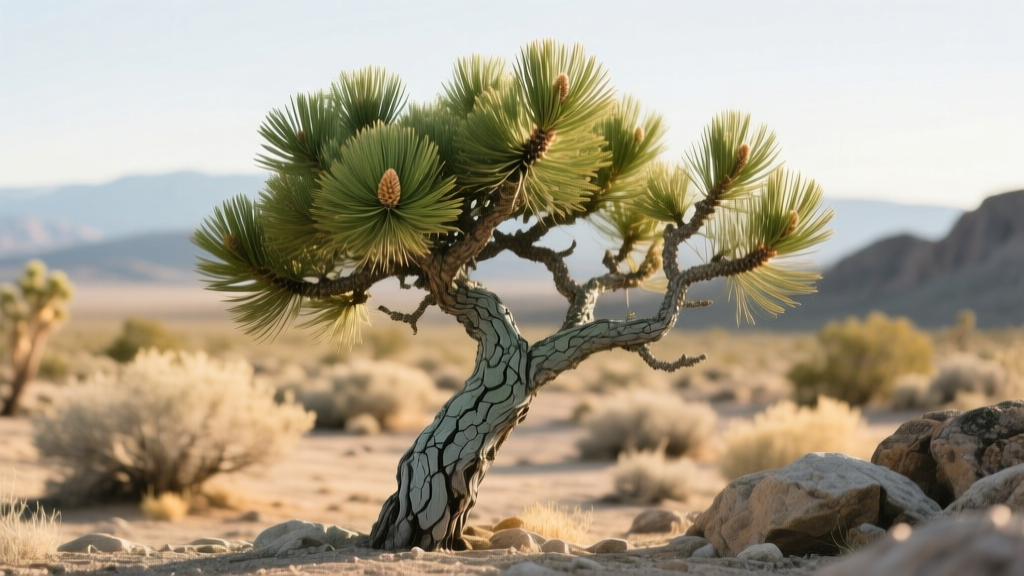
What Is the State Tree of Nevada? Single-Leaf Pinyon ID & Care
The Official State Tree of Nevada
If you are exploring the high-desert landscapes of the American Southwest or researching regional botany, you may be asking: what is the state tree of Nevada? The official state tree is the Single-leaf Pinyon (Pinus monophylla), also commonly spelled Single-leaf Piñon. Designated by the Nevada Legislature in 1959, this resilient evergreen is a keystone species of the Great Basin ecosystem. Unlike most pines that bundle their needles in groups of two, three, or five, the Single-leaf Pinyon is the only pine species in North America that produces just one needle per fascicle. This unique evolutionary adaptation minimizes water loss, allowing the tree to thrive in arid environments where annual precipitation barely exceeds 12 inches.
For homeowners and landscapers in USDA Hardiness Zones 6 through 8, incorporating Pinus monophylla into xeriscape designs provides exceptional drought tolerance, year-round structural interest, and valuable habitat for local wildlife. According to the USDA Plants Database, this species naturally dominates elevations between 4,000 and 8,000 feet, forming vast woodland belts alongside Utah Juniper (Juniperus osteosperma).
Botanical Identification & Morphology
Correctly identifying Pinus monophylla requires examining its needles, bark, and reproductive cones. The Virginia Tech Dendrology database notes that mature trees typically reach 15 to 30 feet in height with a broad, irregular, and rounded crown. The bark is distinctly rough, dark gray-brown, and deeply fissured into scaly plates, providing critical insulation against extreme temperature fluctuations.
| Feature | Single-leaf Pinyon Characteristics |
|---|---|
| Needles | 1 per fascicle, 1 to 2.5 inches long, rigid, sharply pointed, pale green to gray-green |
| Cones | 2 to 3 inches long, globose (round), remain on the tree for several years |
| Seeds | Large, wingless, edible pine nuts with a hard, dark brown seed coat |
| Growth Rate | Extremely slow; typically less than 3 to 5 inches of vertical growth per year |
| Lifespan | 300 to 500+ years in undisturbed native habitats |
Site Selection & Soil Preparation
The most common cause of Pinus monophylla failure in residential landscapes is improper soil preparation. This species is highly susceptible to root rot pathogens like Phytophthora if planted in heavy, poorly draining clay. Native desert soils are naturally alkaline, rocky, and low in organic matter. Attempting to amend the planting hole with excessive peat moss or rich topsoil creates a 'bathtub effect,' trapping moisture around the taproot.
Expert Soil Mix Formulation:
For optimal drainage and pH buffering (targeting a pH between 7.2 and 8.0), excavate the planting hole to twice the width of the root ball and backfill with a custom blend: 40% native mineral soil, 40% pumice or expanded shale (3/8-inch aggregate), and 20% coarse organic compost. Never use fine sand, which can compact and reduce soil porosity.
For optimal drainage and pH buffering (targeting a pH between 7.2 and 8.0), excavate the planting hole to twice the width of the root ball and backfill with a custom blend: 40% native mineral soil, 40% pumice or expanded shale (3/8-inch aggregate), and 20% coarse organic compost. Never use fine sand, which can compact and reduce soil porosity.
Planting Depth & Mycorrhizal Inoculation
When transplanting container-grown or balled-and-burlapped (B&B) Single-leaf Pinyons, planting depth is critical. The root flare—the point where the trunk widens at the base—must sit exactly 1 to 2 inches above the surrounding grade. Burying the root flare suffocates the cambium layer and invites fungal collar rot.
Because pinyons rely heavily on symbiotic soil fungi to extract water and phosphorus from nutrient-poor desert soils, mycorrhizal inoculation is highly recommended during planting. Apply a granular inoculant containing Rhizopogon or Pisolithus tinctorius species directly to the exposed roots before backfilling. This biological amendment accelerates establishment and increases drought survival rates by up to 40% during the first three years.
Watering Schedules for Establishment
While mature Single-leaf Pinyons are supremely drought-tolerant, young transplants require a carefully calibrated irrigation schedule to develop a deep taproot. Overwatering is far more lethal than underwatering. Use a deep-root feeder probe or a slow-drip soaker hose rather than oscillating sprinklers, which wet the foliage and encourage needle cast diseases.
- Year 1 (Establishment): Apply 15 to 20 gallons of water every 14 days during the growing season (April through October). Insert a soil probe 12 inches deep to verify moisture penetration.
- Year 2 & 3: Reduce frequency to once every 21 to 28 days, increasing the volume to 25 gallons to encourage lateral root expansion toward the drip line.
- Established Trees (Year 4+): Rely primarily on natural precipitation. Provide a single 30-gallon deep soak in late May if winter snowpack was below average and spring rains are scarce.
Pest Management: The Pinyon Ips Threat
The most devastating pest threatening Pinus monophylla is the Pinyon Ips Beetle (Ips confusus). These bark beetles target drought-stressed or mechanically damaged trees, boring through the outer bark to lay eggs in the cambium. The larvae girdle the tree, severing the phloem and causing rapid, catastrophic mortality. During regional drought cycles, Ips outbreaks can decimate entire pinyon woodlands.
Identification and Preventative Treatment
Early detection is vital. Look for small (1/8-inch) entry holes on the main trunk and primary branches, often accompanied by reddish-brown 'boring dust' in the bark crevices or small, popcorn-like resin tubes called pitch masses. Once the canopy begins to fade from green to yellow or rust-brown, the tree is already dead and must be removed to prevent beetle spread.
For high-value landscape trees under drought stress, preventative chemical barriers are the only effective defense. Apply a trunk spray containing 22.5% Carbaryl (e.g., Sevin SL) or 7.9% Bifenthrin (e.g., OnyxPro) between late March and mid-April, before the primary beetle flight season begins. The spray must thoroughly coat the main trunk and all branches greater than 2 inches in diameter until runoff. Systemic insecticides like Imidacloprid are generally ineffective against aggressive Ips species due to the tree's slow vascular translocation rate.
Pruning & Structural Maintenance
Single-leaf Pinyons require minimal pruning, and improper cuts can cause irreversible damage. Never practice 'lion-tailing' or 'skirting'—the removal of the lower canopy branches. The lower branches provide essential shade to the trunk, preventing sunscald and protecting the shallow lateral roots from extreme summer soil temperatures. Furthermore, pinyons do not possess a strong compartmentalization response (CODIT); pruning wounds larger than 2 inches rarely seal over, leaving the heartwood exposed to decay fungi. Limit pruning strictly to the removal of dead, diseased, or mechanically broken limbs, making clean cuts just outside the branch collar without the use of wound sealants.
Frequently Asked Questions
Can I harvest the pine nuts from my landscape tree?
Yes, Pinus monophylla produces highly nutritious, edible seeds. However, trees typically do not begin producing viable cones until they are 25 to 35 years old. Harvesting occurs in late autumn when the cones open. Note that wildlife, particularly Clark's Nutcrackers and mule deer, heavily forage on these nuts, so netting may be required if you intend to harvest them for culinary use.
Will the Single-leaf Pinyon survive in humid, low-elevation climates?
No. This species is strictly adapted to arid, high-elevation environments with low humidity and cold winters. Planting it in humid, low-elevation regions (such as the coastal plains or deep South) will result in rapid mortality from fungal needle blights and root asphyxiation. It is not suitable for USDA Zones 9 and above.

