
Tree Care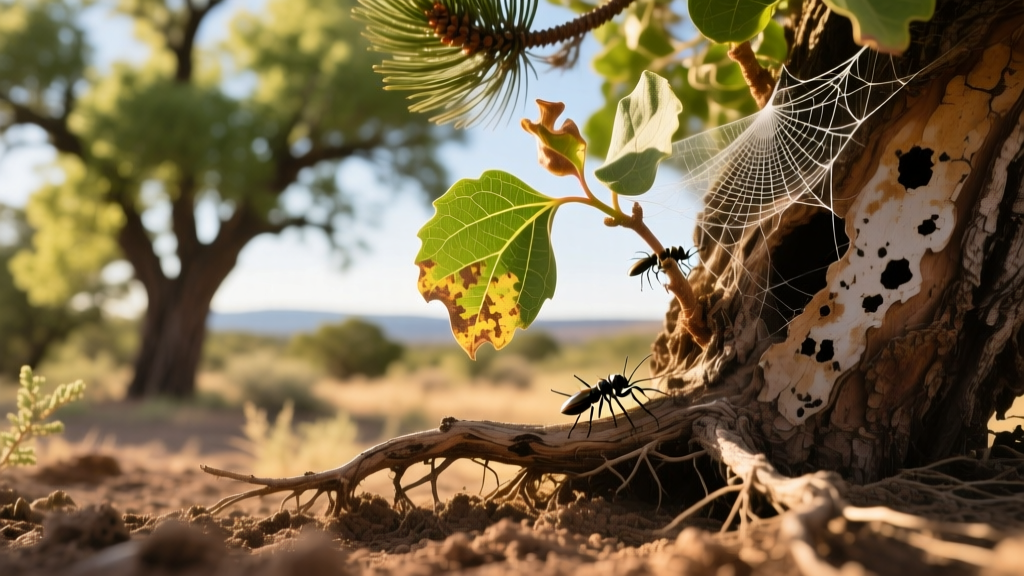
New Mexico Trees: Diagnosing Drought, Soil, and Pest Problems
The High-Desert Diagnostic Challenge
Cultivating trees in New Mexico requires navigating a brutal intersection of USDA Hardiness Zones (5b through 8b), extreme elevation shifts (3,000 to over 7,500 feet), and chronically low humidity. The state's native soils are typically heavily alkaline (pH 7.5 to 8.5) and often feature a hardpan caliche layer just inches below the surface. When a tree begins to decline in this environment, the visual symptoms of drought stress, nutrient lockout, and pest infestation frequently overlap, leading to costly misdiagnoses. Accurate problem-solving for New Mexico trees requires looking past the canopy and analyzing the soil chemistry and root zone hydrology.
⚠️ Critical Misdiagnosis Warning: Homeowners frequently assume that yellowing leaves on a newly planted Desert Willow or Raywood Ash indicate a lack of water. In reality, overwatering in heavy clay-caliche soils suffocates the roots, preventing iron uptake and triggering chlorosis. Adding more water to a yellowing tree in alkaline soil will accelerate root rot and kill the tree.
Iron Chlorosis vs. Drought Stress: Reading the Leaves
Iron chlorosis is the most pervasive nutritional disorder affecting non-native and even some native trees in New Mexico. Because iron becomes chemically locked up and unavailable to roots in soils with a pH above 7.0, trees literally starve for this micronutrient despite it being physically present in the dirt. Distinguishing between chlorosis and drought is the first step in triage.
| Symptom | Iron Chlorosis (Alkaline Lockout) | Drought Stress (Water Deficit) |
|---|---|---|
| Leaf Color | Interveinal yellowing; veins remain dark green. | Uniform dull green, grayish cast, or overall browning. |
| Leaf Margins | Margins may scorch and turn brown as tissue dies. | Crisp, curled, or cupped edges; entire leaf desiccates. |
| Location on Tree | Typically appears on newest, outermost growth first. | Often affects the entire canopy or sun-exposed side uniformly. |
| Soil Moisture | Soil may be adequately moist or even waterlogged. | Soil is dry, cracked, and pulls away from the trunk base. |
The EDDHA Solution for Alkaline Soils
If your diagnostic points to iron chlorosis, standard garden center remedies will fail. Most retail iron supplements contain Fe-EDTA or Fe-DTPA chelates. These compounds break down and become completely inactive in soils with a pH above 7.1. Since New Mexico soils average 7.5 to 8.5, applying EDTA is a waste of money.
You must source a chelate containing Fe-EDDHA (such as Sequestar or Miller's Ferplus). EDDHA remains stable and bioavailable in soils with a pH up to 9.0. Apply Fe-EDDHA as a soil drench in early spring just before bud break. The standard application rate is 3 to 5 grams of active ingredient per inch of trunk diameter, dissolved in 5 gallons of water and poured into shallow trenches around the tree's drip line.
Diagnosing Water Deficits in High-Desert Species
New Mexico's evapotranspiration rates are exceptionally high. A mature shade tree in Albuquerque or Las Cruces can transpire over 50 gallons of water on a 100°F summer day. Relying on lawn sprinklers is a primary failure mode; sprinklers only wet the top 2 to 3 inches of soil, encouraging shallow, vulnerable root systems that cook when surface temperatures exceed 130°F.
Proper hydration requires delivering water to a depth of 18 to 24 inches. Use a soil moisture probe (like the Rapitest digital probe) to verify moisture depth. For established trees, install a drip irrigation ring at the drip line featuring 2 GPH (gallons per hour) emitters spaced 18 inches apart. Run the system for 12 to 16 hours once every two weeks during peak summer, rather than 30 minutes daily.
Pest Triage: Bark Beetles and Sap-Suckers
Trees weakened by drought or caliche-induced stress emit volatile kairomones that attract destructive pests. In New Mexico, two primary culprits require immediate, targeted intervention:
- Pinyon Ips Beetle (Ips confusus): This native bark beetle decimates drought-stressed Pinyon pines. The beetles bore into the cambium, girdling the tree and introducing blue-stain fungi. Solution: Preventative trunk sprays using Carbaryl (Sevin SL) or Bifenthrin must be applied from the ground to the lower 6 feet of the trunk before the spring flight season (typically early to mid-April in central NM). Cost is approximately $80 to $120 for a 2.5-gallon jug of professional concentrate. Once the beetles are under the bark, chemical treatment is useless; the tree must be removed and chipped to prevent brood emergence.
- Giant Conifer Aphids (Cinara spp.): These large, black aphids cluster on the trunks and primary branches of Arizona Cypress and Junipers, excreting heavy honeydew that fosters black sooty mold. Solution: Avoid broad-spectrum foliar sprays that kill native ladybugs. Instead, apply a dormant horticultural oil (like Bonide All Seasons Spray Oil) in late February to smother overwintering eggs, or use a soil-applied Imidacloprid drench (Bayer Advanced Tree & Shrub) in early March for systemic control.
4-Step Recovery Protocol for Declining New Mexico Trees
If you have identified a tree suffering from compaction, mild drought, and early-stage chlorosis, execute this precise recovery sequence to restore vigor without shocking the root system.
- Radial Trench Aeration: Using a 2-inch auger or manual soil corer, drill holes 12 inches deep in a radial pattern starting 3 feet from the trunk and extending 5 feet past the drip line. This fractures the caliche hardpan and introduces oxygen to suffocating roots.
- Deep-Root Hydration: Insert a root waterer attachment (such as the Dramm Deep Root Waterer) into the aeration holes. Deliver 30 to 50 gallons of water slowly, allowing it to percolate into the subsoil rather than running off the surface.
- Targeted Chelate Application: Mix Fe-EDDHA according to the trunk-diameter ratio and pour directly into half of the aeration holes. Backfill the holes with a 50/50 mix of native soil and expanded shale to maintain long-term porosity.
- Arborist Mulch Ring: Apply a 3-inch layer of coarse arborist woodchips from the trunk out to the drip line. Critical rule: Keep the mulch exactly 3 inches away from the trunk bark to prevent crown rot and rodent girdling. The mulch will reduce soil surface evaporation by up to 70% and moderate summer soil temperatures.
Expert Citations and Further Reading
For localized planting guides and updated pest flight models, consult the following authoritative resources tailored to New Mexico's unique microclimates:
- New Mexico State University Cooperative Extension: Iron Chlorosis (H-328) - Comprehensive chemical breakdown of EDDHA efficacy in high-pH desert soils.
- NMSU Extension: Pruning Desert Trees (B-322) - Structural pruning techniques specifically designed to mitigate windthrow in monsoon-prone regions.

