
Tree Care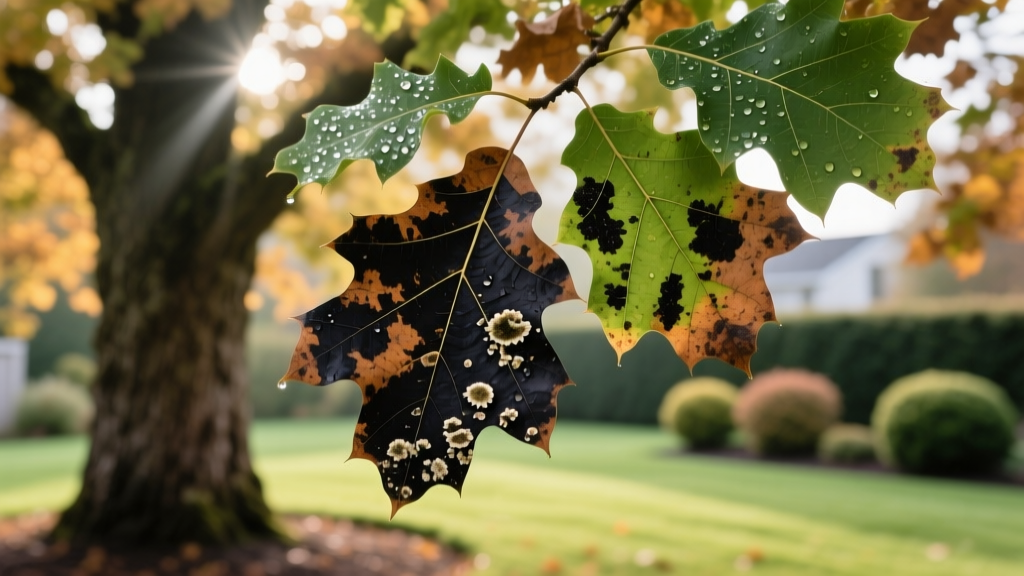
Why Are My Oak Leaves Black? Diagnosis and Treatment Guide
Finding your oak leaves black, spotted, or covered in a powdery crust is a clear signal of biotic stress. While oaks (Quercus spp.) are deeply resilient, three primary pathogens and pest complexes cause this specific discoloration: sooty mold driven by sap-sucking insects, oak leaf blister caused by the Taphrina caerulescens fungus, and anthracnose. Misdiagnosing the culprit leads to wasted chemical applications and continued canopy decline. This guide provides the exact diagnostic criteria, chemical formulations, and seasonal timelines required to restore your oak's health.
Diagnostic Matrix: Identifying the Blackening Agent
Before purchasing any fungicide or insecticide, physically inspect the affected foliage. The texture, location, and pattern of the black discoloration will immediately isolate the problem.
| Symptom Profile | Texture & Feel | Primary Cause | Peak Visibility |
|---|---|---|---|
| Powdery, soot-like coating on upper leaf surface; easily wipes off with a thumb. | Dry, powdery, superficial. | Sooty Mold (growing on insect honeydew). | Mid-Summer to Early Fall |
| Raised, blister-like lesions that turn from pale green to dark black/brown. | Raised, crusty, embedded in leaf tissue. | Oak Leaf Blister (Taphrina caerulescens). | Late Spring to Summer |
| Irregular black/brown dead blotches tracking strictly along the leaf veins. | Brittle, necrotic, papery. | Anthracnose (Apiognomonia quercina). | Spring to Early Summer |
Culprit 1: Sooty Mold and the Honeydew Connection
Sooty mold is not a primary pathogen; it is a secondary fungal complex (Capnodium spp.) that feeds on the sugar-rich honeydew excreted by sap-sucking insects. If your oak leaves are black and sticky, you have an insect infestation—most commonly oak lecanium scale (Parthenolecanium corni) or aphids. The mold itself blocks photosynthesis, but the insects are draining the tree's vascular reserves.
Targeted Treatment Protocol
Treating sooty mold requires eliminating the honeydew source. Wiping the leaves is ineffective for large canopies. Use a two-pronged chemical approach:
- Active Infestation (Summer): Apply a 2% Neem oil extract solution (e.g., Bonide Neem Oil). Mix 2 fluid ounces of concentrate per gallon of water. Spray thoroughly at dusk to avoid leaf burn and protect foraging bees. Repeat every 14 days until the honeydew stops.
- Systemic Prevention (Spring/Fall): For large, established oaks, foliar sprays cannot reach the upper canopy. Apply a soil drench containing Imidacloprid (0.5% concentration). The standard application rate is 1.6 fluid ounces of concentrate per inch of trunk diameter at breast height (DBH). For a 15-inch DBH oak, mix 24 fluid ounces in 3 gallons of water and pour it in a trench around the drip line. The tree's xylem will translocate the insecticide to the leaves over 4 to 6 weeks.
Warning on Systemic Insecticides: Never apply Imidacloprid to oak trees that are currently flowering or when bees are actively foraging on nearby blooms. Apply strictly after petal fall or in late autumn when the tree is entering dormancy.
Culprit 2: Oak Leaf Blister (Taphrina caerulescens)
Oak leaf blister is a highly specific fungal disease that predominantly targets red oaks and pin oaks. The fungus overwinters in bark crevices and bud scales. When spring moisture and temperatures (50°F to 70°F) align with bud break, the spores infect the expanding, tender leaf tissue. The resulting cellular distortion creates raised blisters that eventually necrotize and turn black.
The Dormant Season Eradication Strategy
Once the blisters turn black in summer, the infection cycle is already complete. Fungicide applications in July or August will not cure the existing black spots. Eradication relies entirely on timing.
- Product Selection: Use a Liquid Copper Fungicide (e.g., Bonide Liquid Copper or Monterey Liqui-Cop). Copper disrupts fungal enzyme systems and prevents spore germination.
- Mixing Rate: Combine 0.8 to 1.0 fluid ounces of copper concentrate per gallon of water. Add a non-ionic surfactant (spreader-sticker) at 1/2 teaspoon per gallon to ensure the copper adheres to the waxy bark and bud scales.
- Application Window: Apply a single, thorough drenching spray in late winter or very early spring, just before the buds begin to swell and show green tissue. If a heavy spring rain washes the copper off before bud break, a second application may be necessary.
Culprit 3: Anthracnose Vein Tracking
Anthracnose thrives in cool, wet spring weather. Unlike leaf blister, anthracnose lesions are flat, irregular, and distinctly follow the vascular network of the leaf, turning the veins and surrounding tissue black and brittle. According to the University of Wisconsin-Madison Division of Extension, anthracnose rarely kills a mature, healthy oak, but it can cause severe premature defoliation in younger or stressed trees.
Cultural and Chemical Controls
Because anthracnose is highly weather-dependent, chemical controls are usually reserved for high-value landscape specimens. Focus on canopy airflow and sanitation:
- Sanitation Pruning: Remove dead, crossing, and water-sprout branches during winter dormancy to increase wind penetration. This dries the canopy faster after morning dew.
- Fungicide Intervention: If the tree defoliated prematurely last year, apply a preventive fungicide containing Chlorothalonil (e.g., Daconil) at bud break, followed by two additional sprays at 14-day intervals. Always consult the Clemson University Home & Garden Information Center for updated regional fungicide regulations and resistance management guidelines.
Annual Oak Canopy Maintenance Calendar
Preventing blackened leaves requires a proactive, season-by-season approach. Use this framework to schedule your maintenance.
| Season | Action Item | Target Pathway/Pest |
|---|---|---|
| Winter (Dec-Feb) | Prune deadwood; sanitize shears with 70% isopropyl alcohol between cuts. Apply dormant horticultural oil to smother overwintering scale eggs. | Lecanium scale, Anthracnose overwintering bodies. |
| Early Spring (Mar) | Apply liquid copper fungicide just before bud swell. Rake and destroy all fallen leaf litter from the previous year. | Oak Leaf Blister spores, Anthracnose inoculum. |
| Late Spring (May) | Apply Imidacloprid soil drench after petal fall/leaf expansion. Ensure deep root watering (1 inch per week) if rainfall is deficient. | Aphids, Scale insects, general drought stress. |
| Summer (Jun-Aug) | Monitor for honeydew drip. Spot-treat localized aphid colonies with insecticidal soap or 2% Neem oil at dusk. | Sooty Mold prevention via pest control. |
| Fall (Sep-Nov) | Rake and compost or bag all fallen leaves. Do not leave infected leaves beneath the drip line. | Breaks the lifecycle of all three fungal pathogens. |
Frequently Asked Questions
Will black oak leaves kill my tree?
Rarely. Sooty mold, leaf blister, and anthracnose are primarily aesthetic and stress-inducing rather than lethal to mature oaks. However, consecutive years of severe defoliation will deplete the tree's carbohydrate reserves, making it highly susceptible to secondary borers like the two-lined chestnut borer or Armillaria root rot. The Morton Arboretum notes that maintaining tree vigor through deep watering and mulching is the best defense against secondary mortality.
Can I just prune off the black leaves in July?
No. Removing leaves during the active growing season forces the oak to expend stored energy to push out a secondary flush of foliage. This weakens the tree. Only prune dead or diseased branches during winter dormancy, and let naturally infected leaves drop on their own in autumn.
Is the black substance toxic to my pets?
The sooty mold fungus and the honeydew it grows on are not toxic to dogs or cats. However, the chemical insecticides used to treat the underlying scale or aphid infestations (like Imidacloprid) are highly toxic if ingested before drying. Keep pets away from treated soil drenches until the liquid has fully absorbed and the soil surface is dry.

