
Tree Care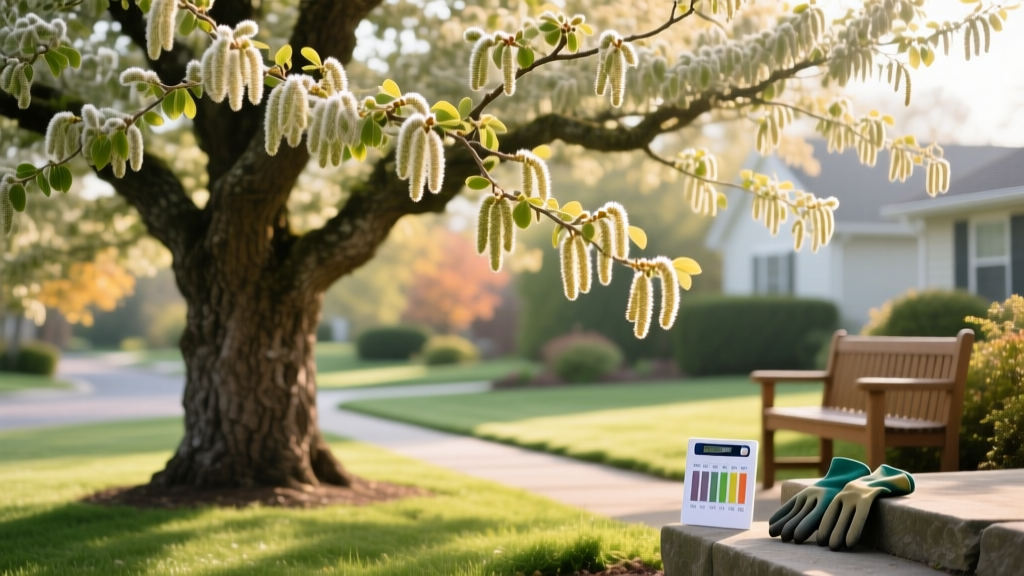
Oak Tree Allergy Guide: How to Reduce Pollen Exposure in Your Yard
The Biology of Oak Tree Allergy Triggers
If you suffer from an oak tree allergy, the primary culprit is not the leaves or the bark, but the male flowers known as catkins. Oak species (Quercus) are monoecious, meaning they produce separate male and female flowers on the same tree. The male catkins dangle from the branches and release billions of microscopic pollen grains into the wind between March and May, depending on your hardiness zone and the specific oak species. Northern Red Oaks (Quercus rubra) typically shed pollen slightly earlier in the spring, while White Oaks (Quercus alba) peak a few weeks later.
Oak pollen grains measure between 20 and 40 microns in diameter. While this makes them large enough to be caught by standard window screens, they are small enough to bypass cheap HVAC filters and trigger severe histamine responses when inhaled. According to the Asthma and Allergy Foundation of America, tree pollen is the earliest seasonal trigger, often causing symptoms before grass or weed pollens even begin to develop. Managing an oak tree allergy requires a multi-tiered approach targeting the source, the transmission pathways, and your immediate environment.
Strategic Pruning to Reduce Catkin Density
The most effective long-term strategy for minimizing oak pollen in your immediate yard is strategic crown pruning. Because catkins develop on the previous year's growth, removing specific branches during the dormant season directly reduces the physical surface area available for pollen production the following spring.
Timing and Technique
You must prune oak trees during deep dormancy, ideally between December and February. Pruning during this window serves a dual purpose: it removes the wood that would have hosted catkins, and it prevents the spread of Oak Wilt disease, as the sap beetles that carry the fungus are inactive in freezing temperatures. Focus on crown thinning—removing interior crossing branches and lower limbs that hang over patios, walkways, and HVAC intake units.
WARNING: Never Prune in Spring
Pruning an oak tree while the catkins are actively dangling (March through May) will physically rupture the flowers, releasing a concentrated, localized cloud of pollen directly into your face and yard. Furthermore, fresh pruning wounds in spring attract Nitidulid beetles, drastically increasing the risk of fatal Oak Wilt infection.
For mature oaks over 30 feet tall, hire an ISA-Certified Arborist. Expect to pay between $450 and $900 for a comprehensive dormant-season crown thinning, depending on canopy size and regional labor rates. For detailed pruning cuts and branch collar identification, reference the University of Minnesota Extension pruning guidelines.
Yard Landscaping and Ground Cover Adjustments
Oak pollen does not simply disappear; it settles. The type of ground cover beneath and surrounding your oak tree dictates how much pollen is trapped near ground level versus how much is kicked back up into the air by wind and foot traffic. Replacing high-retention ground covers with low-allergen alternatives is a critical step in managing your oak tree allergy.
| Ground Cover Type | Pollen Retention | Maintenance Required | Allergy Impact |
|---|---|---|---|
| Tall Fescue Grass | High (Traps pollen in blades) | Weekly mowing (kicks up dust) | Severe |
| Shredded Hardwood Mulch | Medium (Pollen sinks into crevices) | Annual topping | Moderate |
| Paved Hardscape (Concrete) | Low (Sits on surface) | Frequent pressure washing | Low (if washed weekly) |
| Creeping Thyme / Liriope | Medium-Low (Dense mat blocks soil) | Minimal | Low |
If your oak shades a primary seating area, consider replacing turfgrass with a dense, low-growing groundcover like Liriope or a paved patio that can be easily hosed off. Avoid using leaf blowers on dry pollen; always use a high-pressure water nozzle to wash settled pollen into drainage grates.
Mechanical Washing and Air Filtration Tactics
When source reduction (pruning) and landscaping adjustments are not enough, you must intercept the pollen before it enters your respiratory system or your home's interior.
Upgrading HVAC and Window Defenses
Standard fiberglass HVAC filters (MERV 1-4) are virtually useless against 20-micron oak pollen, allowing it to circulate through your ductwork. Upgrade to a pleated filter with a minimum MERV 13 rating, such as the 3M Filtrete MPR 1900 series (typically $22 to $28 per filter). The Environmental Protection Agency notes that MERV 13 filters are highly efficient at capturing airborne particulates in the 1.0 to 3.0-micron range, making them more than adequate for oak pollen. Change these filters every 30 days during peak spring bloom, rather than the standard 90-day interval.
For open windows, install specialized pollen-blocking screens. Brands like PollenTec utilize an electrostatically charged polyester mesh that blocks up to 90% of airborne pollen while maintaining 60% airflow. Expect to pay roughly $40 to $60 per custom-sized window screen.
Outdoor Air Suppression
If you have a covered patio beneath an oak tree, install a localized HEPA air purifier designed for semi-outdoor or garage use. Units like the Blueair Blue Pure 211i+ (retailing around $350) feature a 3-part filtration system capable of scrubbing the air in a 500-square-foot covered area, creating a safe, low-pollen microclimate for outdoor seating.
Decision Matrix: Keep, Treat, or Remove?
Deciding whether to keep a mature oak tree despite severe allergies requires weighing ecological benefits against personal health. Use this framework to make your decision:
- Keep and Manage: If the tree is a heritage oak (over 50 years old), provides critical summer shade that reduces home cooling costs by 15% or more, and is located at least 50 feet from your primary HVAC intake and bedroom windows. Implement dormant pruning and MERV 13 filtration.
- Treat with Growth Regulators: If the tree is medium-sized (20-40 feet) and located close to the house. Consult an arborist about injecting Paclobutrazol (Profile 2F). While primarily a vegetative growth inhibitor, it can reduce overall tree vigor and subsequent flower/catkin production, though results vary by species and require professional application costing $300 to $500 per treatment.
- Remove and Replace: If the tree is located within 20 feet of your front door or primary patio, you suffer from asthma exacerbated by oak pollen, and the tree is a fast-growing, lower-value species like a Pin Oak (Quercus palustris). Removal costs for a 40-foot oak average $1,200 to $2,500, including stump grinding. Replace it with a low-allergen, female cultivar (which produces no pollen) such as a female Ginkgo biloba or an insect-pollinated tree like a Dogwood, which does not release windborne pollen.
Managing an oak tree allergy is not about eliminating the tree entirely, but rather disrupting the lifecycle of the catkins and fortifying your home's perimeter. By combining dormant-season pruning, strategic hardscaping, and high-efficiency filtration, you can maintain a beautiful, shaded yard without sacrificing your respiratory health.

