
Tree Care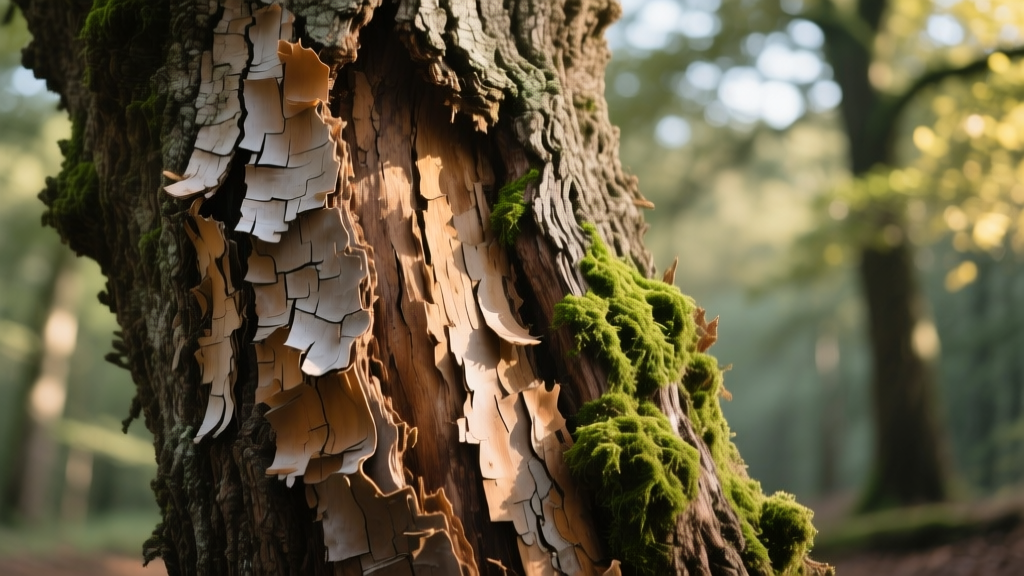
Diagnosing Peeling and Cracking Oak Tree Bark Issues
The Diagnostic Matrix: Decoding Oak Tree Bark Symptoms
The bark of an oak tree is not merely a protective shield; it houses the phloem, the critical vascular tissue responsible for transporting photosynthates from the canopy to the root system. When oak tree bark begins to peel, crack, or discolor, it indicates a severe disruption in this vascular network or an active pathogenic invasion. Accurate diagnosis requires moving beyond surface-level observations to understand the underlying physiological failure.
Use the following diagnostic matrix to cross-reference visual bark symptoms with their most probable causes and required urgency levels.
| Visual Symptom | Bark Texture Change | Probable Culprit | Urgency Level |
|---|---|---|---|
| Vertical seams, deep splitting | Rigid, exposed inner wood | Frost crack / Sunscald | Moderate (Monitor & Wrap) |
| Sloughing, peeling patches | Crusty gray/tan/black stromata | Hypoxylon Canker | High (Prune & Remediate Soil) |
| Vascular streaking under bark | Bark detaches easily in strips | Oak Wilt (Bretziella fagacearum) | Critical (Immediate Fungicide) |
| D-shaped exit holes, frass | Localized sponginess or weeping | Flatheaded Appletree Borer | High (Systemic Insecticide) |
Oak Wilt: Vascular Streaking and Bark Slippage
Oak wilt, caused by the fungal pathogen Bretziella fagacearum, is the most lethal threat to oak trees in North America. While canopy leaf browning is the most visible symptom, the definitive diagnosis occurs at the cambium layer. When you peel back the outer oak tree bark on a recently wilted branch or trunk section, you will observe dark brown to black vascular streaking.
Red Oaks vs. White Oaks
The pathogen's impact varies drastically by species group. Red oaks (e.g., Texas Red Oak, Shumard Oak) lack tyloses—balloon-like structures that block xylem vessels—allowing the fungus to spread rapidly. A mature Red Oak can die within 4 to 6 weeks of infection. White oaks (e.g., Bur Oak, White Oak) produce tyloses, compartmentalizing the fungus and surviving for years with localized branch dieback.
Cost & Treatment Protocol: Preventative and early-stage therapeutic treatment requires trunk injections of Propiconazole (commercially known as Alamo). Expect to pay $15 to $22 per diameter inch (DBH) for professional injection. A 24-inch DBH Red Oak will cost between $360 and $528 per treatment, which must be repeated every 18 to 24 months. According to the Texas A&M Forest Service, trenching to sever root grafts is also mandatory to stop subterranean spread to adjacent trees.
Hypoxylon Canker: The Opportunistic Bark Slougher
If large sheets of oak tree bark are peeling away to reveal a crusty, powdery, or mat-like surface in shades of gray, tan, or brown, you are likely looking at Hypoxylon canker (Hypoxylon atropunctatum). This is a secondary, opportunistic pathogen. It does not attack healthy trees; it colonizes the sapwood of trees severely stressed by drought, soil compaction, or root damage.
Why Fungicides Fail Here
There is no chemical cure for Hypoxylon canker once the stromata (the crusty reproductive structures) erupt through the bark. The fungus has already consumed the sapwood. Treatment focuses entirely on prolonging the tree's life by alleviating the primary stressor.
- Soil Decompaction: Hire an arborist to perform radial trenching or air-spading. Air-spading uses compressed air at 120 PSI to fracture compacted soil without severing roots. Cost: $150 to $250 per hour.
- Canopy Reduction: Reduce the leaf area the compromised root system must support by pruning 15-20% of the live canopy.
- Mulching: Apply a 3-inch layer of arborist wood chips out to the drip line, keeping it 4 inches away from the trunk flare to prevent basal rot.
For a deeper understanding of how drought stress triggers this pathogen, review the Penn State Extension guidelines on Hypoxylon Canker.
Sunscald and Frost Cracks: Thermal Bark Damage
Young oaks, particularly Live Oaks and Pin Oaks with relatively smooth, thin bark, are highly susceptible to winter sunscald. This occurs when the winter sun heats the southwest-facing trunk, activating the cambium cells. When the sun sets and temperatures plummet below freezing, the active cells freeze and rupture, leading to vertical bark splitting and eventual peeling.
The Wrapping Protocol
To prevent thermal shock, wrap the trunks of newly planted oaks (under 4 inches DBH) in late autumn.
- Material Selection: Use a white, polypropylene tree wrap (typically 4 inches wide). Avoid dark-colored wraps or burlap, which absorb heat and exacerbate the freezing cycle.
- Application: Start at the base and overlap the wrap by one-third as you spiral upward to the first scaffold branch.
- Removal (Critical): Remove the wrap in early spring. Leaving it on year-round traps moisture against the bark, creating an ideal microclimate for flatheaded borers and fungal cankers.
The University of Minnesota Extension notes that frost cracks, once formed, rarely close entirely but will form a callus ridge over time if the tree is otherwise healthy.
Borer Insects: D-Shaped Holes and Frass
When oak tree bark exhibits small, D-shaped exit holes roughly 1/4 inch wide, accompanied by fine sawdust (frass) at the base of the trunk, the tree is under attack by wood-boring beetles, most commonly the flatheaded appletree borer (Chrysobothris femorata) or the oak clearwing moth. These insects target trees with compromised sap flow.
Targeted Chemical Interventions
Contact sprays are useless once the larva breaches the bark. You must use systemic insecticides that translocate through the xylem.
- Imidacloprid (Soil Drench): Applied at the base of the tree in early spring before adult emergence. Cost: $40 to $60 for a mature tree. Takes 4-6 weeks to reach the canopy.
- Emamectin Benzoate (Trunk Injection): Sold under the brand name TREE-äge. Provides up to two years of control and acts much faster than soil drenches. Requires professional application to avoid girdling the tree with injection ports.
Wound Management: Debunking the Pruning Paint Myth
A common, detrimental practice among homeowners is applying black asphalt-based pruning paint or tar over cracked or peeled oak tree bark. Decades of arboricultural research, specifically the CODIT (Compartmentalization of Decay in Trees) model developed by Dr. Alex Shigo, proves that wound dressings do not stop decay.
'Wound dressings create an anaerobic environment that traps moisture and fungal spores against the exposed cambium, accelerating wood decay rather than preventing it.' — Dr. Alex Shigo, USDA Forest Service Pathologist
The Correct Protocol: If bark is torn by wind or equipment, use a sterilized, sharp knife to carefully trace an ellipse around the wound, removing only the detached bark to expose clean, tight edges. This promotes rapid callus tissue formation. Leave the exposed wood entirely untreated and allow the tree's natural biochemical barriers to seal the breach.
When to Call a Certified Arborist vs. DIY
Not all bark issues require professional intervention. Use this decision framework to allocate your budget effectively:
- DIY: Applying winter tree wrap for sunscald, mulching to alleviate mild drought stress, and carefully tracing small, clean mechanical wounds with a sterilized knife.
- Hire an ISA Certified Arborist: Propiconazole injections for oak wilt, air-spading for severe soil compaction, systemic trunk injections for borers, and the removal of trees where Hypoxylon canker has girdled more than 30% of the main trunk.
Always verify your arborist's credentials through the International Society of Arboriculture (ISA) database and ensure they carry both liability and workers' compensation insurance before allowing them to inject or prune your oaks.

