
Tree Care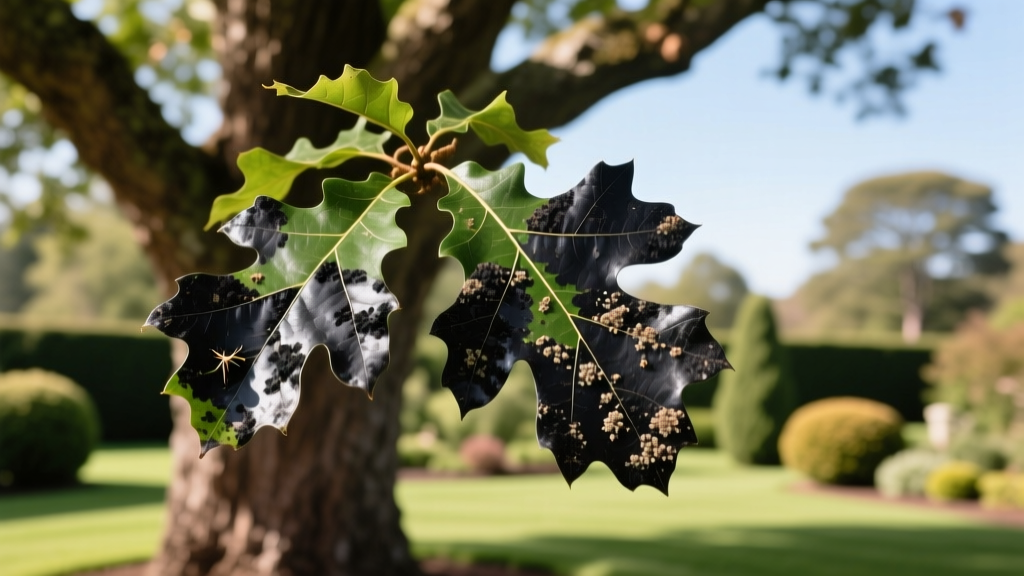
Oak Tree Black Leaves: How to Diagnose and Treat Sooty Mold
The Real Culprit Behind Oak Tree Black Leaves
When your oak tree’s canopy develops a dark, powdery coating, it is easy to assume a primary fungal disease has taken over. However, the black substance is almost always sooty mold (Capnodium or Fumago species), a secondary fungus that does not directly infect plant tissue. Instead, it feeds exclusively on honeydew—a sticky, sugar-rich waste product excreted by sap-sucking insects colonizing your tree.
The insects responsible for oak tree black leaves are typically oak leaf aphids (Monellia spp.), scale insects, or whiteflies. As these pests pierce the phloem to drink sap, they excrete excess sugars onto the leaves and branches below. Airborne sooty mold spores land on this honeydew and rapidly colonize it, blocking sunlight and reducing the tree's photosynthetic capacity by up to 30% in severe cases. To clear the black soot, you must eradicate the insect population producing the honeydew; the mold will naturally weather away once its food source is gone.
Quick Diagnosis Checklist
- Visual: Leaves and small branches are coated in a black, charcoal-like powder that can be wiped off with a damp cloth.
- Tactile: The leaves feel unusually sticky to the touch before the mold fully sets in.
- Secondary Signs: Heavy ant traffic on the trunk (ants farm aphids for their honeydew) or the presence of stationary, brown/white bumps on twigs (scale insects).
- Drip: A sticky residue accumulates on patio furniture, cars, or sidewalks parked directly beneath the canopy.
3-Step Treatment Protocol to Clear Black Soot
Treating sooty mold requires a targeted approach that addresses the insect vectors without causing undue stress to the oak. Follow this sequential protocol for the fastest recovery.
Step 1: Mechanical Dislodgement and Wash
For light to moderate infestations on smaller or newly planted oaks, physical removal is highly effective. Attach a sweeping nozzle to your garden hose and set it to a medium-pressure fan spray (approximately 40 to 60 PSI). Spray the undersides of the leaves where aphids and whiteflies congregate. This physically knocks the pests off the tree and washes away a significant portion of the existing honeydew, immediately starving the sooty mold. Repeat this process every three days for two weeks during the peak spring and early summer insect hatches.
Step 2: Apply Contact Controls (Horticultural Oils)
If water blasting is insufficient or your oak is too large for manual spraying, use a highly refined horticultural oil, such as Bonide All Seasons Horticultural Oil or Monterey Horticultural Oil. These oils smother soft-bodied insects and scale crawlers on contact.
- Mixing Ratio: Combine 2.5 to 5 tablespoons of horticultural oil per gallon of water for a summer-weight dormant spray.
- Application Timing: Spray at dusk or early morning when temperatures are below 85°F (29°C) to prevent phytotoxicity (leaf burn). Never apply oil when the tree is drought-stressed.
- Coverage: Ensure thorough coverage of the leaf undersides and branch crotches where scale insects hide. Expect to spend $15 to $25 per quart of concentrate, which treats multiple mature trees.
Step 3: Deploy Systemic Root Drenches for Severe Infestations
For massive, multi-story oaks where canopy spraying is impossible, systemic insecticides are the professional standard. Products containing Imidacloprid (e.g., BioAdvanced 12 Month Tree and Shrub Protect & Feed II) are absorbed by the roots and translocated into the tree’s vascular system. When sap-sucking insects feed, they ingest the active ingredient and die.
Calculating Trunk Diameter for Systemic Dosing
Systemic drenches are dosed by the tree's Diameter at Breast Height (DBH). Overdosing wastes chemicals and harms soil ecology; underdosing fails to control the pests. Follow these exact measurement steps:
- Measure the circumference of the oak trunk at exactly 4.5 feet above ground level using a flexible fabric measuring tape.
- Divide that circumference number by 3.14 (Pi) to calculate the DBH in inches.
- Apply the imidacloprid drench at a rate of 1 fluid ounce per inch of DBH. (For example, a tree with a 31.4-inch circumference has a 10-inch DBH and requires 10 ounces of concentrate).
- Mix the calculated dose into 1 to 2 gallons of water. Water the tree's root zone thoroughly 24 hours prior to application to ensure the soil is receptive, then pour the drench in a circular band 12 inches away from the trunk base.
Insecticide Treatment Comparison Matrix
| Method | Active Ingredient | Est. Cost (Per Mature Tree) | Time to Efficacy | Best Use Case |
|---|---|---|---|---|
| Water Blast | None (Mechanical) | $0 | Immediate (Temporary) | Small trees, early spring hatches |
| Horticultural Oil | Mineral Oil (Paraffinic) | $15 - $30 | 24 - 48 Hours | Scale insects, accessible canopies |
| Systemic Drench | Imidacloprid | $20 - $45 | 2 - 4 Weeks | Large oaks, heavy aphid pressure |
| Trunk Injection | Emamectin Benzoate | $12 - $15 per inch DBH | 1 - 2 Weeks | Professional use, restricted areas |
⚠️ Critical Warning: Differentiating Sooty Mold from Oak Wilt
Homeowners often panic when oak leaves turn dark, confusing sooty mold with Oak Wilt (Bretziella fagacearum). Sooty mold is a black powder that wipes off the surface of otherwise green leaves. Oak Wilt, conversely, causes internal veinal necrosis—the leaves turn brown or bronze from the margins inward and remain firmly attached or drop rapidly, without any powdery black coating. According to the Texas A&M Forest Service, pruning oaks to treat perceived fungal issues between February and June can expose fresh wounds to sap-feeding nitidulid beetles, which transmit the fatal Oak Wilt pathogen. Never prune an oak in spring without immediately sealing the cuts with a specialized tree wound paint.
Long-Term Preventative Canopy Care
Sap-sucking insects target trees that are under environmental stress. Once you have cleared the active infestation and the University of Minnesota Extension recommended weathering period has passed, implement these cultural practices to prevent recurrence:
- Proper Mulching: Apply a 3-inch layer of organic arborist wood chips in a wide ring around the tree, extending to the drip line. Keep the mulch at least 4 inches away from the trunk flare to prevent "volcano mulching," which invites root rot and bark-boring insects that weaken the tree's natural defenses.
- Deep Root Watering: During late-summer droughts, use a root feeder or soaker hose to deliver 10 gallons of water per inch of DBH every two weeks. Drought-stressed oaks produce higher concentrations of amino acids in their sap, making them highly attractive to aphids and scale.
- Ant Management: Apply a sticky barrier band (like Tanglefoot) around the trunk in early spring. This stops ants from climbing the tree to protect their aphid "herds" from natural predators like ladybugs and lacewings, allowing beneficial insects to naturally control the pest population.
By targeting the honeydew-producing insects rather than the sooty mold itself, you restore the tree's photosynthetic efficiency and eliminate the unsightly black coating permanently. Monitor your oak's canopy weekly during the spring flush, and rely on systemic treatments for large, established specimens where contact sprays cannot reach.

