
Tree Care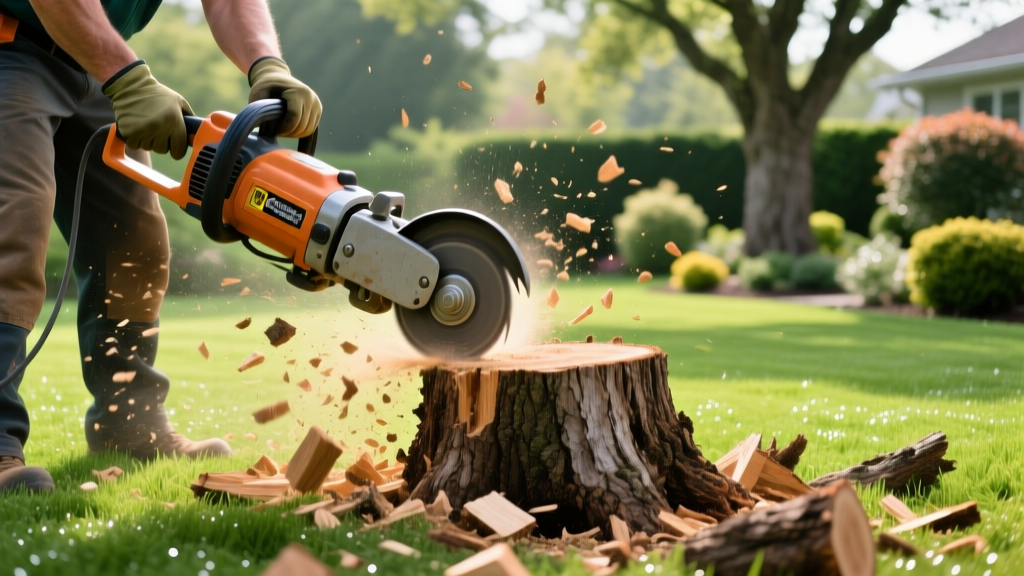
How to Remove an Old Tree Stump: Grinding vs. Chemical Decay
The Hidden Costs of Ignoring an Old Tree Stump
Leaving an old tree stump in your yard is not merely an aesthetic compromise; it is an active liability. Decaying wood serves as a primary nesting habitat for subterranean termites, carpenter ants, and wood-boring beetles. Once these colonies establish in the stump, they will inevitably forage toward nearby structural timber, fencing, and healthy landscape trees. Furthermore, stumps harbor fungal pathogens like Armillaria root rot, which can spread through subterranean root grafts to infect adjacent healthy trees. Removing the stump eliminates the vector. The optimal removal method depends entirely on the stump's diameter, wood density, and your budget.
Assessing Your Old Tree Stump: Decision Matrix
Before renting equipment or buying chemicals, measure the stump's diameter at ground level and assess its decay state. Use this framework to select the most efficient removal protocol.
| Stump Diameter | Wood Condition | Recommended Method | Estimated Timeline |
|---|---|---|---|
| Under 12 inches | Soft / Rotted | Manual Excavation | 2 - 4 hours |
| 12 - 24 inches | Solid / Fresh | DIY Mechanical Grinding | 3 - 5 hours |
| Over 24 inches | Solid / Fresh | Professional Grinding | 1 - 2 hours |
| Any size | Hardwood / No rush | Chemical Accelerated Decay | 4 - 8 weeks |
Method 1: Mechanical Stump Grinding (The Fastest Route)
Stump grinding is the industry standard for rapid removal. The machine uses a high-speed rotating cutting wheel equipped with carbide-tipped teeth to shred the wood into mulch, typically reaching 8 to 12 inches below grade.
Equipment Specs & Rental Economics
For DIY projects, rental yards typically stock 12-inch walk-behind grinders (such as the Vermeer SC30 or equivalent Ditch Witch models). As of 2026, expect to pay between $120 and $160 for a four-hour rental, or $180 to $250 for a full day. Professional arborists charge by the diameter inch, averaging $3.50 to $5.00 per inch, with a minimum trip fee of $150.
Step-by-Step Grinding Procedure
- Clear the Zone: Remove all rocks, mulch, and soil from the stump's base. Rocks will shatter the carbide teeth, resulting in $50+ replacement fees from the rental company.
- Cut Low: Use a chainsaw to trim the stump as close to the ground as possible. Less vertical wood means faster grinding.
- Sweep and Pivot: Engage the cutting wheel, sweeping it side-to-side in 2-inch increments. Do not plunge the wheel straight down; pivot the machine on its axle to shave the wood layer by layer.
- Sever Surface Roots: Grind the major lateral roots extending 2 to 3 feet outward from the trunk to prevent future tripping hazards and fungal spread.
⚠️ CRITICAL SAFETY WARNING: Before breaking ground or grinding deeper than 4 inches, you must call 811 or visit call811.com to have underground utility lines marked. Striking a buried gas or fiber-optic line with a grinder wheel can cause catastrophic damage and severe injury.
Method 2: Chemical Accelerated Decay (The Budget Route)
If you are not in a rush and want to avoid heavy machinery, chemical decay is highly effective for old tree stumps. This method does not "dissolve" the wood instantly; rather, it creates an environment that hyper-accelerates fungal decomposition.
The Chemistry of Potassium Nitrate
The active ingredient in most commercial stump removers (like Spectracide or Hi-Yield) is Potassium Nitrate (KNO3). Wood-decaying fungi require high nitrogen levels to break down lignin and cellulose. By saturating the stump with nitrogen, you fuel a rapid microbial bloom that rots the wood from the inside out in 4 to 6 weeks.
Application Protocol
- Drilling Pattern: Using a 1-inch spade bit, drill holes 8 to 10 inches deep into the top of the stump. Space the holes 3 inches apart in a grid pattern. Drill additional holes at a 45-degree angle around the perimeter to intersect the lateral roots.
- Chemical Loading: Pour the potassium nitrate granules directly into the holes until they are filled to within 1/2 inch of the surface.
- Activation: Fill the remaining space in each hole with warm water to dissolve the granules. Cover the stump with a dark plastic tarp to trap heat and moisture, which are critical for fungal reproduction.
According to University of Minnesota Extension, once the wood becomes spongy, you can easily break it apart with a mattock or axe and remove it by hand.
Method 3: Manual Excavation (For Small or Rotted Stumps)
For stumps under 12 inches in diameter, or those that have already undergone significant natural decay, manual extraction is the most cost-effective method. You will need a digging bar, a trenching shovel, and a pruning saw.
"The secret to manual removal is not pulling the stump; it is severing the anchor roots. Once the four primary lateral roots are cut, the stump acts as a lever and can be tipped out of the ground."
Dig a trench 18 inches deep and 12 inches wide around the circumference of the stump. Expose the lateral roots and sever them using a reciprocating saw with a pruning blade or a sharp splitting axe. Drive the digging bar under the taproot and use the stump's mass as leverage to snap the bottom anchor.
Cost & Labor Comparison Breakdown
| Removal Method | Material / Rental Cost | Labor Exertion | Time to Completion | Best Application |
|---|---|---|---|---|
| DIY Grinding | $120 - $250 | High (Vibration/Weight) | 2 - 5 Hours | Medium stumps, immediate replanting |
| Pro Grinding | $150 - $450+ | None (Observation only) | 1 - 2 Hours | Large stumps, hard access areas |
| Chemical Decay | $10 - $25 | Low (Drilling/Pouring) | 4 - 8 Weeks | Budget-conscious, no immediate need |
| Manual Digging | $0 (If tools owned) | Extreme (Digging/Prying) | 3 - 6 Hours | Small stumps, soft soil conditions |
Post-Removal Soil Remediation
A common mistake homeowners make is immediately planting a new tree or laying sod over the cavity left by an old tree stump. This almost always results in chlorosis (yellowing) and stunted growth due to nitrogen depletion.
Decaying wood chips and sawdust have a carbon-to-nitrogen (C:N) ratio of approximately 400:1. As soil microbes break down this carbon-heavy debris, they consume all available nitrogen in the surrounding soil, starving any new plants. To remediate the soil, you must artificially spike the nitrogen levels.
The Fix: Mix the backfill soil with a high-nitrogen fertilizer, specifically a 46-0-0 Urea blend. Apply at a rate of 1 pound per 100 square feet of the disturbed area. Alternatively, replace the top 12 inches of the stump cavity with fresh, amended topsoil mixed with compost to bypass the microbial nitrogen tie-up entirely.
Frequently Asked Questions
Will an old tree stump eventually disappear on its own?
Yes, but the timeline varies drastically by species. A pine or cedar stump may rot in 5 to 7 years due to lower density and natural moisture retention. However, a dense hardwood like oak or hickory can take 15 to 25 years to fully decompose naturally, during which it will continuously attract wood-destroying insects.
Can I burn an old tree stump out of the ground?
While building a fire ring over a stump is a traditional method, it is highly inefficient and often violates local municipal burn ordinances. Furthermore, the smoldering roots can travel underground and ignite dry peat or duff layers, causing subterranean fires that are difficult to detect and extinguish.
Do I need to remove the roots after grinding?
No. Once the main trunk and the top 12 inches of the root flare are ground away, the remaining deep root system is severed from its carbohydrate supply (the canopy). These orphaned roots will naturally die and decompose within 2 to 3 years, eventually adding organic matter to the soil without causing surface heaving.

