
Tree Care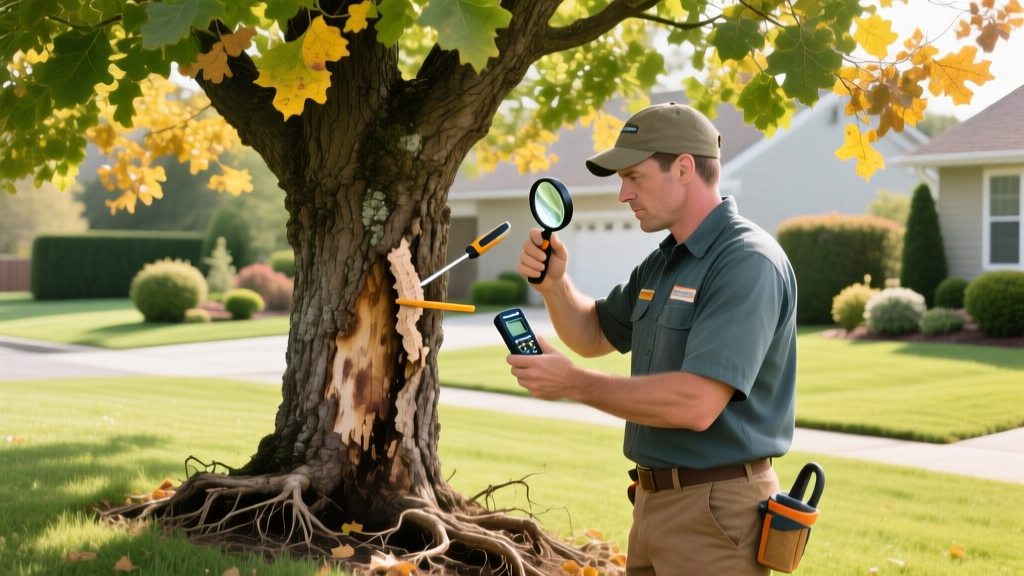
How an On Point Tree Service Diagnoses and Fixes Sick Trees
The Difference Between a Hack Job and an On Point Tree Service
When a mature shade tree begins showing signs of decline—such as premature leaf drop, crown dieback, or weeping cankers—homeowners often panic and call the first local contractor they find. Unfortunately, the tree care industry is flooded with uncertified operators who rely on guesswork, tree topping, and excessive pruning. An on point tree service, by contrast, operates on the principles of plant pathology and biomechanics. They employ International Society of Arboriculture (ISA) Certified Arborists who use diagnostic frameworks rather than assumptions.
According to the International Society of Arboriculture, improper pruning and misdiagnosed soil conditions are the leading human-caused factors in urban tree mortality. A top-tier arborist service will not simply recommend cutting down a struggling tree or blindly injecting it with generic fertilizers. Instead, they deploy a systematic, four-step diagnostic protocol to identify the exact physiological or environmental stressor before prescribing a targeted, science-backed solution.
The 4-Step Diagnostic Framework Used by Elite Arborists
If you hire an on point tree service, expect them to perform a comprehensive site assessment. Here is the exact methodology they use to evaluate tree health from the canopy down to the root plate.
1. Crown and Canopy Assessment
Arborists begin by evaluating the tree's crown using binoculars and, increasingly, drone imagery. They look for chlorosis (yellowing between leaf veins), dieback (dead twigs at the extremities), and epicormic sprouting (water sprouts shooting directly from the trunk). If more than 25% of the crown is experiencing dieback, the tree is in severe decline, signaling either a vascular disease or catastrophic root failure.
2. Root Flare Excavation via AirSpade
The root flare—the area where the trunk widens and transitions into the root system—must be visible above grade. Many landscape contractors bury root flares under 4 to 8 inches of mulch or soil, leading to suffocation and girdling roots. Professional services use an AirSpade, a tool that blows compressed air at 120 PSI, to safely excavate soil without tearing the delicate bark or severing fine feeder roots.
3. Trunk Sounding and Resistography
To detect internal decay that isn't visible from the outside, elite arborists use a resistograph. This device drills a tiny 3mm needle into the trunk, measuring the resistance of the wood. A sudden drop in resistance indicates hollow cavities or advanced fungal decay (such as Ganoderma or Armillaria). This data is critical for determining if a tree is a structural hazard or if it can be saved with cabling and bracing.
4. Soil Chemistry and Drainage Profiling
Trees in urban environments frequently suffer from soil compaction, alkaline pH, and poor drainage. An on point tree service will take core soil samples to test for pH, phosphorus, potassium, and organic matter levels. For example, pin oaks and red maples require acidic soil (pH 5.0 to 6.5); if planted in alkaline clay (pH 7.5+), they will develop severe iron chlorosis because the high pH locks up essential micronutrients.
Common Tree Problems and Exact Solutions
Below is a diagnostic matrix detailing how professional arborists treat the most common urban tree ailments, including the specific active ingredients and 2026 pricing expectations.
| Visible Symptom | Probable Cause | On Point Solution | Estimated Cost (2026) |
|---|---|---|---|
| Yellowing leaves with green veins (Chlorosis) | Iron/Manganese deficiency due to high soil pH | Trunk micro-injections of Ferric ammonium citrate or Manganese sulfate using an Arborjet QUIK-jet system. | $150 - $300 per tree |
| D-shaped exit holes, canopy thinning | Emerald Ash Borer (EAB) or similar wood-boring beetle | Systemic trunk injection of Emamectin benzoate (Tree-äge) applied in early spring before beetle flight. | $200 - $450 per tree |
| Wilting leaves on single branches, dark sapwood streaks | Oak Wilt or Dutch Elm Disease (vascular fungi) | Immediate trenching to sever root grafts; preventative trunk injection of Propiconazole (Alamo) for adjacent oaks. | $350 - $600 per tree |
| Mushrooms/conks growing at the base or on roots | Advanced root rot (Armillaria or Ganoderma) | If >30% of root plate is compromised, safe removal. If <30%, vertical mulching and application of mycorrhizal inoculants. | $500 - $1,500 (Removal) |
| Water pooling at base, sudden leaf drop in summer | Phytophthora root rot due to anaerobic soil conditions | Install French drains; apply systemic fungicide (Phosphorous acid) via soil drench or trunk injection. | $400 - $800 (Drainage + Tx) |
Red Flags: How to Spot a Subpar Tree Service
Not every company with a chainsaw and a bucket truck qualifies as an on point tree service. Protect your landscape investment by walking away if you observe any of the following practices:
⚠️ Warning Signs of Malpractice
- Tree Topping: Cutting the main central leader or primary branches back to stubs. This violates ANSI A300 pruning standards, causes massive stress, and invites decay. It is the hallmark of an amateur.
- Climbing Spikes on Living Trees:Arborists should only use gaffs (spikes) on trees scheduled for complete removal. Walking up a living trunk with spikes creates hundreds of puncture wounds, providing direct entry points for fungal pathogens and boring insects.
- Lion's Tailing: Stripping all the inner lateral branches from a limb, leaving only a tuft of foliage at the very end. This shifts the weight distribution, making the branch highly susceptible to snapping in high winds.
- Lack of ISA Certification or Insurance: Always ask for their ISA Certified Arborist credential number and a certificate of insurance (COI) proving both liability and workers' compensation coverage.
The Cost of Professional Tree Diagnostics and Preventative Care
Many homeowners hesitate to call an arborist until a tree is dead or drops a limb on their roof. However, preventative care from an on point tree service is significantly cheaper than emergency removal or property damage repair. As of 2026, expect to pay a $150 to $350 consultation and diagnostic fee for a comprehensive property assessment by an ISA Board Certified Master Arborist.
Following the assessment, routine deep-root fertilization (using a slow-release, low-phosphorus 16-4-8 NPK blend injected 6 inches below the soil surface) typically costs $15 to $25 per inch of trunk diameter. For a mature 30-inch diameter shade tree, this equates to roughly $450 to $750 every two to three years. Structural support systems, such as installing Cobra dynamic cabling or rigid hardware bracing to support weak codominant stems, generally range from $400 to $900 depending on the height and complexity of the canopy.
When to Treat vs. When to Remove: The 30% Rule
One of the most valuable insights an expert arborist provides is knowing when to stop treating a tree. The industry standard for structural integrity is the 30% Rule. If diagnostic tools (like the resistograph or root flare excavation) reveal that more than 30% of the tree's root plate or main trunk cross-section is compromised by decay fungi, the tree cannot be safely saved. At this threshold, the structural failure risk outweighs the benefits of chemical treatments or cabling, and proactive removal is the only responsible recommendation. The Arbor Day Foundation emphasizes that removing a hazardous tree before it fails during a storm prevents catastrophic property damage and personal injury.
Frequently Asked Questions
How often should I have my mature trees inspected?
Mature trees should undergo a professional visual risk assessment every 2 to 3 years. However, if your region experiences severe droughts, heavy ice storms, or an outbreak of local pests (like the Spotted Lanternfly or Emerald Ash Borer), annual inspections by an on point tree service are highly recommended.
Can I treat tree diseases myself with store-bought products?
Over-the-counter soil drenches (like basic Imidacloprid) are largely ineffective against aggressive vascular diseases like Oak Wilt or severe EAB infestations. Professional arborists use restricted-use, systemic chemicals injected directly into the tree's xylem, ensuring the active ingredient reaches the upper canopy without leaching into the surrounding groundwater.
What is vertical mulching, and when is it necessary?
Vertical mulching involves drilling 2-inch wide holes, 12 to 18 inches deep, in a grid pattern throughout the tree's drip line and backfilling them with porous materials like calcined clay or compost. This is necessary when soil compaction from construction or heavy foot traffic has suffocated the root system, preventing oxygen and water infiltration. It typically costs $400 to $800 per tree but can dramatically revive a declining specimen.

