Tree Care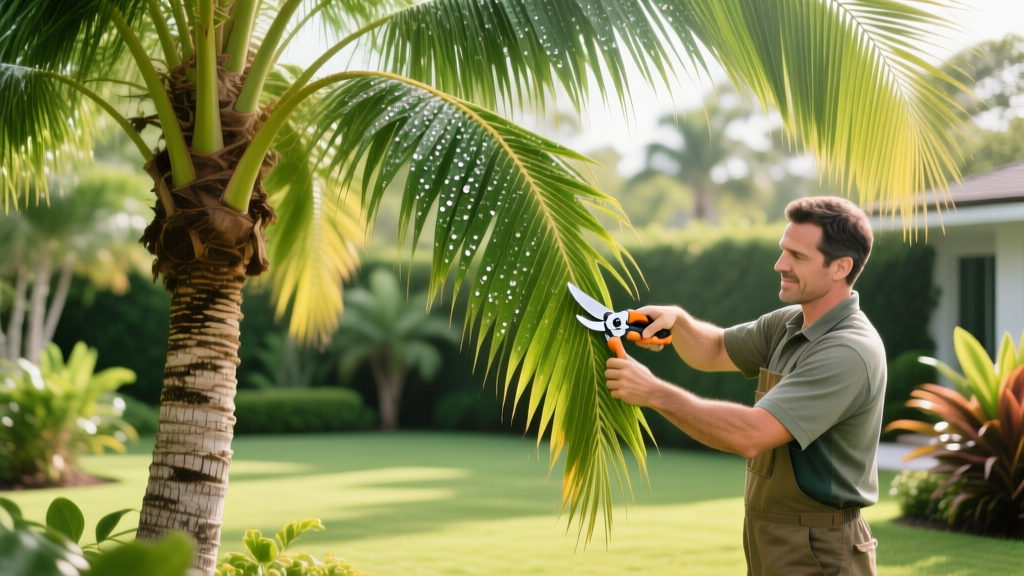
Outdoor Palm Tree Care: A Practical Step-by-Step Maintenance Guide
The Botanical Reality: Palms Are Monocots, Not True Trees
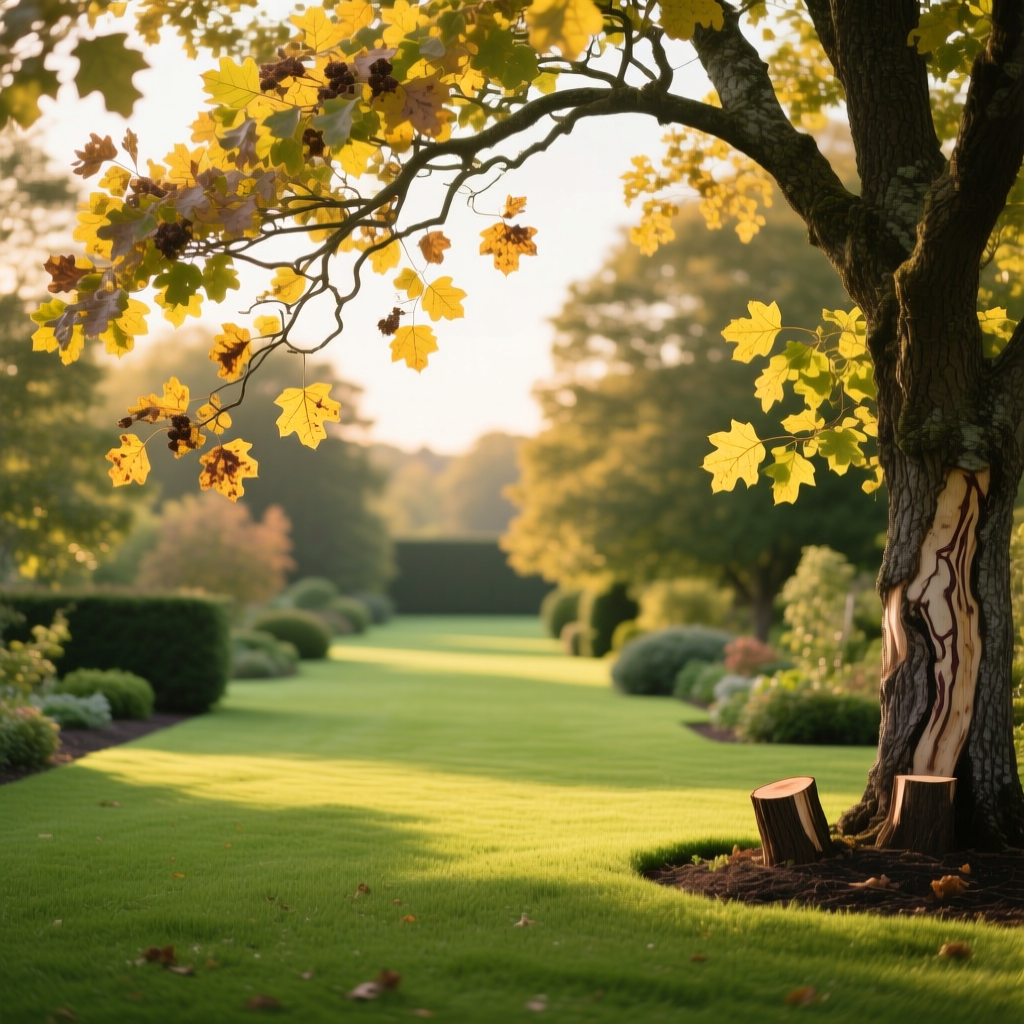
Before applying standard arboriculture practices to your landscape, you must understand a fundamental botanical distinction: palms are monocots, closely related to grasses and lilies, rather than dicot hardwood trees. They lack a vascular cambium, meaning their trunks cannot expand in girth to heal wounds, and they cannot compartmentalize decay like an oak or maple. This biological reality dictates every aspect of outdoor palm tree care, from pruning protocols to trunk protection. Misapplying hardwood tree care practices—such as painting pruning wounds or using standard 10-10-10 fertilizers—will rapidly decline your palm's health.
Warning: The 'Hurricane Cut' Myth
Never strip a palm down to a few upright fronds before storm season. This aggressive over-pruning, known as a 'hurricane cut,' starves the palm of essential potassium, weakens the trunk's structural integrity, and actually increases the likelihood of the crown snapping in high winds.
Never strip a palm down to a few upright fronds before storm season. This aggressive over-pruning, known as a 'hurricane cut,' starves the palm of essential potassium, weakens the trunk's structural integrity, and actually increases the likelihood of the crown snapping in high winds.
Precision Watering Schedules by Establishment Phase
Outdoor palms rely on a fibrous, adventitious root system that emerges from the base of the trunk (the root initiation zone). Unlike taproots, these roots require consistent moisture without waterlogging. The most critical failure point in outdoor palm tree care occurs during the first 120 days post-planting. Watering must be calculated by the trunk's caliper (diameter measured 6 inches above the soil line).
Establishment Watering Matrix
| Timeline Post-Planting | Frequency | Volume (per inch of trunk caliper) | Application Method |
|---|---|---|---|
| Weeks 1-2 | Daily | 10-15 gallons | Slow drip over root ball |
| Weeks 3-4 | Every other day | 10-15 gallons | Deep soak to 12-inch depth |
| Months 2-3 | Twice per week | 10 gallons | Expand zone 12 inches past root ball |
| Months 4-6 | Weekly (if no rain) | 8-10 gallons | Broad canopy drip-line watering |
According to the University of Florida IFAS Extension, allowing the top 2 inches of soil to dry out between waterings after month three encourages deeper root penetration and prevents Phytophthora root rot. If you are planting in heavy clay soil, reduce the volume by 20% but maintain the frequency to prevent anaerobic soil conditions.
Nutrient Management: The 8-2-12-4Mg Gold Standard
Standard lawn fertilizers are highly detrimental to palms. High nitrogen spikes rapid, weak frond growth while depleting soil potassium, leading to severe tip necrosis. For optimal outdoor palm tree care, you must use a specialized palm fertilizer with the exact N-P-K-Mg ratio of 8-2-12-4, fortified with micronutrients (specifically Manganese, Iron, Copper, Zinc, and Boron).
Application Rates and Timing
- Rate: Apply 1.5 pounds of 8-2-12-4Mg fertilizer per 100 square feet of canopy area.
- Frequency: Three times per year (Spring, Early Summer, Early Fall) in USDA Zones 9-11. Twice per year in Zone 8.
- Placement: Broadcast evenly from 1 foot away from the trunk out to the drip line. Never pile fertilizer against the trunk, as this will burn the root initiation zone.
Pro Tip: Correcting Iron Chlorosis
If your palm's newest fronds are emerging pale yellow or white while older fronds remain green, the soil pH is likely above 7.0, locking out iron. Standard iron sulfate will not work in alkaline soils. Apply a chelated iron product containing Fe-EDDHA (not Fe-EDTA) at a rate of 2 ounces per 10 gallons of water as a soil drench.
If your palm's newest fronds are emerging pale yellow or white while older fronds remain green, the soil pH is likely above 7.0, locking out iron. Standard iron sulfate will not work in alkaline soils. Apply a chelated iron product containing Fe-EDDHA (not Fe-EDTA) at a rate of 2 ounces per 10 gallons of water as a soil drench.
Pruning Protocols: The 9-to-3 Clock Rule
Palms draw nutrients from dying fronds to fuel new growth at the central bud. Prematurely removing green or partially yellow fronds creates a nutrient deficit that the palm will attempt to pull from its trunk, causing 'pencil-pointing' (a dangerous narrowing of the trunk). The Clemson University Home & Garden Information Center recommends the visual 'clock face' method for determining when a frond is safe to remove.
- Visualize a Clock: Imagine the palm trunk as the center of a clock face, with 12 o'clock pointing straight up.
- The Safe Zone: Only remove fronds that hang below the 9 o'clock and 3 o'clock horizontal lines. Fronds pointing upward or horizontally are still actively photosynthesizing and storing potassium.
- Flower Stalks: Seed pods and flower stalks can be removed at any time to redirect energy back into vegetative growth and prevent unwanted volunteer seedlings in your landscape beds.
Tool Sanitation is Non-Negotiable
Fusarium wilt and Ganoderma butt rot are fatal, soil-borne and wound-borne pathogens that spread rapidly via dirty pruning saws. Before moving from one palm to another, soak your pruning blades for 5 minutes in a 70% isopropyl alcohol solution or a commercial quaternary ammonium disinfectant (like Physan 20). Avoid using bleach, as sodium hypochlorite pits and corrodes the steel blades, creating microscopic grooves where fungal spores hide.
Cold Protection and Winterizing Strategies (Zones 8-9)
While species like the Windmill Palm (Trachycarpus fortunei) and Pindo Palm (Butia odorata) can survive dips into the teens, sudden freezes in late autumn before the palm has acclimated can destroy the central meristem (the spear). If the spear pulls out easily and smells foul, the palm has suffered fatal crown rot.
Step-by-Step Freeze Protection
- Mulching: Apply a 3-inch layer of pine bark mulch over the root zone in late November. Keep the mulch exactly 3 inches away from the trunk base to prevent moisture accumulation and fungal growth.
- Trunk Wrapping: For marginal species in Zone 8, wrap the lower 4 feet of the trunk with commercial grade burlap or specialized frost cloth (such as Agribon AG-50, which provides up to 8°F of frost protection). Secure with twine, never wire.
- Canopy Heating: During extreme polar vortex events, drape non-LED incandescent holiday lights (C7 or C9 bulbs) through the lower fronds and cover the entire canopy with a frost blanket. The incandescent bulbs generate enough ambient heat to keep the central bud above the critical 28°F threshold.
Troubleshooting Common Outdoor Palm Ailments
Diagnosing palm deficiencies requires observing where the symptoms appear on the canopy. Because palms are monocots, nutrient mobility dictates the visual symptoms.
| Deficiency / Disease | Visual Symptoms | Location on Canopy | Corrective Action |
|---|---|---|---|
| Potassium (K) | Yellow-orange translucent spots, brown necrotic tips | Oldest (lowest) fronds | Apply 8-2-12-4Mg palm special fertilizer |
| Magnesium (Mg) | Bright yellow banding along leaf margins, green center | Oldest (lowest) fronds | Apply Kieserite or Magnesium Sulfate |
| Manganese (Mn) | 'Frizzle top' - deformed, crinkled new growth, necrotic streaks | Newest (top) fronds | Foliar spray or soil drench of Manganese Sulfate |
| Ganoderma Butt Rot | Basal conk (shelf fungus) on lower trunk, wilting | Base of trunk | No cure. Remove palm and grind stump immediately. |
For comprehensive diagnostic resources and regional pest alerts, consult the Arbor Day Foundation's tree health database or your local county extension office. Proper outdoor palm tree care relies on proactive observation; catching a manganese deficiency when the spear is just emerging can save the palm's aesthetic form for the entire growing season, whereas waiting until the frond fully opens will leave permanent crinkling damage that cannot be reversed.