
Tree Care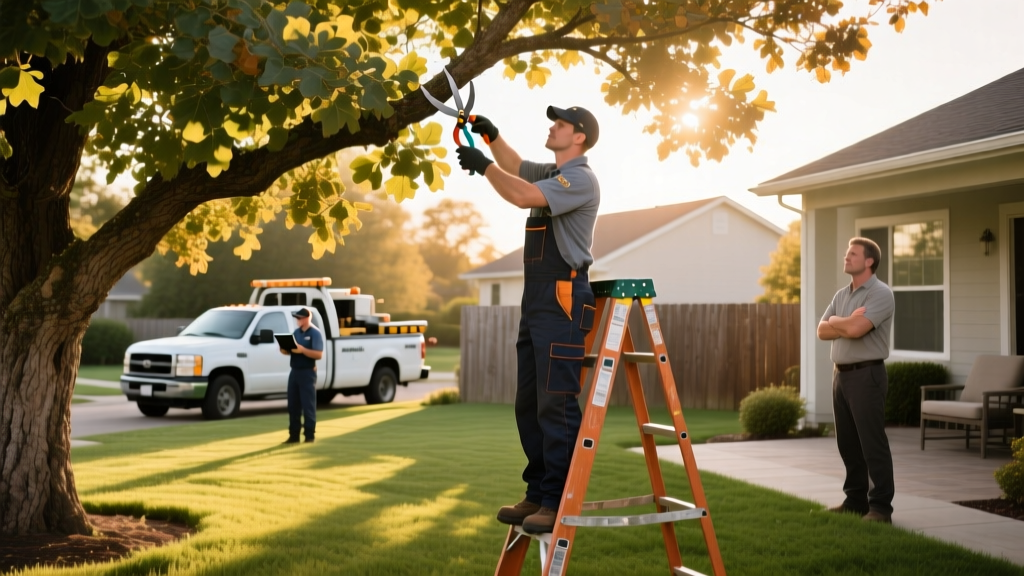
Who Is Responsible for Cutting Overhanging Tree Branches? Legal Guide
When a neighbor's tree grows beyond its boundaries, it quickly transitions from a minor landscaping quirk to a complex legal and arboricultural issue. If you are wondering who is responsible for cutting overhanging tree branches, the short answer is twofold: the property owner where the branches overhang has the legal right to trim them back to the property line, but that same property owner is generally responsible for footing the bill for routine maintenance.
However, boundary tree law is fraught with edge cases. Misjudging the property line, making improper pruning cuts, or inadvertently killing the tree can result in severe financial penalties under timber trespass laws. This guide breaks down the exact legal frameworks, arborist cost expectations, and ANSI A300 pruning standards you need to know before touching a single branch.
The Core Legal Principle: Trunk Location Dictates Ownership
In almost all U.S. jurisdictions, tree ownership is determined exclusively by the location of the trunk, not the canopy or the root system. This creates two distinct legal scenarios:
1. Encroaching Trees (Trunk on Neighbor's Land)
If the tree trunk sits entirely on your neighbor's property, they are the sole legal owner. You have the right to prune any branches or roots that cross the vertical plane of your property line. You do not need their permission to do so, provided you remain strictly on your side of the line and do not harm the tree's structural integrity.
2. Boundary Trees (Trunk on the Property Line)
If the trunk grows directly on the property line, the tree is considered "common property." Both neighbors are co-owners. In this scenario, neither party can prune, alter, or remove the tree without the explicit written consent of the other. Unilateral removal of a boundary tree is a severe legal violation.
Legal Maxim: "The right to trim encroaching branches does not include the right to cross the property line to do so, nor the right to prune in a manner that destroys the tree's value or health."
The "Timber Trespass" Trap: Why DIY Pruning is Risky
⚠️ WARNING: Timber Trespass and Treble Damages
If you or an unqualified handyperson cut branches past the property line, or make improper flush cuts that introduce decay and eventually kill the tree, you can be sued for "timber trespass" or "waste." According to FindLaw's real estate guidelines, many states impose treble (triple) damages for the unauthorized destruction of a neighbor's tree. A mature shade tree can have a replacement value appraised between $5,000 and $25,000, meaning a careless pruning job could result in a $75,000 liability.
To avoid this, all pruning must comply with ANSI A300 (Part 1) Pruning Standards. This means making directional cuts just outside the branch collar to allow the tree to compartmentalize the wound. Topping, lion-tailing, or flush-cutting encroaching branches violates these standards and opens you to negligence claims.
Cost Breakdown: Who Pays for Overhanging Branch Removal?
For routine maintenance (e.g., blocking sunlight, dropping leaves, minor encroachment), the neighbor who wants the branches trimmed pays for the work. The tree owner is under no legal obligation to fund the pruning of healthy, non-hazardous branches. Below is a breakdown of current market rates for professional boundary pruning.
| Service Required | Average Cost (2026) | Who Typically Pays? |
|---|---|---|
| ISA Arborist Consultation & Risk Assessment | $100 - $250 | Neighbor requesting the trim |
| Standard Branch Pruning (Up to 30ft, no crane) | $350 - $850 | Neighbor requesting the trim |
| Heavy Canopy Reduction (Requires aerial lift/crane) | $1,200 - $2,800 | Neighbor requesting the trim |
| Dead/Hazard Tree Removal (Documented risk) | $1,500 - $4,500+ | Tree Owner (or split 50/50) |
| Wood Chipping and Debris Hauling | $150 - $400 | Neighbor requesting the trim |
Step-by-Step: How to Legally and Safely Prune Neighbor's Branches
Do not grab a pole saw and start cutting. Follow this strict protocol to protect your property and your wallet.
- Verify the Exact Property Line: Do not rely on fences, hedges, or assumptions. Hire a licensed land surveyor to mark the exact boundary with stakes. The cost of a survey ($400-$800) is minor compared to a timber trespass lawsuit.
- Notify the Neighbor (Courtesy Step):strong> While legally unnecessary for healthy encroaching branches, informing your neighbor prevents police calls from confused residents who think their property is being vandalized.
- Hire an ISA Certified Arborist: Use the International Society of Arboriculture's search tool to find a credentialed professional. Ensure they carry both liability insurance and workers' compensation. If an uninsured worker falls off a ladder on your property, you could be liable for their medical bills.
- Execute the Pruning from Your Side: The arborist must use ladders, aerial lifts, or climbing gear positioned entirely on your property. They cannot step foot on the neighbor's land to make the cuts without explicit written permission.
- Dispose of the Debris Properly: You cannot legally dump the cut branches back onto the neighbor's property; in many municipalities, this is classified as illegal dumping. You must pay to have the wood chipped or hauled away.
When Can You Force the Tree Owner to Pay?
The financial responsibility shifts entirely if the tree poses a documented hazard. A tree is considered a hazard if it is dead, severely diseased (e.g., advanced Armillaria root rot), or structurally compromised (e.g., severe lean with soil heaving).
The Hazard Notification Framework
If you suspect the overhanging tree is a hazard, you must put the tree owner on formal notice. Follow these steps:
- Hire an ISA Certified Arborist with a Tree Risk Assessment Qualification (TRAQ) to inspect the tree.
- Obtain a written report stating the tree is an imminent hazard.
- Send the report to the tree owner via Certified Mail with a Return Receipt.
Once the neighbor receives this documented notice, they are legally obligated to mitigate the hazard. If they refuse, you can petition your local municipal code enforcement or a judge to order the removal. If the tree later falls and damages your home, the certified mail receipt proves the neighbor had "actual knowledge" of the defect, making them (and their homeowner's insurance) fully liable for all structural damages.
What If the Tree Falls? Liability and Insurance Rules
According to the Insurance Information Institute (III), liability for fallen trees depends heavily on the tree's health prior to the event.
| Scenario | Who Pays for Property Damage? | Who Pays for Tree Cleanup? |
|---|---|---|
| Healthy tree falls during a storm (Act of God) | Your own homeowner's insurance | Your own homeowner's insurance (up to policy limits, usually $500-$1,000) |
| Dead/diseased tree falls (Neighbor was notified) | Neighbor's homeowner's insurance (Liability) | Neighbor's homeowner's insurance |
| Tree falls but hits nothing (Fence, lawn, empty space) | N/A (No structural damage) | You (the property owner where it landed) |
Frequently Asked Questions
Can I keep the fruit from the overhanging branches?
No. Legally, the fruit belongs to the owner of the tree, even if the branch hangs entirely over your yard. Picking the fruit is technically considered theft. You must allow the fruit to drop naturally or ask the neighbor for permission to harvest it.
What about encroaching tree roots?
You have the right to cut roots up to the property line. However, cutting major structural roots (typically those over 2 inches in diameter) can destabilize the tree. If you sever critical roots and the tree subsequently falls onto the neighbor's house during a windstorm, you will be held financially liable for the damage. Always consult an arborist before pruning roots.
Can I sue my neighbor for leaves blowing into my yard?
No. Courts universally classify falling leaves, twigs, and natural debris as a "natural occurrence." It does not constitute a legal nuisance, and you cannot force the tree owner to pay for your yard cleanup or gutter maintenance.

