
Tree Care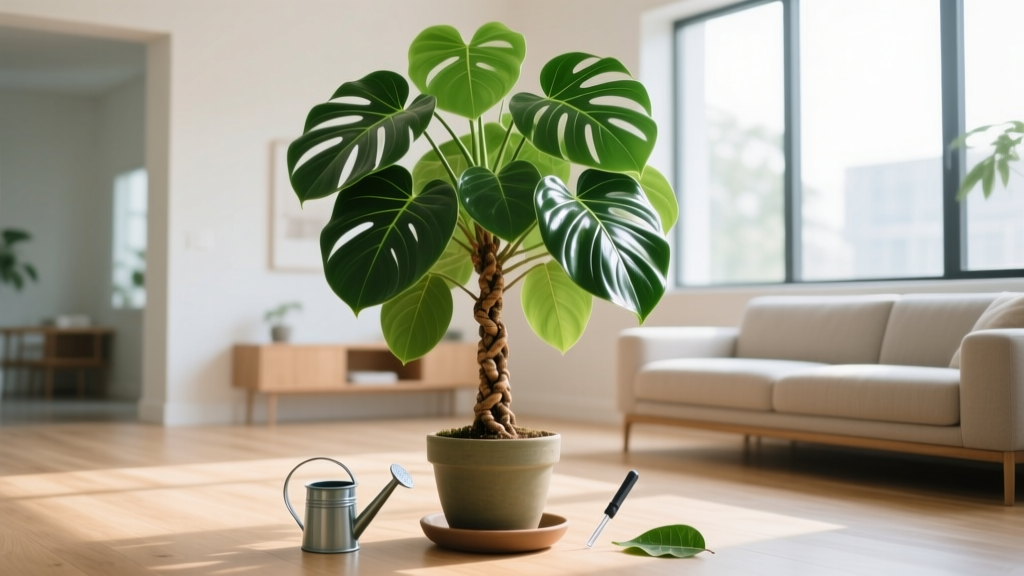
Indoor Money Tree Care: The Beginner's Survival Guide
The Pachira aquatica, universally marketed as the indoor money tree, is a staple in modern houseplant collections. Valued in Feng Shui for supposedly attracting positive energy and wealth, this Central and South American wetland native is surprisingly resilient. However, most beginner growers inadvertently kill their money trees within the first year due to a fundamental misunderstanding of its root system and the structural realities of its iconic braided trunk.
This guide strips away the myths and provides exact, actionable parameters for light, soil composition, watering weight-tests, and critical structural maintenance to ensure your Pachira aquatica thrives for decades.
The Ideal Indoor Environment: Light and Climate
Money trees are highly adaptable, but they do not thrive in dark corners. To maintain a dense, vibrant canopy and prevent leggy, etiolated growth, you must provide bright, indirect light. According to the University of Minnesota Extension, indoor plants requiring bright indirect light perform best in environments receiving 2,500 to 10,000 lux (roughly 250 to 1,000 foot-candles).
Placement Strategy
- East-facing windows: The absolute ideal location. Provides gentle morning sun and bright ambient light for the rest of the day.
- West-facing windows: Suitable, but you must diffuse the harsh afternoon sun with a sheer curtain to prevent leaf scorch (which manifests as bleached, crispy patches on the foliage).
- South-facing windows: Keep the tree 3 to 5 feet away from the glass, or use heavy diffusion.
- North-facing windows: Generally too dark. The tree will survive but will drop lower leaves and halt new growth.
Climate Parameters: Maintain ambient temperatures between 65°F and 80°F (18°C - 26°C). Money trees are highly sensitive to cold drafts. Keep them away from HVAC vents, drafty exterior doors, and single-pane windows in winter. Humidity should ideally hover between 40% and 60%; if your home drops below 30% in winter, use a nearby humidifier or a pebble tray.
Watering and Soil: Preventing Root Rot
The number one cause of death for Pachira aquatica is root rot triggered by suffocating, waterlogged soil. In their natural swampy habitats, money trees develop thick, bulbous trunks that store water, allowing them to survive seasonal dry spells. Overwatering negates this evolutionary adaptation.
The "Lift Test" Watering Method
Abandon calendar-based watering schedules (e.g., "water every Sunday"). Instead, use the weight test. Water your tree thoroughly until water runs freely from the drainage holes, then empty the catch saucer immediately. Lift the pot to memorize its heavy, saturated weight. Wait to water again until the pot feels remarkably light, and the top 3 inches of soil are completely bone-dry. For data-driven growers, a digital moisture meter should read between 1.0 and 2.0 (dry) before you water again. The Clemson University Home & Garden Information Center emphasizes that allowing the soil profile to dry significantly between waterings is critical for preventing fungal pathogens like Pythium and Phytophthora.
The Optimal Soil Recipe
Standard bagged potting soil retains too much moisture. Mix your own well-draining, aerated substrate using this exact ratio:
- 50% High-quality indoor potting mix (peat or coco-coir based)
- 25% Coarse perlite (prevents compaction and aids drainage)
- 25% Orchid bark or pumice (creates macro-pores for root oxygenation)
The Braided Trunk Trap: A Critical Warning
Most commercial money trees feature three to five individual trunks tightly braided together. While visually striking, this creates two massive horticultural hazards that beginners must address immediately upon bringing the plant home.
WARNING: Remove the Top Binding
Nurseries secure the top of the braid with a tight rubber band or wire to maintain the shape. As the tree's vascular cambium expands, this binding will girdle the trunks, cutting off the flow of phloem and xylem. This will inevitably kill the canopy above the binding. Use sterilized scissors to carefully snip and remove any rubber bands, zip-ties, or wires hidden at the top of the braid or buried just under the soil line.
Nurseries secure the top of the braid with a tight rubber band or wire to maintain the shape. As the tree's vascular cambium expands, this binding will girdle the trunks, cutting off the flow of phloem and xylem. This will inevitably kill the canopy above the binding. Use sterilized scissors to carefully snip and remove any rubber bands, zip-ties, or wires hidden at the top of the braid or buried just under the soil line.
Managing Dead Trunks in a Braid
Because multiple trees share a single small pot, they compete aggressively for root space and water. Frequently, one trunk will fail and die. Do not leave a dead trunk in the braid. The decaying wood will harbor fungal rot that will rapidly spread to the healthy, living trunks. Grip the dead trunk firmly at the soil line, gently twist, and pull it straight up and out of the braid. The remaining trunks will adjust, and the structural integrity of the braid will hold.
Fertilizing for Lush Canopy Growth
Money trees are moderate feeders. Over-fertilizing leads to salt buildup in the soil, which manifests as brown, crispy leaf margins. Use a balanced, water-soluble fertilizer diluted to half-strength during the active growing season.
| Season | Frequency | Fertilizer Type & NPK | Application Notes |
|---|---|---|---|
| Spring & Summer | Every 4 weeks | Balanced Liquid (e.g., 10-10-10 or 3-1-2) | Dilute to 50% of the manufacturer's recommended dose. Apply to damp soil, never dry. |
| Early Fall | Once in September | Low-Nitrogen / High-Potassium (e.g., 2-10-10) | Helps harden off the trunk and roots for the winter dormancy period. |
| Winter | None | N/A | Halt all feeding. The plant is in semi-dormancy and cannot process excess nutrients. |
Troubleshooting Common Money Tree Ailments
When your Pachira aquatica shows distress, use this diagnostic framework to identify the root cause before taking action.
Yellowing Leaves
- Lower leaves turning yellow and dropping: Normal senescence (aging) if only happening occasionally. If rapid, check for overwatering.
- Widespread yellowing with mushy stems: Advanced root rot. Unpot immediately, trim black/mushy roots with sterilized shears, and repot in fresh, dry soil.
- Yellowing with brown, crispy tips: Fluoride or salt toxicity. Switch to distilled or rainwater, and flush the soil heavily to leach out accumulated fertilizer salts.
Dropping Green Leaves
If healthy, green leaves are falling off, the tree is experiencing environmental shock. This is usually caused by a sudden drop in temperature, a cold draft from an AC vent, or moving the plant from a bright greenhouse to a dimly lit room too quickly. Stabilize the environment and avoid moving the plant while it acclimates.
Sticky Sap and Sooty Mold
This indicates a sap-sucking pest infestation, most commonly scale insects or spider mites. Inspect the undersides of the leaves and the crevices where the petioles meet the stem. Treat by wiping the foliage with a solution of 70% isopropyl alcohol and water, followed by an application of cold-pressed neem oil or insecticidal soap every 5 days until the pests are eradicated.
Repotting: When and How to Upgrade
Money trees actually prefer to be slightly root-bound. Repotting too frequently into oversized pots leads to excess soil holding water, triggering rot. Only repot when roots are visibly circling the bottom of the nursery pot or growing out of the drainage holes, typically every 2 to 3 years.
- Select the right pot: Choose a pot that is only 1 to 2 inches larger in diameter than the current one. Ensure it has at least one large drainage hole. Terracotta is highly recommended for beginners, as its porous walls wick away excess moisture.
- Prepare the base: Add a 1-inch layer of your custom soil mix to the bottom of the new pot.
- Extract gently: Tip the current pot sideways, support the base of the braided trunk with your fingers, and gently slide the root ball out. Never pull the tree by the canopy.
- Loosen the roots: Use your fingers or a sterilized hand fork to gently tease out the outer circling roots. This encourages them to grow outward into the new soil rather than strangling the root ball.
- Backfill and settle: Place the tree in the new pot and fill the gaps with your soil mix. Tamp down lightly to remove large air pockets, then water thoroughly to settle the soil around the roots.
Pet Safety and Final Considerations
"One of the greatest advantages of the Pachira aquatica in a household setting is its lack of toxicity, making it a stress-free choice for homes with curious pets."
Unlike many popular tropical houseplants (such as Monsteras or Pothos) that contain irritating calcium oxalate crystals, the money tree is entirely safe. The ASPCA lists the Pachira aquatica as non-toxic to both cats and dogs. While you still want to discourage pets from chewing on the foliage to prevent mechanical damage to the leaves and potential mild stomach upset from ingesting fibrous plant matter, you do not need to worry about systemic poisoning.
Mastering the indoor money tree comes down to restraint: restraint in watering, restraint in fertilizing, and restraint in repotting. By providing bright indirect light, a chunky, well-draining soil profile, and vigilantly monitoring the structural integrity of the braided trunk, your Pachira aquatica will remain a vibrant, architectural centerpiece in your home for years to come.

