
Tree Care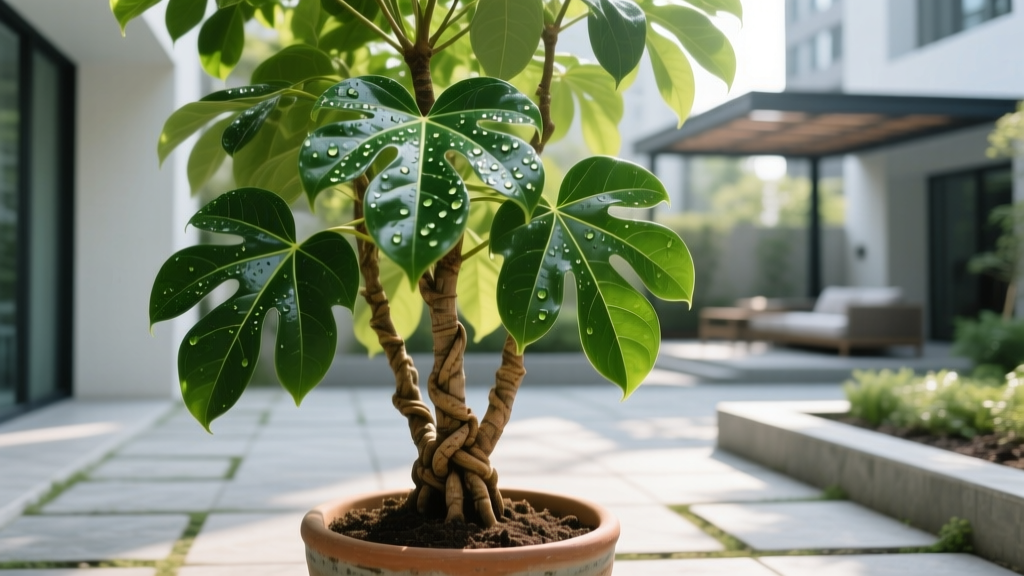
How to Take Care of a Money Tree: Complete Pachira Guide
Understanding Pachira Aquatica: Beyond the Braided Trunk
When homeowners ask how to take care of a money tree, they are usually referring to Pachira aquatica, a wetland tree native to the swamps and estuaries of Central and South America. While famously sold as a braided indoor houseplant, it is crucial to understand its botanical nature. According to the USDA Plants Database, Pachira aquatica is a true tree that can reach up to 30 feet tall in its natural habitat or in USDA Hardiness Zones 10 through 12. Indoors, its growth is restricted by pot size, typically capping at 6 to 8 feet.
Success with this species requires shifting your mindset from treating it as a delicate ornamental to managing it as a semi-aquatic tropical tree. The most common cause of death in cultivated money trees is not underwatering, but chronic soil saturation leading to Phytophthora root rot. This guide provides a precise, arboricultural framework for keeping your Pachira aquatica structurally sound and botanically thriving.
Quick Reference: Pachira Aquatica Baseline Metrics
- Optimal Light: 10,000 to 20,000 lux (bright, indirect)
- Temperature Range: 65°F to 80°F (18°C - 26°C)
- Soil pH: 6.0 to 7.5 (slightly acidic to neutral)
- Hardiness Zones: 10-12 (outdoors); Container-grown elsewhere
Soil Composition and Potting Mechanics
Commercial potting soils are often too dense for Pachira aquatica, retaining moisture long after the surface appears dry. To replicate its native swampy but oxygenated root environment, you must engineer a highly aerated substrate.
The Ideal Custom Soil Recipe
Mix the following components by volume to create a chunky, fast-draining medium that prevents anaerobic bacterial growth:
- 50% High-Quality Potting Base: Use a peat-free or coco coir-based mix (e.g., FoxFarm Ocean Forest or a generic coco coir brick rehydrated to a crumbly texture).
- 25% Pumice or Perlite: Pumice is preferred over perlite as it does not float to the top during watering and provides permanent aeration. Use 1/4-inch to 3/8-inch particle sizes.
- 25% Pine Bark Fines or Orchid Bark: This introduces macro-pores, allowing water to flow rapidly through the pot while giving roots a rigid structure to anchor against.
When repotting, always select a container with at least one large drainage hole. The new pot should be no more than 2 inches wider in diameter than the current root ball. Oversized pots hold excess soil volume that stays wet, creating a massive risk for root rot.
Watering Protocols and Root Rot Prevention
The question of how often to water a money tree is a trap; you must water based on soil moisture depletion, not a calendar schedule. Pachira aquatica features a thickened, water-storing trunk base (caudex). It is highly drought-tolerant but highly susceptible to suffocation in waterlogged soil.
The 'Lift and Probe' Watering Framework
- The Lift Test: Lift the pot. A dry money tree pot feels significantly lighter than a saturated one. Train your arm to recognize the weight difference.
- The Probe Verification: Insert a wooden dowel or a dedicated moisture meter (like the $12 XLUX Soil Moisture Meter) at least 4 inches deep into the soil, near the center of the root ball.
- The Threshold: Only water when the probe comes out completely dry, or the moisture meter reads in the 'Dry' zone (usually a 1 or 2 on a 1-10 scale).
- The Drench: Water heavily until 20% of the total water volume exits the drainage holes. This flushes out accumulated mineral salts from fertilizers and tap water.
- The Drain: Never let the pot sit in a saucer of standing water. Elevate the pot on pot feet or pebbles to ensure unrestricted airflow to the drainage hole.
Pruning, Braiding, and Structural Maintenance
The iconic braided trunk of a commercial money tree is an artificial construct. The braiding is performed when the stems are young, green, and highly flexible. As the tree matures, these stems lignify (turn woody and brown).
Warning: The Girdling Hazard
If you purchase a young money tree with a tight braid bound by rubber bands or wire, you must remove those bindings immediately. As the trunk expands in girth, bindings will girdle the vascular cambium, cutting off the flow of water and nutrients, eventually killing the upper canopy. If a braid becomes too tight naturally, carefully snip the offending stem at the base to save the remaining trunks.
If you purchase a young money tree with a tight braid bound by rubber bands or wire, you must remove those bindings immediately. As the trunk expands in girth, bindings will girdle the vascular cambium, cutting off the flow of water and nutrients, eventually killing the upper canopy. If a braid becomes too tight naturally, carefully snip the offending stem at the base to save the remaining trunks.
Canopy Pruning Guidelines
Pruning is necessary to maintain a compact shape and encourage lateral branching. According to guidelines on tropical tree maintenance from the University of Florida IFAS Extension, proper cut placement is vital for healing.
| Scenario | Action Required | Tool & Technique |
|---|---|---|
| Leggy, elongated stems | Hard prune to force lateral buds | Bypass pruners; cut at a 45-degree angle, 1/4 inch above a leaf node. |
| Yellowing or necrotic leaves | Selective leaf removal | Micro-snips; cut the petiole (leaf stem) halfway down, allowing the rest to dry and drop naturally. |
| Dead or rubbing branches | Structural thinning | Pruning saw or heavy loppers; cut flush to the branch collar without leaving a stub. |
Fertilization Schedule and Nutrient Deficiencies
Money trees are light feeders. Over-fertilizing leads to rapid, weak, 'leggy' growth that cannot support its own weight, alongside toxic salt buildup in the soil.
The Recommended Regimen: Use a balanced, water-soluble fertilizer with a slightly higher phosphorus content to support root health and trunk thickening. Dyna-Gro 7-9-5 Foliage Pro (priced around $18 for a 16oz bottle in 2026) is an excellent choice as it contains all 16 essential macro and micro-nutrients, including calcium and magnesium, which are often missing in cheaper brands.
- Spring and Summer (Active Growth): Apply at half-strength (1/4 teaspoon per gallon of water) every time you water, or at full strength once a month.
- Fall and Winter (Dormancy): Cease fertilization entirely. The tree's metabolic rate slows, and unused nutrients will accumulate in the soil, causing root burn.
Diagnosing Nutrient Issues
If the older, lower leaves turn uniformly yellow and drop, you likely have a nitrogen deficiency. If the leaf margins turn brown and crispy while the center remains green, suspect potassium deficiency or, more commonly, fertilizer burn from salt accumulation. Flush the soil with distilled water for 5 minutes to leach out excess salts if burn is suspected.
Pest Management and Disease Troubleshooting
Indoor money trees are primarily targeted by sap-sucking insects that exploit the plant's soft new growth.
- Spider Mites (Tetranychus urticae): Identify by fine, silky webbing at the leaf joints and pale stippling on the leaf surface. Treat by wiping leaves with a damp cloth, followed by a foliar spray of 1% to 2% cold-pressed neem oil (such as Bonide Neem Oil, ~$14). Apply at dusk to prevent phototoxicity (leaf burn from sunlight reacting with the oil).
- Mealybugs: Look for white, cottony masses in the leaf axils. Dip a cotton swab in 70% isopropyl alcohol and physically remove the colonies. Follow up with an insecticidal soap spray to kill hidden nymphs.
- Edema: Not a pest, but a physiological disorder where the roots take up water faster than the leaves can transpire it, causing corky, brown blisters on the leaves. Fix by increasing ambient air circulation with an oscillating fan and reducing watering frequency.
Frequently Asked Questions
Is the money tree toxic to pets?
No. The ASPCA lists Pachira aquatica as non-toxic to both cats and dogs. However, ingestion of large quantities of the fibrous leaves can still cause mild gastrointestinal upset or vomiting due to the physical irritation of the plant matter.
Why is my money tree dropping green leaves?
Sudden drop of healthy, green leaves is almost always an environmental shock response. The most common culprits are a sudden change in light exposure (moving it away from a window), exposure to cold drafts from HVAC vents, or a drastic shift in watering habits. Identify the recent change and stabilize the environment; the tree will acclimate and produce new foliage within 4 to 6 weeks.

