
Tree Care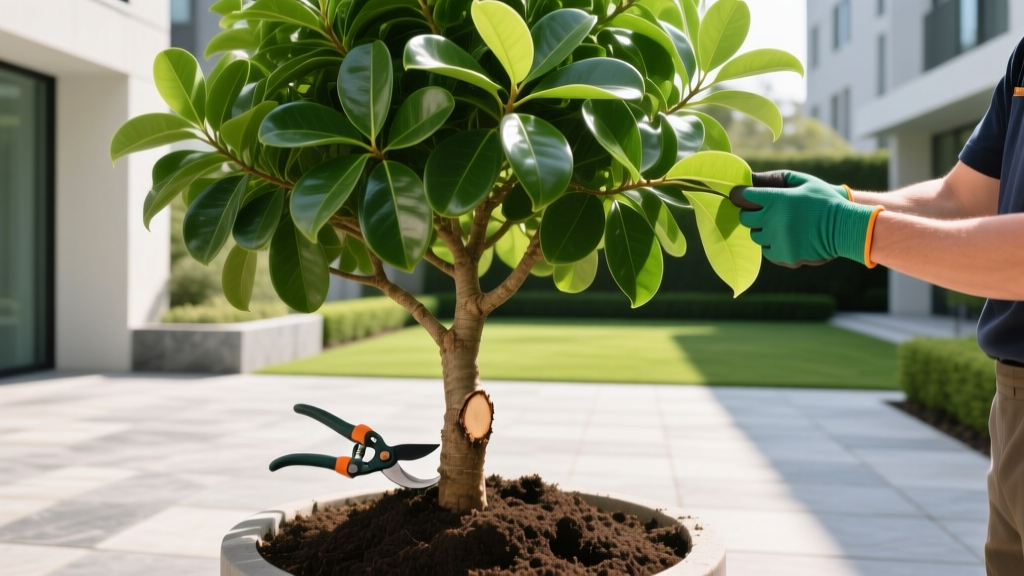
Mastering Money Tree Maintenance: Watering, Soil & Pruning Guide
Pachira aquatica, universally known as the money tree, is a resilient wetland species native to the swamps of Central and South America. While commercial nurseries typically sell them as small, braided indoor novelties, these trees can reach 8 feet indoors and up to 60 feet in their natural USDA Zones 10-12 habitats. Successful money tree maintenance requires abandoning the 'set it and forget it' approach in favor of a proactive, data-driven care routine tailored to its semi-aquatic origins.
The Core Money Tree Maintenance Matrix
Money trees undergo distinct metabolic shifts throughout the year. Adjusting your care parameters based on seasonal light and temperature fluctuations prevents the most common failure modes: winter root rot and summer desiccation. Use the matrix below as your baseline schedule.
| Season | Light Target (Lux) | Watering Trigger | Fertilizer Dose |
|---|---|---|---|
| Spring / Summer | 2,000 - 3,000 | Top 3 inches dry | 1/2 strength 20-20-20 bi-weekly |
| Fall | 1,500 - 2,500 | Top 4 inches dry | 1/4 strength monthly |
| Winter | 1,500 - 2,000 | Top 5 inches dry | Pause completely |
According to the University of Florida IFAS Extension, Pachira aquatica thrives in bright, indirect light. Direct southern exposure exceeding 4,000 lux will cause rapid leaf scorch, manifesting as bleached, papery patches on the canopy.
Precision Watering & Humidity Protocols
Despite their swampy origins, indoor money trees are highly susceptible to suffocation in standard potting setups. The goal is to simulate a heavy tropical downpour followed by rapid drainage.
The 'Soak and Dry' Method
- Measure: Insert a calibrated moisture meter (such as the XLUX Soil Moisture Meter) 4 inches into the soil. Only water when the reading drops to 2 or 3 (dry).
- Saturate: Apply room-temperature filtered or rainwater until 20% of the total volume exits the drainage holes. Avoid using hard tap water, as fluoride and chlorine accumulation causes tip burn.
- Evacuate: Never let the pot sit in a saucer of standing water. Elevate the pot on pebbles or use a self-draining cache pot to ensure the root crown remains dry.
⚠️ Root Rot Warning: If the soil remains wet for more than 5 days, anaerobic bacteria will attack the root system. Flush the soil every 4 months using 2x the pot's volume of distilled water to leach out accumulated mineral salts that impede water uptake.
Humidity Management
While money trees tolerate standard indoor humidity (30-40%), they perform optimally at 50% or higher. During winter, when forced-air heating drops indoor humidity below 20%, utilize an ultrasonic humidifier (like the Levoit Dual 150) placed 3 feet from the canopy. Misting is ineffective and promotes fungal foliar diseases like powdery mildew.
Custom Soil Blends & Fertilizer Regimens
Commercial 'cactus and succulent' mixes are often too dense and peat-heavy for a mature money tree, retaining moisture long after the surface appears dry. Formulating a custom aroid-style blend ensures optimal oxygenation to the taproot.
The Ideal Pachira Soil Recipe
- 40% Coco Coir: Provides a stable, pH-neutral base that resists compaction better than sphagnum peat moss.
- 30% Pumice or #3 Perlite: Creates macro-pores for rapid drainage and root aeration.
- 20% Fine Orchid Bark: Introduces organic structure and mimics the forest floor environment.
- 10% Worm Castings: Supplies slow-release micronutrients and beneficial microbes.
Cost Analysis: Mixing a 5-gallon batch of this custom blend costs approximately $35, enough to repot three 10-inch nursery pots.
Fertilizer Strategy
Money trees are light feeders. Over-fertilization leads to weak, leggy growth and fertilizer burn. Use a balanced, water-soluble fertilizer like Jack's Classic 20-20-20 at one-quarter the recommended label strength during the active growing season. Alternatively, top-dress the soil in early spring with 2 tablespoons of Osmocote Plus 15-9-12 slow-release granules, which will feed the tree steadily for up to 6 months without the risk of salt spikes.
Structural Pruning & Braid Management
The iconic braided trunk is the defining feature of most retail money trees, but it introduces a hidden, fatal flaw in long-term money tree maintenance.
Removing the Girdling Threat
Nurseries bind the base of the braided trunks with thick rubber bands or wire to hold the stems together while they fuse. As the tree's vascular cambium expands, these bindings act as a tourniquet, girdling the tree and cutting off the phloem. Within 12 to 18 months of purchase, you must carefully slice and remove any hidden bands at the soil line using a sterilized utility knife. If the trunks have already fused, leave them be; if they are loose, tie them gently with soft horticultural tape that degrades over time.
Canopy Pruning Techniques
To maintain a dense, umbrella-like canopy, prune leggy branches back to a node (the bump where a leaf stem meets the branch). Use sterilized bypass pruners and make a clean 45-degree cut exactly 1/4 inch above the node. This forces the tree to break dormancy at the lateral buds, resulting in two new branches instead of one elongated stem.
Troubleshooting Decision Tree
When your money tree exhibits distress signals, use this diagnostic framework to identify the root cause and apply the correct intervention.
Symptom: Lower leaves turning yellow and dropping, accompanied by a soft, mushy stem base.
Diagnosis: Advanced Overwatering / Root Rot.
Action: Immediately unpot the tree. Trim away all black, mushy roots with sterilized scissors. Soak the remaining healthy roots in a solution of 1 part 3% hydrogen peroxide to 4 parts water for 15 minutes to kill fungal pathogens. Repot in the custom dry soil blend and withhold water for 7 days.
Symptom: Crispy, brown leaf edges with inward curling; soil pulls away from the pot edges.
Diagnosis: Severe Underwatering / Low Humidity.
Action: Submerge the entire plastic nursery pot in a basin of room-temperature water for 45 minutes to force-hydrate the hydrophobic soil. Move the plant away from HVAC vents and increase ambient humidity.
Symptom: Sticky residue (honeydew) on leaves, fine webbing near the petioles, and stippled yellow foliage.
Diagnosis: Spider Mites or Scale Insects.
Action: Wipe the foliage down with 70% isopropyl alcohol to physically remove pests. Follow up with a foliar spray of Bonide Neem Oil at a 2% dilution rate. Apply every 7 days for three consecutive cycles to break the reproductive lifecycle.
By adhering to these precise environmental controls and maintenance protocols, your Pachira aquatica will transition from a fragile novelty into a robust, long-lived architectural centerpiece. For households with pets, it is worth noting that the ASPCA lists the money tree as non-toxic to cats and dogs, making it a safe choice for indoor environments.

