
Tree Care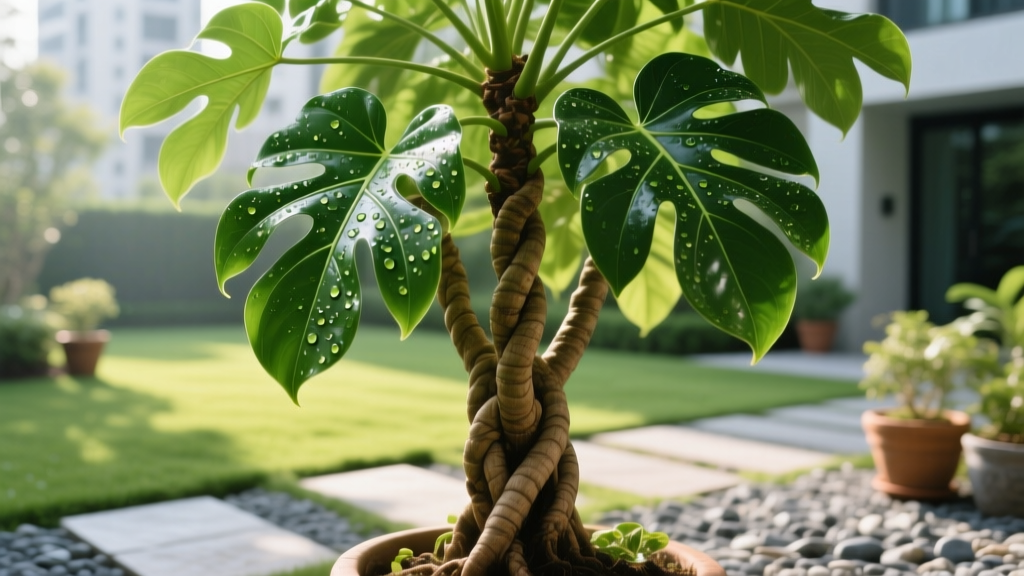
How to Grow a Money Tree: Pachira Aquatica Planting Guide
Botanical Clarification: Identifying the True Money Tree
Before initiating the planting process, it is critical to verify the species you are establishing. In the North American horticultural market, the common name "money tree" almost exclusively refers to Pachira aquatica, a tropical wetland tree native to Central and South America characterized by its braided trunk and palmate, umbrella-like leaves. However, some retailers mistakenly label Crassula ovata (Jade Plant) or Lunaria annua (Money Plant) under the same moniker. This guide specifically addresses the planting, soil engineering, and establishment protocols for Pachira aquatica. According to the Royal Horticultural Society (RHS), Pachira aquatica thrives in bright, indirect light and requires a highly aerated substrate to prevent the root asphyxiation common in heavy indoor soils.
Specimen Selection and Nursery Pitfalls
Most commercially available money trees are sold with intricately braided trunks. While aesthetically pleasing, this nursery practice introduces specific establishment risks. When selecting a specimen, inspect the soil line closely. Many commercial growers bury the base of the braid several inches below the soil surface to stabilize the plant during transit. This traps moisture against the bark, inevitably leading to "braid rot" and stem girdling within 6 to 12 months of purchase.
Inspection Protocol: Gently scrape away the top inch of soil at the base of the trunk. If the braided section is buried, you must carefully excavate the soil down to the true root flare (where the trunk transitions into roots) during the repotting process. The bark must remain exposed to ambient air to prevent fungal pathogens like Phytophthora from invading the cambium layer.
Additionally, check the firmness of the trunk. A healthy Pachira trunk should feel rigid, similar to a mature woody branch. If the trunk yields to gentle pressure or feels spongy, the plant is already suffering from advanced root or stem rot and will fail to establish.
Engineering the Ideal Soil Matrix
Pachira aquatica is a wetland species in its natural habitat, but in a containerized indoor environment, it is highly susceptible to hypoxia (oxygen deprivation) in the root zone. Standard peat-heavy potting soils retain too much moisture and compact over time, suffocating the roots. You must engineer a chunky, fast-draining aroid-style mix.
| Component | Ratio | Function & Specifications |
|---|---|---|
| Peat-Free Potting Base | 50% | Provides baseline structure and minimal nutrient retention. Avoid heavy peat moss which becomes hydrophobic when dry. |
| Coarse Perlite (#3 or #4) | 25% | Creates macro-pores for rapid water drainage and oxygen diffusion to the root hairs. |
| Pine Bark Fines (Orchid Bark) | 25% | Prevents soil compaction, adds slight acidity (pH 5.5-6.5), and mimics natural forest floor debris. |
Mix these components thoroughly in a galvanized tub before planting. The resulting matrix should feel loose and chunky; if you squeeze a handful of the moistened mix, it should hold together briefly but crumble immediately when poked.
Step-by-Step Planting and Establishment Protocol
Proper planting technique dictates the long-term vigor of your money tree. Follow these exact steps to transition your plant from its nursery pot to its permanent container.
- Container Selection: Choose a pot that is exactly 2 inches wider in diameter than the current root ball. Oversized pots hold excess soil volume that stays wet and triggers root rot. Ensure the pot has at least one unobstructed drainage hole. Unglazed terracotta is highly recommended as its porous walls wick excess moisture away from the soil core.
- Root Teasing: Gently remove the plant from its nursery pot. If the roots are circling the perimeter (root-bound), use sterilized pruning shears to make three vertical, 1-inch deep slits down the sides of the root ball. This stimulates lateral root growth into the new substrate.
- Base Layering: Place a single piece of fiberglass window screen over the drainage hole to prevent soil washout. Do not add a layer of gravel or rocks at the bottom; this creates a perched water table, artificially raising the saturation level closer to the roots.
- Positioning: Add 2 inches of your custom soil matrix to the bottom. Set the root ball in the center. Ensure the root flare sits exactly 1 inch below the rim of the pot. Fill in the sides, tamping the soil gently with a wooden dowel to eliminate large air pockets without compacting the perlite.
- Initial Hydration: Water the plant thoroughly until water flows freely from the drainage hole. This "waters in" the soil, collapsing microscopic air gaps and ensuring direct contact between the roots and the new substrate.
Environmental Acclimation and Light Parameters
Pachira aquatica requires bright, indirect light to maintain its dense canopy. Direct, unfiltered midday sun will scorch the leaves, causing irreversible chlorotic bleaching and necrotic spotting. However, placing the tree in a low-light corner will result in etiolation (stretching) and rapid leaf drop.
Position the tree near an east-facing window, or 3 to 5 feet back from a south/west-facing window where it receives dappled light. When moving a newly purchased money tree from a low-light retail environment to a brighter home environment, acclimate it gradually over 14 days. Move it 1 foot closer to the light source every three days to allow the leaf cuticle to thicken and adapt to higher UV exposure.
Nutrient Management During Establishment
Do not fertilize a newly planted money tree for the first 60 days. The fresh potting mix contains sufficient baseline nutrients, and the roots need time to heal from transplant shock. Fertilizing too early can burn tender new root tips via osmotic stress.
After 60 days, initiate a diluted feeding schedule. Use a balanced, urea-free liquid fertilizer such as Dyna-Gro 7-9-5 Foliage-Pro or Jack's Classic 20-20-20. Dilute the fertilizer to 25% of the manufacturer's recommended strength and apply it only when the soil is already slightly moist. Never apply liquid fertilizer to a bone-dry root ball, as the sudden salt concentration will cause immediate root desiccation.
Troubleshooting Early Establishment Failures
Even with meticulous planting, environmental variables can cause stress. Use this diagnostic framework to identify and correct issues during the first three months of establishment.
- Lower Leaves Turning Yellow and Dropping: If the yellowing is uniform and the soil is wet, you are overwatering. Halt watering immediately and place the pot in a warmer area with increased airflow. If the soil is dry and the plant was recently moved, this is normal transplant acclimation drop; the tree is shedding older foliage to conserve energy for new root growth.
- Mushy, Blackened Trunk Base: This indicates advanced stem rot, usually caused by burying the braided trunk. If caught early, excavate the soil to expose the trunk, treat the area with a copper-based fungicide, and allow the soil to dry out completely. If the trunk is entirely soft, the plant cannot be saved.
- Crispy, Brown Leaf Margins: This is rarely a watering issue; it is typically caused by low ambient humidity or fluoride toxicity from tap water. Pachira aquatica is sensitive to fluoride. Switch to distilled, rainwater, or reverse-osmosis water, and increase local humidity to 40-50% using a nearby humidifier.
Pet Safety and Toxicity
For households with dogs or cats, plant selection requires careful consideration of toxicity. According to the ASPCA Animal Poison Control Center, the Pachira aquatica money tree is officially classified as non-toxic to both cats and dogs. While ingestion of large quantities of leaves may cause mild gastrointestinal upset due to the physical irritation of plant fibers, it does not contain the dangerous calcium oxalate crystals or cardiac glycosides found in many other common houseplants.
By adhering to these precise soil, planting, and environmental protocols, your Pachira aquatica will bypass the common nursery-induced decline and establish a robust root system capable of supporting vigorous, long-term growth.

