
Tree Care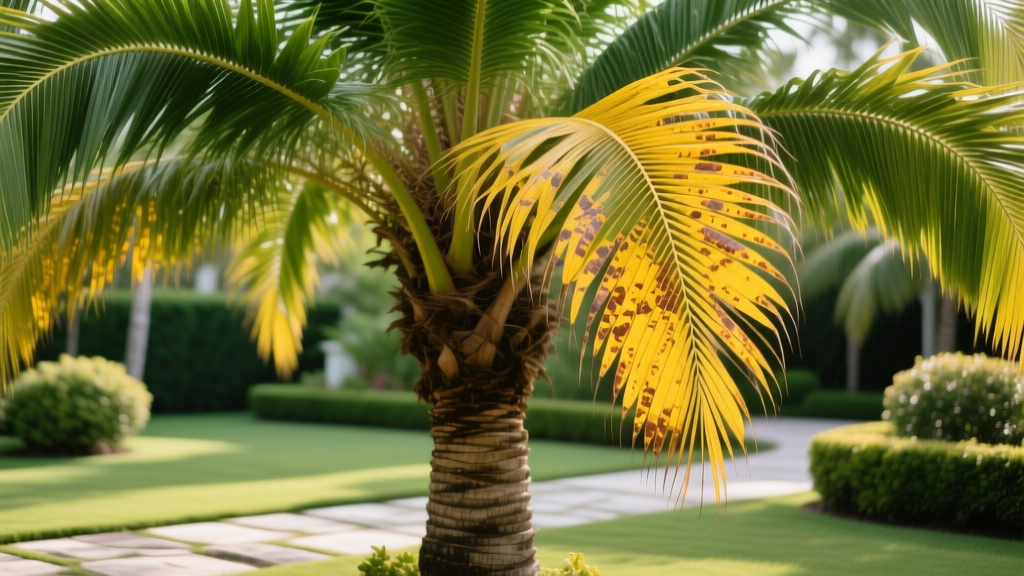
Palm Tree Care: Diagnosing Yellow Fronds and Nutrient Deficiencies
The Diagnostic Approach to Palm Tree Care
Yellowing fronds, stunted crowns, and decaying trunks in palms are rarely random occurrences; they are specific physiological responses to environmental stress, nutritional imbalances, or vascular pathogens. Effective palm tree care requires moving beyond generic 'palm food' applications and adopting a clinical diagnostic mindset. Unlike broadleaf trees, palms are monocots with a single terminal growing point (the meristem). If this bud is compromised by disease or severe deficiency, the tree cannot regenerate, making early and accurate diagnosis critical.
This guide provides a structured framework for identifying the most common palm ailments, detailing the exact chemical interventions, application rates, and economic thresholds for professional removal.
Decoding Frond Discoloration: A Nutrient Deficiency Matrix
Nutrient deficiencies are the most frequent cause of chlorosis (yellowing) in palms. Because palms translocate mobile nutrients from older leaves to support new growth, the location of the symptoms on the canopy dictates the diagnosis. Below is a diagnostic matrix based on research from the University of Florida IFAS Extension.
| Nutrient | Mobility | Visual Symptoms | Specific Intervention & Product |
|---|---|---|---|
| Potassium (K) | Mobile | Older (lower) fronds develop translucent yellow-orange spotting, progressing to necrotic (dead) margins and tip dieback. | Apply controlled-release 8-2-12-4 palm fertilizer. Rate: 1.5 lbs per 100 sq ft of canopy area. |
| Magnesium (Mg) | Mobile | Older fronds show broad, bright yellow bands along the outer margins while the center of the leaf remains distinctly green. | Soil drench with Magnesium Sulfate (Epsom salts) or apply Kieserite. Rate: 2 to 4 lbs per tree, broadcast under canopy. |
| Manganese (Mn) | Immobile | Newest fronds emerge stunted, chlorotic, and with necrotic streaking—a condition known as 'frizzle top'. Leaf size is reduced. | Foliar spray or soil apply Manganese Sulfate (32% concentration). Do not use Manganese Oxide, which is insoluble. |
| Iron (Fe) | Immobile | New growth emerges uniformly pale green to yellow. Usually caused by poor drainage or high soil pH (alkaline soils) locking up iron. | Apply chelated iron, specifically Fe-EDDHA (effective in high pH soils up to 9.0). Avoid Fe-EDTA in alkaline conditions. |
CRITICAL WARNING: Avoid Fertilizer Spikes
Never hammer concentrated fertilizer spikes directly into a palm trunk or the immediate root zone. Palms lack the secondary growth (cambium layer) to compartmentalize wounds. Driving spikes into the trunk causes permanent vascular damage and creates entry points for lethal fungal pathogens. Always broadcast granular fertilizers evenly across the soil surface under the drip line.
Never hammer concentrated fertilizer spikes directly into a palm trunk or the immediate root zone. Palms lack the secondary growth (cambium layer) to compartmentalize wounds. Driving spikes into the trunk causes permanent vascular damage and creates entry points for lethal fungal pathogens. Always broadcast granular fertilizers evenly across the soil surface under the drip line.
Infectious Diseases: When to Treat vs. When to Remove
When nutritional corrections fail to halt canopy decline, suspect a vascular or trunk-infecting pathogen. Distinguishing between treatable fungal issues and lethal diseases dictates whether you spend $50 on a fungicide or $800 on a crane removal.
Lethal Yellowing and Phytoplasma Infections
Lethal Yellowing (LY) typically begins with the premature dropping of fruit, followed by the blackening of the flower stalk (inflorescence), and finally, a uniform yellowing that starts in the lower canopy and spirals upward. There is no cure for LY once the canopy shows symptoms. The only management strategy for susceptible species (like Coconut and Christmas palms) in endemic zones is preventative trunk injections of Oxytetracycline hydrochloride (Tree-saver), administered every four months by a licensed applicator at a cost of $45 to $85 per injection.
Fusarium Wilt
Fusarium Wilt presents asymmetrically: one side of an individual frond turns brown and dies while the other side remains green. It is highly contagious and spreads via contaminated pruning tools. Action: Remove the tree. Do not attempt to cure it. Sterilize all chainsaws and hand saws with a 25% bleach solution or 70% isopropyl alcohol for 10 minutes before touching any other palm.
Ganoderma Butt Rot: The Unsalvageable Threat
Ganoderma zonatum is a devastating wood-decaying fungus. According to the UF/IFAS Plant Diagnostic Network, it destroys the lower 4 to 5 feet of the trunk from the inside out. External symptoms include a general decline, wilting, and a reduced growth rate, but the definitive sign is the emergence of a 'conk'—a hard, shelf-like, reddish-brown fungal growth at the base of the trunk.
IMMEDIATE ACTION REQUIRED: Ganoderma Protocol
- Do not wait for the tree to fall. Once a conk appears, the structural integrity of the trunk is severely compromised. The tree is a falling hazard.
- Hire an ISA Certified Arborist for removal. Standard lawn crews often lack the rigging equipment to safely drop a top-heavy, hollowed-out palm.
- Stump Grinding & Soil: Grind the stump to at least 12 inches below grade. The Ganoderma fungus survives in the root mass. Do not plant another palm in the exact same location for at least 2 to 3 years to prevent immediate reinfection of the new root system.
Correcting Irrigation and Root Asphyxiation
Overwatering is a silent killer in palm tree care, often misdiagnosed as a nutrient deficiency. Palms planted in turfgrass environments are highly vulnerable because lawn irrigation schedules (frequent, shallow watering of 10-15 minutes daily) asphyxiate palm roots, which require deep, infrequent moisture cycles.
The Deep-Soak Protocol:
- Established Palms: Water deeply 1 to 2 times per week, applying enough water to penetrate 18 to 24 inches into the soil profile.
- Verification: Use a professional-grade soil moisture meter (such as the XLUX T10 Soil Moisture Sensor, approx. $15) inserted 12 inches deep near the root initiation zone. The soil should dry out to a reading of '3' (dry) before the next irrigation cycle.
- Drainage Fix: If your soil is heavy clay and retains water for more than 24 hours post-irrigation, install a French drain or vertical mulch columns (drilling 2-inch wide holes 24 inches deep around the drip line and filling them with pea gravel) to introduce oxygen to the root zone.
The 8-2-12-4 Fertilizer Protocol for Preventative Care
Preventative palm tree care relies on a specific NPK ratio designed to counteract the leaching effects of sandy soils common in coastal and southern regions. The industry gold standard is an 8-2-12-4 (Nitrogen-Phosphorus-Potassium-Magnesium) controlled-release fertilizer, often supplemented with minor elements (Manganese, Iron, Zinc, Copper, Boron).
Application Rules for 2026 Pricing and Products:
- Product Selection: Look for brands like Lesco Palm Fertilizer or Carl Pool Palm Food. Ensure the potassium and nitrogen sources are polymer-coated or sulfur-coated for slow release over 3 months. Expect to pay between $55 and $75 for a 50 lb bag in the current market.
- Timing: Apply three times a year: early spring (March), early summer (June), and early fall (September). Never fertilize palms in late fall or winter, as pushing new growth before a freeze guarantees severe cold damage.
- Placement: Broadcast the granules evenly starting 6 inches away from the trunk and extending 1 foot past the outermost frond drip line. Palms have a wide, shallow root initiation zone; concentrating fertilizer near the trunk is useless and risks root burn.
Cost Guide: DIY Treatments vs. Professional Arborist Intervention
Knowing when to deploy your own resources versus hiring an ISA Certified Arborist saves money and prevents catastrophic property damage.
| Scenario / Diagnosis | DIY Cost & Approach | Professional Cost & Approach |
|---|---|---|
| Mild Nutrient Deficiency (Yellowing lower fronds) | $45 - $75 (50lb bag of 8-2-12-4 fertilizer + manual spreader) | $150 - $250 (Arborist soil test + custom blended deep-root liquid injection) |
| Manganese Deficiency (Frizzle top on new growth) | $25 - $40 (Manganese Sulfate powder mixed in a 2-gallon pump sprayer) | $125 - $200 (Foliar spray application and soil pH amendment service) |
| Suspected Trunk Rot / Conks | $0 (Do not attempt to treat; observe only) | $400 - $1,200+ (Arborist hazard assessment, crane-assisted removal, stump grinding, and debris hauling) |
| Severe Scale / Mealybug Infestation | $30 - $60 (Horticultural oil or systemic Imidacloprid soil drench) | $200 - $450 (High-pressure trunk wash and professional-grade systemic trunk micro-injections) |
By matching specific visual symptoms to their underlying physiological causes, you can transition from reactive guesswork to targeted, effective palm tree care. Always prioritize soil health and precise nutrient ratios over generic, high-nitrogen lawn fertilizers, which actively exacerbate potassium and magnesium deficiencies in palms.

