
Tree Care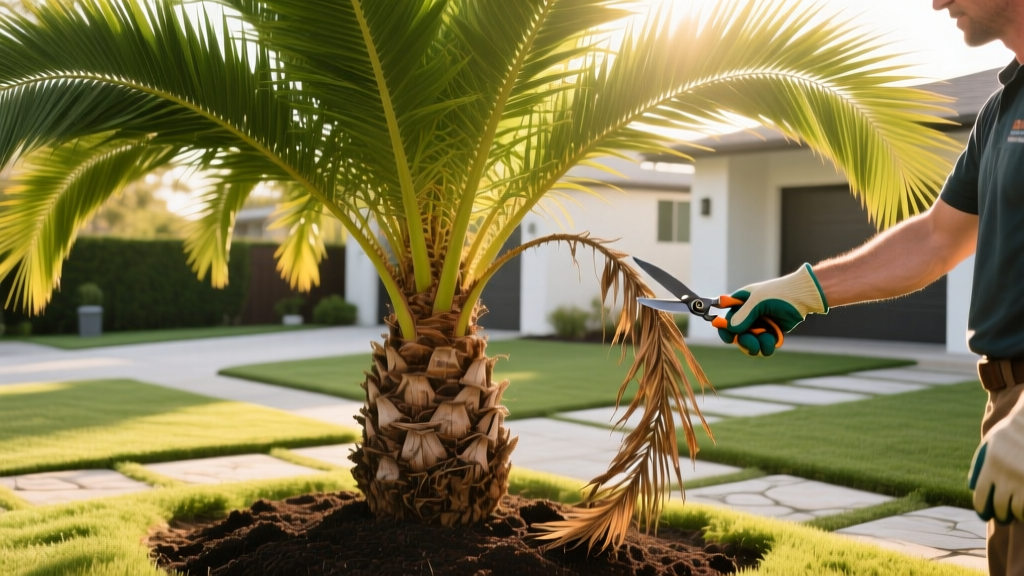
Top Palm Tree Care Tips for Beginners: Watering, Soil & Pruning
The Beginner's Blueprint to Thriving Palms
Palms are not true trees; they are monocots, more closely related to grasses and lilies than to oaks or maples. This biological distinction dictates every aspect of their care. Unlike hardwood trees, palms cannot heal over wounds on their trunks, and they rely on a single terminal bud for all vertical growth. If that bud dies, the entire plant dies. Understanding this foundational biology is the first step in transitioning from simply keeping a palm alive to helping it thrive in your landscape or container garden.
Decoding Your Palm: Species Matrix
Before applying any water or fertilizer, you must identify your palm's specific environmental thresholds. The most common mistake beginners make is treating all palms as a monolith. Below is a decision matrix for the four most common beginner-friendly palms sold in nurseries today.
| Species | Light Requirement | Watering Frequency | Cold Hardiness | Best Use Case |
|---|---|---|---|---|
| Pygmy Date (Phoenix roebelenii) | Partial Shade to Full Sun | Moderate (Allow top 2 inches to dry) | 25°F (-4°C) | Patio containers, small yard accents |
| Areca (Dypsis lutescens) | Bright Indirect Light | High (Keep soil consistently moist) | 35°F (2°C) | Indoor spaces, shaded tropical gardens |
| Queen (Syagrus romanzoffiana) | Full Sun (Minimum 6 hours) | Moderate to High (Deep soaking) | 18°F (-8°C) | Large residential landscapes, street lining |
| Sago (Cycas revoluta)* | Full Sun to Partial Shade | Low (Drought tolerant once established) | 15°F (-9°C) | Xeriscaping, low-maintenance borders |
*Note: The Sago is technically a cycad, not a true palm, but it is grouped here due to identical beginner care profiles and common nursery labeling.
Hydration Mechanics: The Soak and Dry Method
Palms require deep, infrequent watering to encourage a robust taproot system. Shallow, daily sprinkling leads to surface roots that are highly susceptible to drought stress and windthrow. For in-ground palms, apply 10 to 15 gallons of water per inch of trunk diameter at the base. For container palms, water until it flows freely from the drainage holes, then wait.
To eliminate the guesswork, invest in an XLUX Soil Moisture Meter (typically $12 to $15). Insert the probe 6 inches deep near the root ball. Only water when the meter reads in the red or dry zone (levels 1-3). Overwatering is the number one killer of indoor and potted palms, leading to fatal root rot caused by Phytophthora fungi.
Soil Architecture and the 8-2-12-4 Formula
Standard lawn fertilizers will slowly kill a palm. Turf fertilizers are high in nitrogen and low in magnesium, which induces a severe potassium and magnesium deficiency in palms. According to research from the University of Florida IFAS Extension, palms require a specific, slow-release nutritional profile.
Purchase a fertilizer with an NPK ratio of 8-2-12-4 (Nitrogen, Phosphorus, Potassium, Magnesium). The '4' represents magnesium, which is non-negotiable for preventing frizzle top. Brands like Lesco 8-2-12 Palm Fertilizer (approx. $48 for a 50 lb bag) or Jobe's Organics Palm Spikes ($8 for 5 spikes) are industry standards. Apply granular fertilizer in a ring 1 foot away from the trunk, extending out to the drip line (the outer edge of the canopy). Never let fertilizer touch the trunk, as it will cause chemical burns.
⚠ WARNING: The Pencil Pointing Hazard
Never strip the lower fronds of a palm to create a 'pencil point' or 'hurricane cut' shape. This practice starves the palm of essential nutrients, as palms reabsorb potassium and magnesium from dying older fronds to support new growth. Removing green or partially green fronds forces the palm to pull these nutrients from its own internal reserves, leading to a weakened trunk and stunted canopy.
The 9-to-3 Pruning Rule
Pruning palms is less about shaping and more about sanitation. You only need a sterilized pruning saw or a heavy-duty bypass lopper like the Corona BP 7100D ($28). Wipe your blades with 70% isopropyl alcohol between every single cut to prevent the spread of Fusarium wilt, a fatal vascular disease.
The 9-to-3 Rule: Imagine the palm canopy as a clock face facing you. Only prune fronds that hang below the 9 o'clock and 3 o'clock positions. Any frond pointing upward or horizontally is actively photosynthesizing and must remain untouched, even if it has minor yellowing. For a comprehensive breakdown of safe pruning angles, consult the UF/IFAS Pruning Guidelines.
Diagnostic Troubleshooting Guide
Palms communicate their deficiencies through specific visual symptoms on their fronds. Use this diagnostic key to identify and correct issues before they reach the terminal bud.
Symptom 1: Frizzle Top (New Growth is Yellow and Stunted)
- Cause: Manganese deficiency. This is highly common in alkaline soils (pH above 7.0) where manganese becomes chemically locked up.
- Fix: Apply 1 to 3 pounds of manganese sulfate directly to the soil beneath the canopy. Do not use standard Epsom salts (magnesium sulfate), as this will not correct a manganese deficit.
Symptom 2: Orange Spotting on Oldest Fronds
- Cause: Potassium deficiency. The oldest (lowest) fronds will develop translucent yellow-orange spots that eventually turn necrotic and brown.
- Fix: Increase the potassium ratio in your next fertilizer application. Ensure your 8-2-12-4 fertilizer uses a slow-release potassium source like sulfur-coated potassium sulfate.
Symptom 3: Brown, Crispy Leaf Tips
- Cause: Salt accumulation from tap water or over-fertilization, common in indoor Areca and Majesty palms.
- Fix: Flush the container soil with distilled or rainwater. Run 3 to 4 gallons of water through the pot to leach out soluble salts, and switch to a liquid fertilizer applied at half-strength.
Frequently Asked Questions
How often should I repot a container palm?
Repot your palm every 2 to 3 years, or when you see roots emerging from the drainage holes. Palms prefer to be slightly root-bound, so only move up one pot size (e.g., from a 10-inch to a 12-inch pot). Use a well-draining mix composed of 50% peat moss, 25% perlite, and 25% coarse horticultural sand.
Can I save a palm with a rotting trunk?
No. If the trunk is soft, weeping, or smells foul, the internal vascular tissue has been destroyed by Thielaviopsis or Ganoderma butt rot. There is no chemical cure for trunk rot. The palm must be removed immediately, and the soil should be treated with a copper-based fungicide before planting anything else in that exact location.

