
Tree Care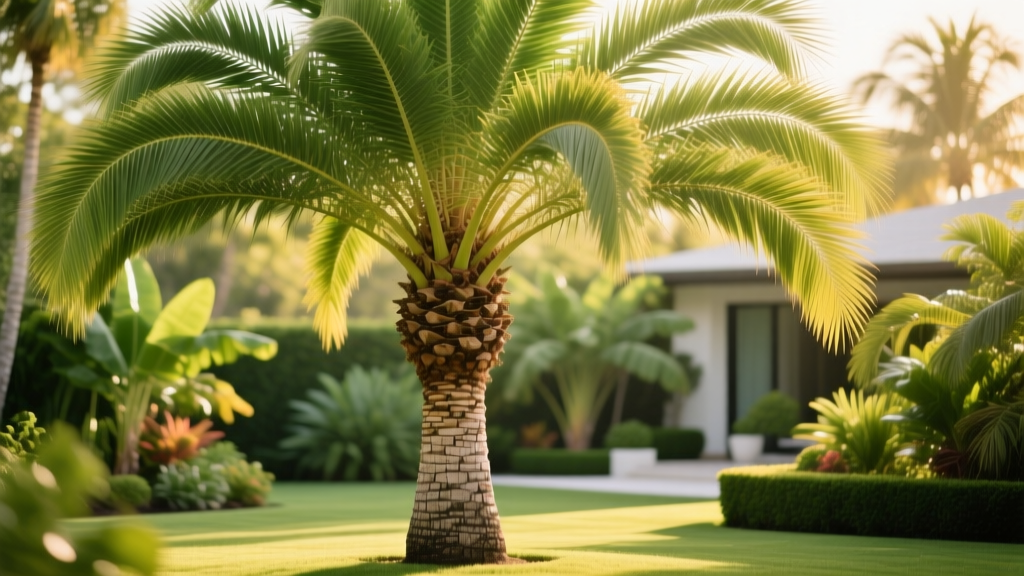
Palm Tree Meaning and Identification: A Complete Botanical Guide
The Dual Meaning of Palm Trees: Botany and Symbolism
When homeowners and landscapers search for the "meaning palm tree," they are usually looking for one of two things: the cultural symbolism these iconic plants represent, or the literal botanical definition of what a palm actually is. Unlike oaks, maples, or pines, palms belong to a completely different evolutionary branch. Understanding both the symbolic and scientific meaning of palm trees is essential for proper identification, selection, and long-term landscape care.
Quick Botanical Fact: Palms are not true trees. They are monocotyledons (monocots), making them more closely related to grasses, lilies, and orchids than to traditional hardwood or softwood trees.
The Botanical Meaning: Are Palms Actually Trees?
From a strict botanical standpoint, the meaning of a "palm tree" is somewhat of a misnomer. True trees are dicots or gymnosperms that possess a vascular cambium—a layer of tissue that produces secondary growth, resulting in true wood and annual growth rings. Palms, belonging to the family Arecaceae, lack this cambium layer.
Instead of expanding outward with rings of wood, palms grow strictly from a single apical meristem (the "heart" or terminal bud) at the top of the trunk. According to Kew Gardens, the palm trunk is actually a massive, hardened stem composed of scattered vascular bundles embedded in a fibrous matrix. Because they cannot produce new bark or heal over wounds like dicot trees, any damage to a palm's trunk is permanent, making careful landscape placement and maintenance critical.
Anatomical Differences at a Glance
| Feature | True Trees (Dicots/Gymnosperms) | Palm Trees (Monocots) |
|---|---|---|
| Growth Origin | Apical and lateral meristems | Single apical meristem only |
| Trunk Composition | True wood with annual growth rings | Fibrous stem with scattered vascular bundles |
| Wound Healing | Callus tissue forms over wounds | No callus formation; wounds remain open |
| Root System | Taproot or expanding lateral roots | Adventitious root ball of uniform thickness |
Decoding Palm Fronds: Identification by Leaf Structure
The most reliable way to identify a palm species is by examining its fronds. The architecture of the leaf dictates not only the species but also its wind resistance and ideal landscape placement. As of 2026, landscape architects heavily favor costapalmate and pinnate varieties for hurricane-prone zones due to their superior aerodynamic shedding.
The Four Primary Frond Types
- Pinnate (Feather-like): Leaflets grow outward from a central axis (rachis). Examples include the Queen Palm (Syagrus romanzoffiana) and Date Palm (Phoenix dactylifera). These offer a classic, delicate tropical aesthetic.
- Palmate (Fan-shaped): Leaflets radiate from a single central point, resembling an open hand. The Mexican Fan Palm (Washingtonia robusta) and Windmill Palm (Trachycarpus fortunei) are prime examples, offering excellent cold tolerance.
- Costapalmate (Hybrid): A fan shape that features a distinct midrib (costa) extending into the blade before the leaflets diverge. The Sabal Palmetto (Sabal palmetto) is the most famous costapalmate, prized for its extreme salt and wind resilience.
- Bipinnate (Twice-feathered): Leaflets branch off from secondary axes, creating a jagged, fishtail appearance. The Fishtail Palm (Caryota urens) is a striking example, though it is monocarpic (dies after flowering).
Cultural and Symbolic Meanings of the Palm
Beyond botany, the cultural meaning of the palm tree spans millennia, representing vastly different concepts depending on the region and era.
"The palm branch is a symbol of victory, triumph, peace, and eternal life originating in the ancient Near East and Mediterranean world." — Historical Botanical Archives
Regional Symbolism Breakdown
- Ancient Rome & Greece: The word for palm in Latin is palma, which was also the word for the palm of the hand. Romans awarded palm branches to victors in athletic competitions and legal triumphs, cementing its meaning as a symbol of victory and success.
- Middle Eastern Heritage: In arid regions, the Date Palm meant survival. It symbolizes hospitality, abundance, and resilience, providing food, shade, and building materials in harsh desert climates.
- Christian Iconography: Palm branches represent spiritual triumph and martyrdom, heavily associated with Palm Sunday and the entry into Jerusalem. In early Christian art, a palm tree often symbolized the righteous soul flourishing in heaven.
- Modern Tropical Landscaping: Today, the palm tree universally signifies leisure, relaxation, and resort-style living, driving billions of dollars in global tourism and real estate branding.
Translating Meaning into Action: Palm Care Essentials
Because palms are monocots, their care requirements differ drastically from traditional shade trees. Applying standard tree care practices to palms will rapidly lead to nutrient deficiencies or structural failure.
Nutritional Requirements and Deficiency Diagnostics
Standard landscape fertilizers (like a 16-4-8 NPK ratio) are detrimental to palms. The University of Florida IFAS Extension mandates a specific 8-2-12-4 (Nitrogen-Phosphorus-Potassium-Magnesium) ratio, with all nitrogen, potassium, and magnesium in slow-release form to prevent leaching in sandy soils.
Deficiency Warning: If your palm's newest fronds are emerging with a sharp, hooked tip (known as "hookleaf"), it is suffering from a Boron deficiency. Do not apply standard borax; use a specialized palm micronutrient blend containing chelated boron to prevent fatal bud rot.
The "Clock Face" Pruning Rule
Over-pruning is the most common fatal mistake in palm care. Many landscaping companies perform "hurricane cuts," stripping the canopy down to a few upright fronds to reduce wind resistance. This is scientifically counterproductive; it starves the palm of potassium, forcing it to cannibalize its own trunk, resulting in a weakened, tapered trunk condition known as "pencil-pointing."
The Rule: Imagine the palm canopy as a clock face facing you. Only prune fronds that fall below the 9 o'clock and 3 o'clock positions. Fronds pointing upward or horizontally (between 9 and 3) are actively photosynthesizing and must remain, even if they show minor yellowing, as they are translocating nutrients back to the trunk.
Common Misidentifications: Plants That Mimic Palms
When identifying plants for your yard, beware of "palms" that aren't actually in the Arecaceae family. Misidentifying these can lead to incorrect care or severe safety hazards.
| Common Name | Scientific Name | True Family | Key Distinguishing Feature |
|---|---|---|---|
| Sago Palm | Cycas revoluta | Cycadaceae (Cycad) | Highly toxic to dogs and cats; produces cones, not flowers. |
| Madagascar Palm | Pachypodium lamerei | Apocynaceae (Dogbane) | Succulent trunk with sharp thorns; deciduous in winter. |
| Traveler's Palm | Ravenala madagascariensis | Strelitziaceae | Leaves grow strictly in a single flat, fan-like plane. |
Frequently Asked Questions
Can a palm tree survive if the top is cut off?
No. Because palms grow exclusively from a single apical meristem at the very top of the trunk, severing the "heart" or crown will kill the plant. Unlike a ficus or oak, a palm cannot sprout new lateral branches to replace a lost canopy.
What is the meaning of a palm tree turning completely yellow?
A uniform yellowing across the entire canopy usually indicates a severe Nitrogen deficiency or a fatal disease like Lethal Yellowing (caused by a phytoplasma). If only the oldest, lowest fronds are yellowing while the new growth remains green, it is likely a Potassium or Magnesium deficiency, which can be corrected with the 8-2-12-4 fertilizer blend mentioned above.
Do palm tree roots destroy foundations or sidewalks?
Generally, no. Palm roots are adventitious, meaning they grow as a dense, fibrous ball of uniform thickness (usually no wider than the trunk's base) and do not thicken over time. They lack the aggressive, expanding taproots of dicot trees like oaks or willows, making them exceptionally safe to plant near hardscaping and plumbing, as noted by UF/IFAS Gardening Solutions.

