
Tree Care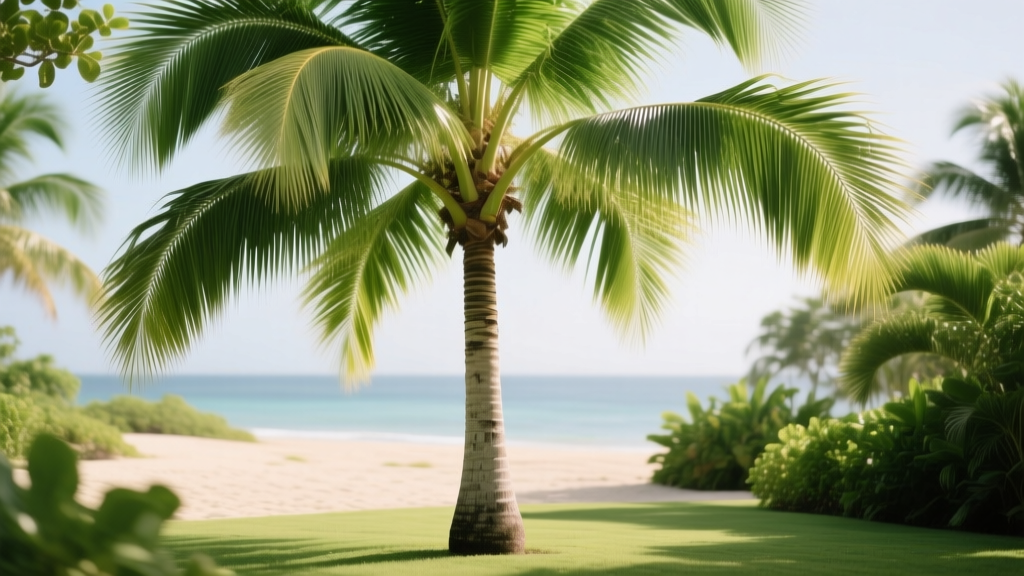
Where Do Palm Trees Originate From? Fixing Climate-Mismatch Stress
Landscapers and homeowners frequently treat all palms as a single, uniform category of tropical plants, leading to widespread physiological failures in residential yards. The reality is that the family Arecaceae comprises over 2,500 species adapted to radically different microclimates. When asking where do palm trees originate from, the answer is not simply 'the tropics.' Palms evolved in highly specific ecological niches—from the hyper-arid, alkaline oases of the Middle East to the acidic, waterlogged subtropical rainforests of South America.
When a palm is planted outside its native environmental parameters, it does not just struggle; it develops specific, diagnosable physiological disorders. Understanding a palm’s geographic origin is the foundational step in diagnosing nutrient lockouts, root rot, and thermal stress. This guide maps native palm habitats to the exact landscape problems they trigger and provides targeted, actionable remediation protocols.
The Botanical Blueprint: Mapping Native Palm Habitats
To diagnose a failing palm, you must first identify its evolutionary baseline. Landscape palms generally fall into four distinct origin categories, each dictating their soil, water, and temperature requirements:
- Coastal Tropical (e.g., Coconut Palm, Cocos nucifera): Evolved in sandy, highly porous, salt-rich soils with constant high humidity and warm temperatures. They are adapted to rapid drainage and nutrient-poor substrates.
- Subtropical Rainforest (e.g., Queen Palm, Syagrus romanzoffiana): Native to South American regions with heavy rainfall, high canopy shade in youth, and naturally acidic, leached soils.
- Arid Oasis (e.g., Date Palm, Phoenix dactylifera): Originating from North Africa and the Middle East, these palms require extreme summer heat and deep, accessible water tables, but thrive in heavy, alkaline soils.
- Temperate Highlands (e.g., Windmill Palm, Trachycarpus fortunei): Native to elevated regions in Asia, these palms experience cool, moist summers and freezing winters, making them highly susceptible to heat stress and alkaline toxicity.
Diagnosing Origin-Based Nutrient Deficiencies
The most common palm disorders in residential landscapes are nutrient deficiencies caused by soil pH mismatches. A palm originating in acidic rainforest soil will fail to absorb nutrients when planted in alkaline clay, even if the soil is heavily fertilized.
| Palm Species & Origin | Native Soil pH | Common Landscape Mismatch | Resulting Deficiency & Symptom |
|---|---|---|---|
| Queen Palm (South America) | 5.0 - 6.0 (Acidic) | Planted in high-pH limestone or alkaline clay | Manganese deficiency ('Frizzle Top' - yellowing, necrotic new fronds) |
| Coconut Palm (Coastal Tropics) | 5.5 - 7.0 (Sandy) | Planted in heavy, compacted urban soils | Potassium deficiency (yellow/orange spotting on oldest frond tips) |
| Windmill Palm (Asian Highlands) | 6.0 - 7.0 (Loam) | Planted in highly alkaline desert soils | Iron deficiency (Interveinal chlorosis on new growth) |
The Manganese Lockout in Queen Palms
Queen palms originate in regions where heavy rainfall naturally acidifies the soil, keeping manganese highly soluble. When planted in areas with soil pH above 7.0, manganese becomes chemically locked. According to the University of Florida IFAS Palm Nutrition Guide, foliar sprays provide only temporary cosmetic relief. The permanent solution requires soil acidification using elemental sulfur (applied at 1 lb per 100 sq ft) combined with soil drenches of manganese sulfate, rather than manganese oxide, which is unavailable in high-pH soils.
Water and Soil Drainage: The Oasis Paradox
Diagnostic Warning: The Date Palm Root Rot Paradox
Date palms originate in arid deserts, leading homeowners to assume they are drought-tolerant and require minimal water. In reality, oasis palms have roots that reach deep underground water tables. In residential landscapes with shallow, compacted clay soils, frequent light waterings create a perched water table that suffocates the roots, leading to Phytophthora root rot.
Date palms originate in arid deserts, leading homeowners to assume they are drought-tolerant and require minimal water. In reality, oasis palms have roots that reach deep underground water tables. In residential landscapes with shallow, compacted clay soils, frequent light waterings create a perched water table that suffocates the roots, leading to Phytophthora root rot.
If your Date Palm or Canary Island Date Palm (Phoenix canariensis) is showing signs of wilting despite regular irrigation, the issue is likely hypoxia (oxygen deprivation) in the root zone, not drought.
Remediating Heavy Clay for Arid-Origin Palms
Do not attempt to amend the planting hole with peat moss or compost when planting arid-origin palms in clay; this creates a 'bathtub effect' that traps water. Instead, use the raised berm method:
- Excavate the native clay only to the depth of the root ball.
- Plant the palm 2 to 3 inches above the surrounding grade.
- Build a berm around the root zone using a 50/50 mix of native soil and coarse, washed horticultural sand (not masonry sand, which compacts).
- Mulch with 2 inches of coarse pine bark to maintain soil temperature without trapping excess moisture against the trunk.
Temperature Extremes: Cold Damage vs. Heat Stress
Thermal stress is entirely dictated by a palm's latitude and elevation of origin. Misidentifying cold hardiness is a primary cause of winter landscape loss, while ignoring heat stress kills highland palms in lowland deserts.
Assessing Freeze Damage Based on Origin
According to the UF/IFAS Extension Cold Hardiness Guide, a palm's survival threshold is tied to its meristem (the central growing bud). If the meristem freezes, the palm dies. Use this diagnostic flowchart after a freeze event:
- Zone 8/9 (Highland Origins like Windmill Palm): Survives down to 5°F. If fronds turn completely brown, do not prune immediately. Wait until spring to test the central spear. If it pulls out easily, the meristem is dead. If it resists, the palm will recover.
- Zone 9/10 (Subtropical Origins like Queen Palm): Damaged below 25°F. Trunk tissue may become soft and mushy. Apply a copper-based fungicide to the central bud to prevent secondary bacterial infections while the palm attempts recovery.
- Zone 10/11 (Coastal Tropical Origins like Royal Palm): Suffers irreversible damage at 30°F. These palms should never be planted in regions with historical winter dips below 35°F.
Targeted Treatment Protocols for Mismatched Palms
When a palm is already established in a mismatched climate or soil profile, you must artificially replicate its native environment through precise chemical and physical interventions.
The 8-2-12-4Mg Fertilizer Standard
Palms originating from nutrient-poor coastal sands (like the Coconut and Sabal palms) are highly efficient at scavenging nutrients but are severely prone to potassium and magnesium deficiencies when forced to compete with turfgrass. Standard lawn fertilizers (e.g., 16-4-8) lack the necessary micronutrient profile and their high nitrogen-to-potassium ratio actively induces potassium deficiency.
Apply a controlled-release 8-2-12-4Mg (Nitrogen-Phosphate-Potassium-Magnesium) fertilizer formulated specifically for palms. The nitrogen and potassium must be in a 1:1.5 ratio, and 100% of the nitrogen, potassium, and magnesium must be in a controlled-release form (like sulfur-coated urea or polymer-coated prills) to prevent rapid leaching in sandy soils. Broadcast this evenly under the entire canopy drip line, never piled against the trunk.
Correcting Highland Heat Stress
Windmill palms and other highland species planted in low-elevation desert or deep-south environments often suffer from chronic heat stress and rapid soil moisture evaporation. To mitigate this, install a subsurface drip irrigation ring 12 inches from the trunk, delivering 2 gallons of water twice weekly during summer months, and apply a 4-inch layer of organic wood mulch to insulate the shallow root system from ambient soil temperatures exceeding 95°F.
Expert FAQ: Origin and Acclimation
Can I acclimate a tropical palm to a colder climate over time?
No. A palm's cold hardiness is genetically fixed by its species' origin. While a palm can acclimate to gradual seasonal temperature drops (hardening off in autumn), it cannot evolve a lower absolute survival threshold. A Coconut Palm will always die at 32°F, regardless of how many years it is exposed to 40°F nights.
Why is my indoor palm dying when it originates from the tropics?
Indoor environments lack the high humidity (60-80%) and intense UV light of tropical origins. Palms like the Areca (Dypsis lutescens) suffer from spider mite infestations and tip-burn indoors due to ambient household humidity dropping below 30%. Use a dedicated humidifier to maintain 50% humidity and place the palm within 2 feet of a south-facing window to meet its high light compensation point.

