Tree Care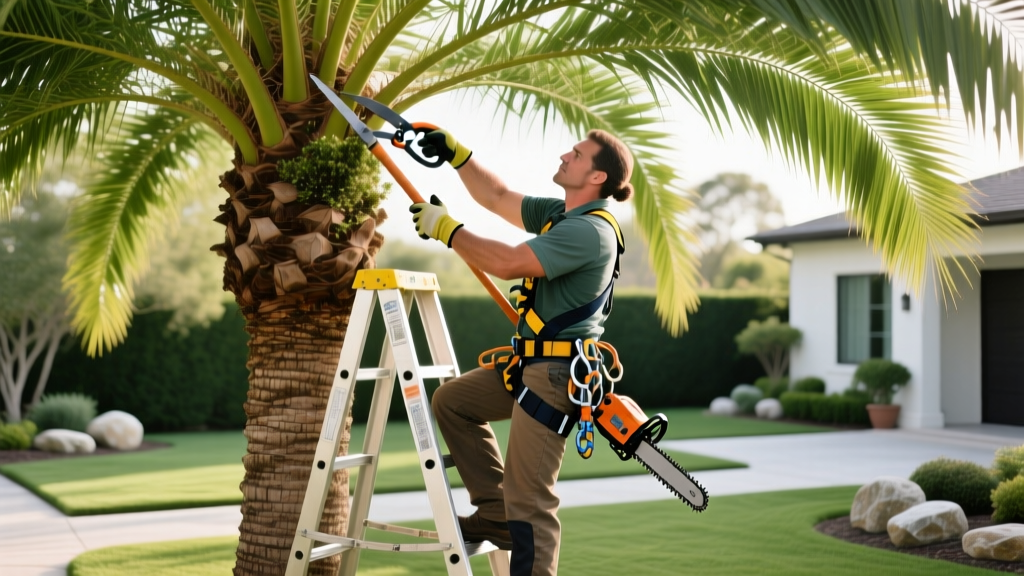
2026 Palm Tree Pruning Prices: Complete Cost & Coverage Guide
The 2026 National Average for Palm Tree Pruning Prices
Unlike deciduous trees, palm trees do not heal from pruning cuts; they seal them. This biological distinction means that improper pruning can introduce fatal fungal pathogens or starve the tree of essential nutrients. Because of the specialized equipment and botanical knowledge required, palm tree pruning prices in 2026 reflect a premium over standard canopy thinning. Nationally, homeowners spend between $150 and $450 per palm tree for routine maintenance, though extreme heights, difficult access, and specific aesthetic requests can push costs well over $1,000 per specimen.
2026 Quick Cost Snapshot:
- Low End (Small, accessible palms): $50 - $125
- National Average: $275
- High End (Tall, complex species, crane required): $800 - $1,500+
Cost Breakdown by Palm Height and Equipment Requirements
The primary driver of palm tree pruning prices is trunk height. Height dictates whether an arborist can use a simple telescoping pole saw, a standard bucket truck, or requires specialized climbing gear or a crane. Note that reputable arborists will never use climbing spikes (gaffs) on a palm tree that is being kept alive. Spikes create thousands of permanent puncture wounds that palms cannot compartmentalize, leading to trunk rot.
| Height Category | Trunk Height | 2026 Price Range | Required Equipment |
|---|---|---|---|
| Dwarf / Small | Under 15 ft | $50 - $150 | Hand saws, 12-ft pole pruners |
| Medium | 15 - 30 ft | $150 - $350 | Telescoping poles, small bucket trucks |
| Large | 30 - 60 ft | $350 - $750 | Standard bucket truck (e.g., Altec AT37G) |
| Extra Large | 60 - 100+ ft | $800 - $1,500+ | Tall-reach bucket truck, crane, or rope-access |
Species-Specific Pricing Factors
Not all palms are priced equally. The botanical architecture of the species heavily influences the labor time and hazard level, which in turn shifts the final invoice.
1. Date Palms (Phoenix dactylifera & Phoenix canariensis)
Date palms feature massive, heavy fronds and thick trunks often covered in retained petiole bases (boots). Many homeowners request a 'diamond-cut' or 'pineapple' trunk carving for aesthetic appeal. This meticulous hand-carving process adds $75 to $200 to the base pruning price per tree. Furthermore, the fronds are incredibly heavy and require careful rigging to lower to the ground without damaging underlying landscaping.
2. Royal Palms (Roystonea regia)
Royal palms have smooth, cement-like trunks that cannot be climbed with spikes under any circumstances. They also shed massive, heavy frond sheaths that can weigh up to 50 pounds each. Pruning a Royal Palm mandates a bucket truck and strict drop-zone management, keeping prices at the higher end of the spectrum (typically $300 to $600 for mature specimens).
3. Cabbage Palms (Sabal palmetto)
Cabbage palms naturally retain their dead leaf bases, creating a textured, cross-hatch trunk. Some clients prefer a 'skinned' or 'smooth' trunk, which requires manually prying off hundreds of old boots with a specialized spade or machete. Expect to pay an extra $1 to $3 per boot removed, or a flat surcharge of $100 to $250 for trunk skinning.
The Biology of Pruning: Avoiding the 'Hurricane Cut' Scam
One of the most critical pieces of information a homeowner must know when evaluating quotes is the 9-to-3 pruning rule. According to the University of Florida IFAS Extension, palms should only have fronds removed if they fall below the 9 o'clock and 3 o'clock positions on an imaginary clock face centered on the trunk.
⚠️ WARNING: The 'Hurricane Cut' Fraud
Unlicensed 'fly-by-night' workers often offer drastically discounted palm tree pruning prices by performing a 'hurricane cut'—stripping the palm of almost all its fronds, leaving only a small tuft at the top like a feather duster. They claim this reduces wind resistance during storms. This is biologically false and highly destructive. Over-pruning starves the palm of potassium, causes the trunk to narrow dangerously ('pencil-pointing'), and actually makes the tree more likely to snap in high winds. If a quote includes stripping green or upward-pointing fronds, reject the arborist immediately.
Palms re-mobilize nutrients (specifically potassium and magnesium) from older, dying lower fronds into the new growth at the canopy. Removing fronds that are still partially green, or removing too many brown fronds above the 9-to-3 line, forces the palm to pull nutrients from the soil, which it is often inefficient at doing. Always hire an arborist certified by the International Society of Arboriculture (ISA) who understands palm physiology.
Hidden Fees and Add-On Services
When comparing palm tree pruning prices, ensure you are looking at the total scope of work. Base quotes often exclude the following common add-ons:
- Debris Haul-Away and Disposal: Palm fronds are highly fibrous and notoriously difficult to run through standard wood chippers. Many companies charge an extra $50 to $150 per truckload to haul away palm waste, as it requires manual loading and specialized disposal.
- Flower and Fruit Stalk Removal: Palms expend massive energy producing heavy seed pods and fruit clusters (like coconuts or dates). Removing these stalks is often considered a separate service from frond pruning and adds $40 to $100 per tree.
- Hurricane Strapping / Bracing: For multi-trunked palms or those with weak root plates, arborists may install Cobra dynamic cabling or rigid bracing. Materials and installation cost $150 to $300 per system.
- Access Surcharges: If a bucket truck cannot fit in your side yard due to narrow gates, low power lines, or soft turf that could be damaged by heavy tires, the crew must resort to manual pole pruning or rope-access climbing, which incurs a 20% to 35% labor premium.
DIY vs. Professional Pruning: A Decision Framework
While the upfront cost of professional pruning may seem high, attempting to prune mature palms yourself carries severe financial and physical risks. Use this framework to decide your approach:
When to DIY (Under 12 Feet)
If your palm is under 12 feet tall, you can safely prune it from the ground. You will need a high-quality telescoping pole saw with a bypass pruning blade (e.g., the STIHL HTA 85 battery-powered pole pruner, retailing around $650, or a manual Corona 14-foot pole saw for $60). Rule: Never use a chainsaw on a pole; the vibration and kickback risk are too high for overhead work.
When to Hire a Pro (Over 12 Feet)
Once a palm exceeds 12 feet, the weight of the dead fronds becomes a lethal hazard if they fall on your head or property. Furthermore, OSHA regulations require specific fall-arrest systems for aerial work. A professional ISA-certified arborist carries a minimum of $1 million in general liability and specialized workers' compensation insurance. If an uninsured worker falls from your palm tree, you are legally liable for their medical bills.
How to Solicit and Compare Accurate Quotes
To ensure you are paying a fair market rate for palm tree pruning prices in your area, follow this exact protocol when requesting estimates:
- Request Three Itemized Quotes: Do not accept a single 'lump sum' number. The quote must break down the cost per tree, the cost of debris removal, and any trunk-skinning add-ons.
- Verify ISA Certification: Ask for their ISA Certification number and verify it on the Trees Are Good website. Look specifically for an arborist with a Tree Risk Assessment Qualification (TRAQ).
- Specify the 9-to-3 Rule: Tell the estimator upfront: 'I expect the 9-to-3 clock face pruning standard to be followed, with no green fronds removed.' This immediately filters out unqualified contractors who plan to over-prune.
- Ask About Trunk Protection: Confirm in writing that no climbing spikes will be used on the trunk. If they must climb, they should use a friction-saver rope and harness system, or a bucket truck.
Frequently Asked Questions
How often should I pay for palm tree pruning?
Most palms only require pruning once or twice a year. Fast-growing species like Queen Palms (Syagrus romanzoffiana) may need bi-annual attention, while slower-growing species like the Pindo Palm (Butia capitata) may only need pruning every 18 to 24 months. Over-pruning to 'keep it looking clean' is biologically harmful.
Does removing seed pods count as pruning?
Yes, but it is often billed as a separate line item. Removing seed pods prevents the palm from wasting energy on reproduction and stops thousands of volunteer seedlings from sprouting in your lawn. Expect to pay an additional $40 to $75 for seed stalk removal during a standard pruning visit.
Why is my quote so much higher after a hurricane?
Following major storms, arborist crews are in extremely high demand, and debris disposal sites are often overwhelmed, leading to longer wait times and higher dumping fees. Expect a 20% to 40% surge premium on palm tree pruning prices for the first 60 days following a named weather event.