Tree Care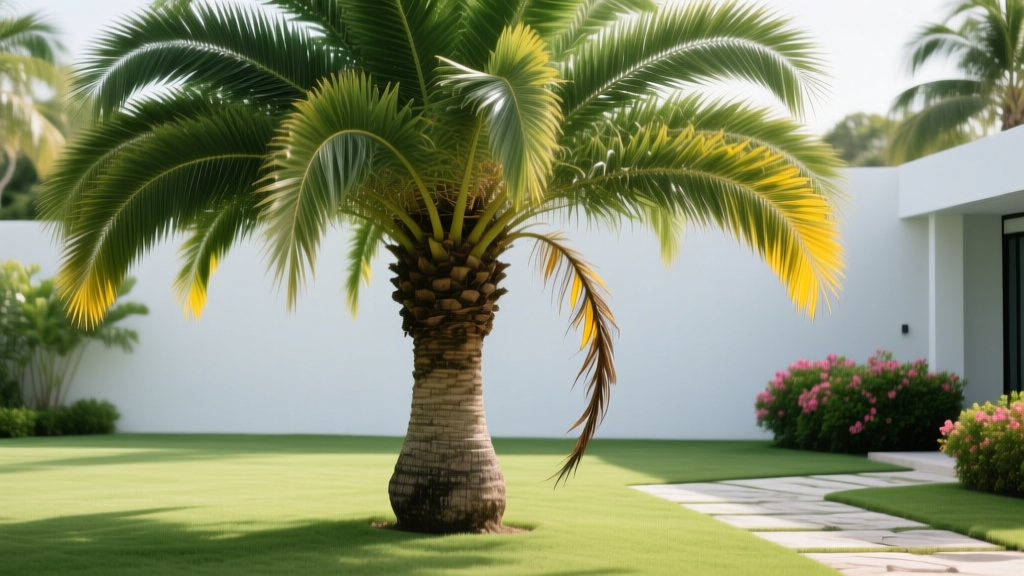
Palm Tree Significance: Diagnosing Visual Decline and Restoring Health
When landscape architects and homeowners discuss palm tree significance, they are referring to the architectural, aesthetic, and property-value anchor these species provide in residential and commercial designs. Palms serve as vertical focal points, framing sightlines and establishing a specific microclimate aesthetic. However, when a palm experiences visual decline—manifesting as chlorosis, necrosis, or stunted growth—it loses its landscape significance, transforming from a premium design element into an eyesore. Diagnosing the precise physiological or pathological cause of this decline requires moving beyond generic 'palm fertilizer' applications and implementing targeted, science-backed remediation protocols.
The Diagnostic Matrix: Decoding Frond Discoloration
Palms are monocots; they cannot heal damaged tissue or translocate nutrients from older leaves to newer ones as efficiently as broadleaf trees. Therefore, the specific location and pattern of discoloration on the fronds act as a direct map to the underlying deficiency or pathology. Use the following diagnostic matrix to identify the exact cause of visual decline.
| Symptom Presentation | Affected Fronds | Primary Diagnosis | Targeted Solution |
|---|---|---|---|
| Translucent yellow-orange spotting progressing to marginal necrosis | Oldest (lower) fronds | Potassium (K) Deficiency | Apply 8-2-12-4Mg controlled-release fertilizer at 1.5 lbs per 100 sq ft of canopy drip line. |
| Broad yellow bands along leaf margins with a distinct green center | Oldest (lower) fronds | Magnesium (Mg) Deficiency | Soil drench with magnesium sulfate (Epsom salt) at 2 lbs per 100 gallons of water; repeat in 30 days. |
| Necrotic streaking, reduced leaf size, and 'frizzletop' deformity | Newest (upper) fronds | Manganese (Mn) Deficiency | Foliar spray or soil drench using manganese sulfate at 3 lbs per 100 gallons. Check soil pH (must be below 7.0). |
| Hook-tip deformity, bent petioles, and multiple unopened spear leaves | Newest (upper) fronds | Boron (B) Deficiency | Apply Solubor (20.5% B) as a soil drench at 1 oz per 100 gallons. Do not overapply; boron toxicity is fatal. |
Expert Insight: According to the UF/IFAS Palm Nutrition Guide, applying standard turf fertilizers (like 16-4-8) near palms causes severe potassium and magnesium deficiencies due to the high nitrogen-to-potassium ratio. Always use a specialized 8-2-12-4Mg palm formulation with 100% controlled-release potassium.
Lethal Bronzing vs. Lethal Yellowing: Spotting the Difference
Not all visual decline is nutritional. Phytoplasma infections can rapidly destroy a palm, eliminating its landscape significance entirely and posing a vector risk to neighboring trees. Distinguishing between Lethal Yellowing (LY) and the more aggressive Lethal Bronzing (LB) is critical for immediate management.
Pathogen Alert: Lethal Bronzing, vectored by the planthopper Haplaxius crudus, has expanded its range significantly through the 2020s. As detailed in the UF/IFAS Lethal Bronzing of Palms publication, LB causes the inflorescence (flower stalk) to blacken and die first, followed by a rapid, bronze-colored necrosis moving from the bottom up. There is no cure. Immediate removal and soil solarization are required.
Preventative Trunk Injection Protocol
For high-value, susceptible species (e.g., Coconut palms, Phoenix species) in active vector zones, preventative treatment is the only viable defense.
- Active Ingredient: Oxytetracycline hydrochloride (e.g., Tree-age G4).
- Dosage: 1000 ppm concentration, injected directly into the xylem tissue.
- Frequency: Every 4 months in high-risk zones; every 6 months in moderate-risk zones.
- Cost Expectation: $15 to $25 per trunk inch of diameter at breast height (DBH) when performed by a certified arborist.
Step-by-Step Soil and Root Remediation Protocol
When nutrient deficiencies persist despite proper fertilization, the issue is almost always root-zone compaction or improper pH locking up micronutrients. Follow this exact protocol to restore root health and reclaim the palm's aesthetic significance.
- Radial Trench Aeration: Do not use standard spike aerators, which cause further compaction. Use a pneumatic AirSpade set to 90 PSI to excavate radial trenches (12 inches deep, 2 inches wide) starting 2 feet from the trunk and extending to the drip line.
- pH Adjustment: Palms require a soil pH between 6.0 and 7.0. If your soil test indicates a pH above 7.5 (common in alkaline coastal soils), apply elemental sulfur at a rate of 1 lb per 100 sq ft to lower the pH and unlock bound manganese and iron.
- Mycorrhizal Inoculation: Backfill the aerated trenches with a mix of native soil and a commercial mycorrhizal inoculant containing Rhizophagus intraradices to expand the root absorption surface area by up to 400%.
- Hydration Management: Install a drip irrigation ring at the drip line. Palms require deep, infrequent watering. Apply 1 inch of water per week, ensuring the top 12 inches of soil are moistened, then allow the top 2 inches to dry out to prevent Phytophthora root rot.
Pruning Protocols to Preserve Structural Significance
Over-pruning is a primary driver of visual decline and structural weakness. The outdated practice of 'hurricane cutting' (stripping the canopy down to a feather-duster shape) severely stunts growth and invites fatal pathogens.
The '9-to-3' Clock Face Rule
Only remove fronds that hang below the horizontal plane. Imagine the palm canopy as a clock face; only prune fronds positioned between 9 o'clock and 3 o'clock. Fronds at 10, 11, 12, 1, and 2 o'clock must remain, even if slightly discolored, as they are actively translocating vital nutrients back into the trunk.
Tool Sanitation Requirement: Fusarium wilt is easily transmitted via pruning tools. Before moving from one palm to the next, soak your bypass loppers (e.g., Corona 3180 2-inch loppers) and pruning saws in a 10% bleach solution or 70% isopropyl alcohol for a minimum of 30 seconds. Wipe dry to prevent blade corrosion.
Rapid Troubleshooting FAQ
Why is the central spear of my palm rotting and pulling out easily?
This is Spear Rot, typically caused by the water mold Phytophthora palmivora. It occurs when water pools in the crown during heavy rains. Immediately apply a systemic fungicide containing mefenoxam (e.g., Subdue MAXX) as a foliar spray at 1.5 fl oz per 100 gallons of water. Ensure the crown is cleared of debris to promote airflow.
My palm has white, cottony masses on the undersides of the fronds. What is the treatment?
This is an infestation of Palm Mealybugs (Palmicultor palmarum). They secrete honeydew, leading to black sooty mold that blocks photosynthesis. Treat with a systemic neonicotinoid soil drench (Imidacloprid 1.47%) applied at the base of the trunk, combined with a topical spray of horticultural oil (Neem oil at 2%) to smother the active crawlers.
Can I save a palm that has been struck by lightning?
Lightning strikes boil the sap inside the trunk, causing explosive bark splitting and internal vascular destruction. If the central spear is dead or the trunk is split, the palm cannot be saved and must be removed within 30 days before secondary pests like palm weevils colonize the dying tissue and spread to healthy neighbors.