
Tree Care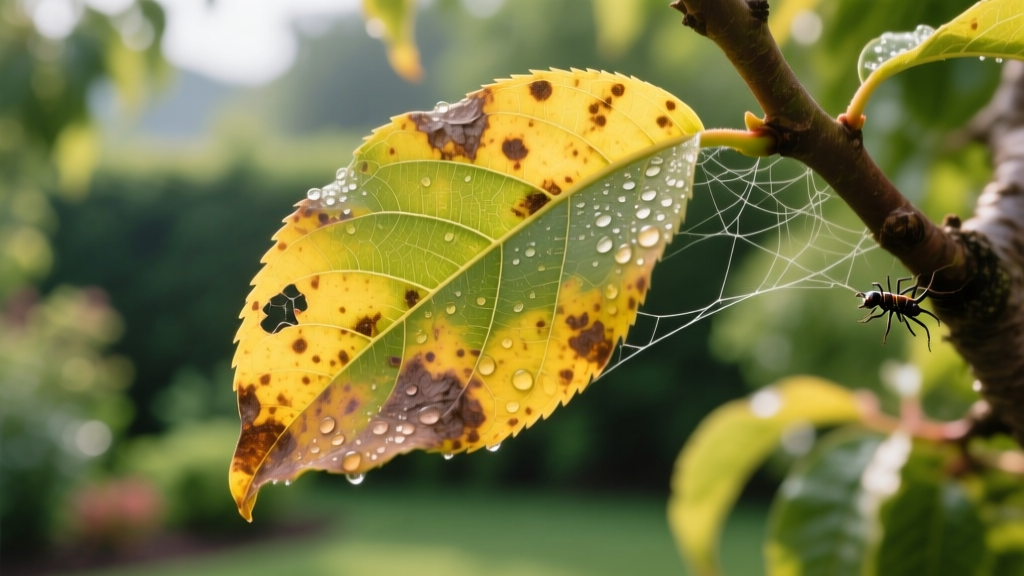
Diagnosing and Treating Sick Peach Tree Leaves: A Visual Guide
The Foliage Diagnostic Framework
Peach tree leaves act as the primary solar panels for your orchard. When foliage fails, carbohydrate production plummets, leading to poor fruit set, small peaches, and eventual branch dieback. Because peach trees (Prunus persica) are highly susceptible to specific fungal pathogens and nutrient lockouts, visual diagnosis must be precise. Misidentifying a nutrient deficiency as a fungal infection—and applying the wrong treatment—wastes money and can cause severe phytotoxicity.
Before reaching for a spray bottle, run your tree's symptoms through this diagnostic checklist to pinpoint the exact failure mode:
- Thickened, curled, reddish-purple blisters: Peach Leaf Curl (Taphrina deformans).
- Yellowing between green veins (interveinal chlorosis): Iron or Zinc deficiency, often driven by high soil pH.
- Uniform pale green or yellow leaves: Nitrogen deficiency or waterlogged root zone.
- Stippling (tiny yellow dots) with fine webbing: Spider mite infestation.
- Sticky residue (honeydew) and black sooty mold: Green peach aphid colonization.
Peach Leaf Curl: The Dormant-Season Imperative
Peach leaf curl is the most devastating foliar disease for homegrown peaches, caused by the fungus Taphrina deformans. The most critical mistake homeowners make is attempting to treat this disease after the leaves have already curled. Once the symptom is visible, the infection is systemic within that leaf tissue, and no fungicide will reverse the damage.
The fungal spores overwinter in the microscopic crevices of the tree's bark and bud scales. In early spring, when temperatures sit between 48°F and 80°F and leaves remain wet for 12.5 hours or more, the spores germinate and infect the swelling buds. According to the University of California Integrated Pest Management (UC IPM) program, eradication relies entirely on protective barrier sprays applied before the buds break.
Exact Application Protocol
To protect your peach tree leaves from curl, you must use a fixed copper fungicide (such as copper octanoate or copper hydroxide). Products like Bonide Copper Fungicide (approx. $14 per 16 oz concentrate) or Monterey Liqui-Cop are industry standards.
- Fall Application: Spray the tree thoroughly at 50% leaf drop in late autumn. Ensure the trunk, all scaffold branches, and the soil immediately beneath the drip line are coated.
- Winter/Spring Application: Apply a second coat during the 'bud swell' stage in late winter or early spring. This is the exact window when buds are plumping up but before any green tissue or pink petals are visible.
- Adjuvant Addition: Mix a horticultural spreader-sticker (like Bonide Turbo Spreader Sticker, approx. $9) into your tank. Copper solutions easily wash off in winter rains; the sticker ensures the protective barrier adheres to the bark.
Decoding Leaf Chlorosis: Iron vs. Nitrogen vs. Zinc
If your peach tree leaves are turning yellow but the veins remain distinctly green, you are looking at interveinal chlorosis. This is almost always a micronutrient deficiency—specifically iron or zinc—rather than a disease. However, the root cause is rarely a lack of these minerals in the soil; it is a chemical lockout caused by alkaline soil conditions.
Peach trees require a soil pH between 6.0 and 6.5 for optimal nutrient uptake. When soil pH climbs above 7.0 (common in arid western climates and areas with heavy clay/limestone), iron and zinc precipitate into insoluble forms that the roots cannot absorb.
The Alkaline Soil Trap and Chelated Iron
Many gardeners buy standard iron supplements (Fe-EDTA) and watch their peach tree leaves remain stubbornly yellow. Fe-EDTA breaks down and becomes unavailable in soils with a pH above 6.5. To force iron uptake in alkaline soils, you must use Fe-EDDHA (ethylenediamine-N,N'-bis(2-hydroxyphenylacetic acid)). Products like Sequestrene 138 (approx. $45 per pound) remain stable and bioavailable in soils with a pH up to 9.0.
Dosage: Dissolve 1 to 2 ounces of Fe-EDDHA granules in 5 gallons of water and apply it as a soil drench directly over the root zone (the drip line) in early spring just as the leaves begin to emerge. For severe zinc deficiency (characterized by 'rosette' leaf clustering and abnormally small leaves), apply a foliar spray of zinc sulfate at a rate of 1 tablespoon per gallon of water immediately after petal fall.
Sap-Sucking Pests: Aphids and Spider Mites
When peach tree leaves develop a stippled, dusty appearance or become coated in a sticky, black-flecked residue, insects are the culprit. The Clemson University Home & Garden Information Center notes that peach trees are highly attractive to both the green peach aphid and the twospotted spider mite, but they require vastly different chemical interventions.
Aphids cluster on the tender new growth at the tips of branches, excreting honeydew that fosters sooty mold. A strong jet of water can dislodge minor infestations. For heavy colonization, use an insecticidal soap containing potassium salts of fatty acids (e.g., Bonide Insecticidal Soap, approx. $12). Spray in the early evening to avoid rapid evaporation and ensure the soap contacts the soft-bodied insects directly.
Spider mites thrive in hot, dry, dusty conditions and are not insects; they are arachnids. Insecticidal soaps and standard insecticides (like carbaryl or pyrethroids) will fail against mites and often kill their natural predators, triggering a massive mite population explosion. To treat spider mites on peach tree leaves, apply a 1% to 2% solution of neem oil or a dedicated miticide containing Spinosad. Ensure you spray the undersides of the leaves where the mites lay their eggs.
Treatment Matrix: Active Ingredients and Costs
| Target Problem | Active Ingredient | Product Example | Application Window | Approx. Cost |
|---|---|---|---|---|
| Peach Leaf Curl | Copper Octanoate / Fixed Copper | Bonide Copper Fungicide | 50% Fall Leaf Drop & Late Winter Bud Swell | $14 / 16 oz |
| Iron Chlorosis (High pH) | Fe-EDDHA Chelated Iron | Sequestrene 138 | Early Spring Soil Drench | $45 / 1 lb |
| Green Peach Aphids | Potassium Salts of Fatty Acids | Bonide Insecticidal Soap | Growing Season (Evening Spray) | $12 / 16 oz |
| Spider Mites | Clarified Hydrophobic Extract (Neem) | Monterey Neem Oil | Growing Season (Underside of leaves) | $16 / 16 oz |
| Dormant Overwintering Pests | Mineral Oil (Horticultural Oil) | Bonide All Seasons Horticultural Oil | Late Winter (Before Bud Break) | $18 / 1 gal |
⚠️ Warning: Copper Toxicity and Soil Accumulation
While fixed copper is essential for preventing peach leaf curl, repeated applications over many years can lead to toxic copper accumulation in the soil, which stunts root growth and kills beneficial mycorrhizal fungi. Never exceed the label rates. If your tree has not shown symptoms of leaf curl in the past three years, consider skipping the fall application and relying solely on the late-winter bud swell spray to minimize soil loading.
Your Seasonal Action Calendar
Managing peach tree leaves is not a one-time event; it requires a proactive, seasonally aligned strategy. Pin this timeline to your garden shed to ensure you never miss a critical treatment window:
- November (50% Leaf Drop): Apply fixed copper fungicide. Rake and destroy all fallen leaves to remove overwintering scab and curl spores.
- February (Bud Swell): Apply the second copper fungicide spray. Follow up 7 days later with a dormant horticultural oil spray to smother overwintering scale and aphid eggs. Never mix copper and oil in the same tank, as it causes severe phytotoxicity.
- March (Petal Fall): Apply Fe-EDDHA soil drench if your soil pH is above 7.0. Monitor new growth for aphid clustering.
- June (Summer Heat): Inspect the undersides of leaves for spider mite stippling. Apply neem oil or Spinosad if thresholds are exceeded. Ensure the tree receives 1 to 1.5 inches of water weekly to prevent drought-stress-induced leaf drop.
By matching the exact symptom to the biological cause and applying the correct active ingredient at the precise phenological stage, you will maintain a dense, photosynthetically active canopy capable of supporting a heavy, sweet peach crop.

