
Tree Care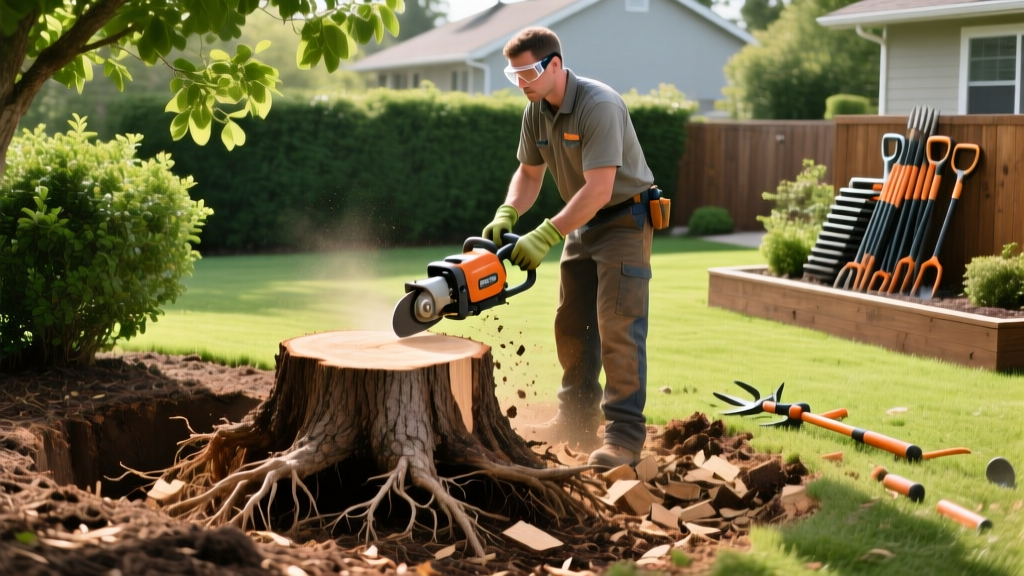
Pest Control Playbook: The Safe Removal of Tree Stumps
The Biological Threat of Retained Stumps
Leaving a felled tree stump in your yard is not merely an aesthetic compromise; it is an active invitation for structural pests and invasive pathogens. From an integrated pest management (IPM) perspective, the removal of tree stumps is a critical defensive maneuver. Decaying wood retains moisture and provides a stable thermal environment, making it an ideal incubator for wood-destroying organisms (WDOs). When a stump is left to rot naturally, it can take 3 to 7 years to fully decompose, during which time it acts as a satellite colony for pests that can eventually migrate to your home's foundation or healthy landscaping.
Subterranean termites (Reticulitermes flavipes) utilize stump root systems as primary foraging hubs. According to the Environmental Protection Agency (EPA), termite colonies can expand their foraging radius up to 100 feet from a central food source. A retained stump located near your property line can easily bridge the gap to your home's wooden sill plates. Furthermore, stumps harbor carpenter ants (Camponotus pennsylvanicus), which excavate galleries in moist, decaying wood before moving on to sound structural timber.
Pest and Pathogen Threat Matrix
| Threat Agent | Target Stump Condition | Spread Radius | Primary Damage Vector |
|---|---|---|---|
| Eastern Subterranean Termites | Bark-on, soil-contact stumps | Up to 100 feet | Migrates via mud tubes to home foundations |
| Carpenter Ants | Moist, partially decayed heartwood | 30 to 50 feet | Satellite colonies in structural eaves and siding |
| Armillaria Root Rot (Honey Fungus) | Conifer and hardwood root systems | Expands 3-5 feet/year | Rhizomorphs infect adjacent healthy tree roots |
| Powderpost Beetles | Dry, exposed hardwood stumps | Localized (flight range) | Adults fly to infest outdoor furniture and decks |
Mechanical vs. Chemical Removal: A Decision Framework
When planning the removal of tree stumps, homeowners must choose between immediate mechanical extraction and accelerated chemical decay. The correct choice depends on your budget, timeline, and the immediate pest pressure in your yard.
Mechanical Grinding (The Immediate Solution)
Stump grinding physically shreds the wood and upper root flare down to 8–12 inches below grade. This instantly eliminates the above-ground pest habitat and severs the primary root connections that harbor Armillaria mellea (honey fungus), a devastating pathogen detailed by the University of Minnesota Extension.
- Equipment: For DIY, rent a tracked grinder like the Vermeer SC362 or a Husqvarna SG13B. Tracked models are essential for wet lawns to prevent turf tearing.
- Cost: Rental rates in 2026 average $150 to $250 per day. Professional arborists charge $3 to $5 per inch of stump diameter, totaling $150 to $450 for an average 24-inch oak stump.
- Timeline: 1 to 3 hours per stump.
- Best For: High termite pressure zones, immediate replanting, and stumps larger than 20 inches in diameter.
Chemical Acceleration (The Budget DIY Route)
Chemical removal relies on high-concentration potassium nitrate (KNO3) to accelerate fungal decomposition and render the wood highly porous. This method does not remove the stump immediately but neutralizes it as a pest habitat by altering the wood's chemical composition, making it inhospitable to carpenter ants and beetles.
- Products: Spectracide Stump Remover or generic 99% Potassium Nitrate granules.
- Cost: $10 to $15 per stump.
- Timeline: 4 to 8 weeks for the wood to become spongy enough to chop out manually.
- Best For: Budget-conscious projects, small stumps (under 15 inches), and low immediate pest pressure.
Step-by-Step Chemical Decay Protocol
If you opt for chemical acceleration, precise application is required to ensure the potassium nitrate penetrates the dense heartwood and lateral roots. Follow this exact protocol for maximum efficacy:
- Reduce the Profile: Use a chainsaw to cut the stump as close to the soil line as possible. The more surface area exposed to soil moisture, the faster the decay.
- Drill the Reservoir Holes: Using a 1-inch spade bit or auger bit, drill holes 10 to 12 inches deep into the top of the stump. Space the holes 3 inches apart in a concentric ring, staying 2 inches away from the outer bark edge.
- Angle the Lateral Drills: Drill additional holes at a 45-degree downward angle through the side bark into the root flare to ensure the chemical reaches the lateral roots where pests overwinter.
- Apply the Accelerator: Fill each hole to the brim with potassium nitrate granules. For a 20-inch stump, expect to use roughly 1.5 to 2 pounds of product.
- Hydrate and Seal: Pour warm water into the holes to dissolve the granules. Cover the entire stump with a heavy-duty black polyethylene tarp, securing the edges with landscape staples to trap heat and moisture.
- Manual Extraction: After 6 weeks, the wood should have the consistency of a damp sponge. Use a mattock and axe to chop out the remaining fibers and root mass.
⚠️ Critical Safety Warning: Utility Lines
Before operating any stump grinder or digging out root balls, you must contact your local utility notification center. In the US and Canada, dial 811 or visit call811.com at least 72 hours before starting. Hitting a buried gas or fiber-optic line with a grinder's cutting wheel can result in fatal explosions or tens of thousands of dollars in infrastructure repair fines.
Post-Removal Soil Remediation and Weed Suppression
The removal of tree stumps leaves behind a void filled with woodchips and decaying root matter. If left unmanaged, this debris causes 'nitrogen robbery'—a process where soil microbes consume all available nitrogen to break down the carbon-heavy wood, starving surrounding turf and ornamentals. Furthermore, residual root fragments of invasive species like the Tree of Heaven (Ailanthus altissima) or Bradford Pear will aggressively sucker, creating a persistent weed problem.
The Remediation Formula
To restore the soil biology and prevent invasive suckering, execute the following remediation steps immediately after the stump cavity is cleared:
- Extract the Chips: Remove at least 80% of the woodchips from the hole. Do not use stump grindings as mulch near your home, as they can harbor surviving termite larvae.
- Amend with Nitrogen: Fill the void with a mix of native topsoil and compost. To counteract nitrogen depletion, incorporate a high-nitrogen fertilizer like blood meal (12-0-0) at a rate of 2 pounds per 100 square feet, or use a balanced 10-10-10 granular synthetic fertilizer.
- Apply a Systemic Herbicide (If Suckering is a Risk): If the removed tree was a known suckering species, paint the freshly cut lateral roots with a 41% Glyphosate solution before backfilling the soil. This translocates down the root system to kill the terminal buds, preventing years of aggressive weed management.
Frequently Asked Questions
Will Epsom salt effectively kill a stump and deter pests?
While magnesium sulfate (Epsom salt) can desiccate wood by drawing out moisture, it is highly inefficient for stumps larger than 12 inches in diameter. It takes 6 to 12 months to work and does not alter the wood chemistry enough to deter carpenter ants during the drying process. Potassium nitrate is vastly superior for accelerated decay and pest neutralization.
How deep should a stump be ground to prevent termite bridging?
For effective termite deterrence, the stump must be ground to a minimum depth of 8 inches below the surrounding soil grade. This ensures the remaining root crown is buried deeply enough that termites cannot easily build mud tubes from the decaying wood to the surface and toward your home's foundation.
Can I replant a new tree in the exact same spot after grinding?
Do not plant a new tree directly in the center of a freshly ground stump. The decomposing woodchips will rob the soil of nitrogen and create air pockets that cause the new tree's root ball to sink and rot. Offset the new planting hole by at least 3 to 4 feet from the original stump center, or wait 12 to 18 months for the grindings to fully decompose and the soil to settle.

