
Tree Care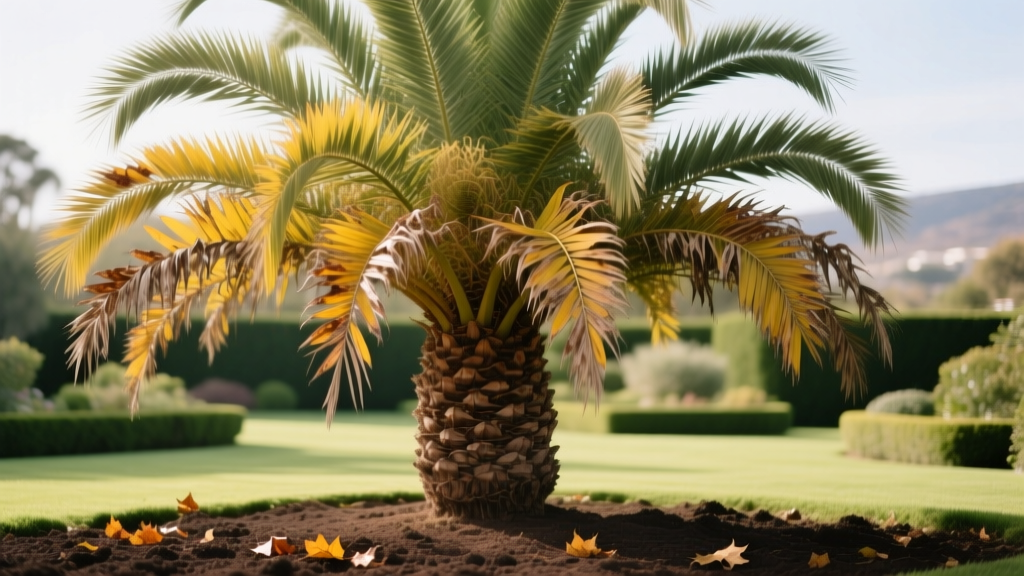
Phoenix Palm Problems: Diagnosing Yellowing, Wilt, and Decline
The Diagnostic Framework: Symptom to Solution
Trees in the Phoenix genus—including the Canary Island date palm (Phoenix canariensis), pygmy date palm (Phoenix roebelenii), and true date palm (Phoenix dactylifera))—are architectural staples in warm climates. However, their susceptibility to specific vascular diseases and nutritional imbalances makes accurate diagnosis critical. Misdiagnosing a lethal fungal infection as a simple potassium deficiency leads to wasted fertilizer and the eventual loss of a mature specimen worth thousands of dollars.
Before applying any treatment, you must isolate the variable. Palm fronds are historical records; the oldest (lowest) fronds reflect nutrient mobility issues, while the newest (central) fronds reveal soil pH lockouts or systemic vascular blockages. Use the following diagnostic matrix to identify the exact failure mode affecting your Phoenix palm.
Warning: The Over-Pruning Trap
Never strip yellowing or brown fronds from a Phoenix palm until they are 100% desiccated. The palm actively retranslocates potassium, magnesium, and nitrogen from dying tissue back into the central meristem. Premature pruning accelerates decline and forces the palm to deplete its internal reserves.
Never strip yellowing or brown fronds from a Phoenix palm until they are 100% desiccated. The palm actively retranslocates potassium, magnesium, and nitrogen from dying tissue back into the central meristem. Premature pruning accelerates decline and forces the palm to deplete its internal reserves.
Nutritional Deficiencies vs. Lethal Pathogens
Distinguishing between abiotic stress (nutrients/water) and biotic threats (fungi/phytoplasmas) requires close inspection of the rachis (the central stem of the frond) and the progression of necrosis. Below is a clinical comparison of the four most common Phoenix palm problems.
| Condition | Visual Symptoms | Progression Pattern | Primary Treatment |
|---|---|---|---|
| Potassium (K) Deficiency | Translucent yellow-orange spotting on oldest fronds; necrotic leaflet tips. | Moves upward from the lowest canopy over several months. | Soil application of 8-2-12-4Mg palm special fertilizer. |
| Magnesium (Mg) Deficiency | Broad, bright yellow bands along the outer margins of older leaflets. | Affects lower-to-middle canopy; center of leaflet remains green. | Magnesium sulfate (Epsom salt) soil drench or prilled kieserite. |
| Fusarium Wilt | One-sided wilting; spines on one side of the rachis die while the other stays green. | Rapid collapse of individual fronds, moving up the canopy asymmetrically. | No cure. Immediate removal and strict tool sterilization. |
| Texas Phoenix Palm Decline (TPPD) | Premature fruit drop, followed by necrosis of oldest fronds and spear rot. | Systemic yellowing moving inward; central spear collapses in late stages. | Oxytetracycline-HCl trunk injections every 4 months. |
Fungal Wilt and Butt Rot: Surgical Interventions
Fusarium oxysporum f. sp. canariensis is a soil-borne and mechanically transmitted fungus that specifically targets Phoenix canariensis. According to the University of Florida IFAS, this pathogen blocks the xylem vessels, starving the canopy of water. The hallmark sign is the 'one-sided wilt'—a single frond will appear half-dead and half-alive, split perfectly down the central rachis.
The 10-Minute Sanitization Protocol
If you suspect Fusarium, your pruning tools are the primary vector. Wiping a saw blade with a rag is insufficient. Fusarium spores embed in the metal teeth and survive standard alcohol wipes. To protect adjacent palms, implement this protocol:
- Prep the Solution: Mix 1 part household bleach (5.25% sodium hypochlorite) to 9 parts water, or use a commercial quaternary ammonium compound like Consan 20 at label rates.
- Soak, Don't Wipe: Submerge the pruning saw blade and handle in the solution for a full 10 minutes between every single cut.
- The Disposable Alternative: For high-value landscape specimens, professional arborists increasingly use reciprocating saws with disposable pruning blades, discarding the blade after cutting each individual frond to guarantee zero cross-contamination.
If Ganoderma butt rot (Ganoderma zonatum) is present—identified by the emergence of a reddish-brown, shelf-like conk at the base of the trunk—the palm's structural integrity is compromised. There is no chemical treatment for Ganoderma. The palm must be removed by a certified arborist before the trunk snaps in high winds, and the soil must be excavated to remove the primary inoculum.
Managing Texas Phoenix Palm Decline (TPPD)
TPPD is caused by a phytoplasma (a bacteria-like organism without a cell wall) transmitted by sap-feeding insects. It is lethal if left untreated. The UF IFAS Extension confirms that early intervention with antibiotics can keep the palm alive indefinitely, though it will not 'cure' the underlying infection.
Trunk Injection Methodology and Costs
Prophylactic or early-stage therapeutic injections require Oxytetracycline-HCl (OTC). Products like Arborjet's injectable OTC formulations are the industry standard.
- Drilling Specifications: Use a 1/4-inch brad-point drill bit. Drill holes 2 to 2.5 inches deep into the outer xylem, angling slightly downward. Space holes 4 inches apart around the entire circumference of the trunk, approximately 12 to 18 inches above the soil line.
- Dosage: Dosage is strictly calculated by trunk diameter at breast height (DBH). A mature 24-inch DBH Canary Island date palm typically requires 40 to 60 mL of the formulated OTC solution.
- Cost Analysis: Professional injection services range from $150 to $300 per tree per treatment (required every 4 months). DIY injection kits cost roughly $45 to $75, but improper drilling can cause severe trunk scarring and secondary fungal entry points.
Soil Drench and Root Zone Rescue Plan
When dealing with abiotic decline, correcting the soil chemistry is mandatory. Phoenix palms require a specific nutrient ratio to thrive, and standard landscape fertilizers (like 10-10-10) will induce severe magnesium and potassium lockouts due to competitive ion uptake.
The 8-2-12-4Mg Standard
Always use a 'Palm Special' fertilizer with an 8-2-12 NPK ratio plus 4% Magnesium, where 100% of the nitrogen, potassium, and magnesium are in slow-release, coated forms (e.g., sulfur-coated or polymer-coated). Apply at a rate of 1.5 lbs per 100 square feet of canopy area every 3 months during the growing season. Broadcast evenly from the trunk out to the drip line; never pile fertilizer against the trunk base.
Always use a 'Palm Special' fertilizer with an 8-2-12 NPK ratio plus 4% Magnesium, where 100% of the nitrogen, potassium, and magnesium are in slow-release, coated forms (e.g., sulfur-coated or polymer-coated). Apply at a rate of 1.5 lbs per 100 square feet of canopy area every 3 months during the growing season. Broadcast evenly from the trunk out to the drip line; never pile fertilizer against the trunk base.
If your soil pH exceeds 7.0, manganese becomes unavailable, leading to 'frizzle top'—a condition where new fronds emerge stunted, curled, and heavily streaked with necrotic tissue. Lowering the pH of alkaline soils is a multi-year process. For immediate relief, apply a foliar spray of Manganese Sulfate (2 oz per gallon of water) directly to the emerging central spear, or apply 3 lbs of manganese sulfate per 100 sq ft to the soil surface.
Expert FAQs
Why is my Pygmy Date Palm (Phoenix roebelenii) suddenly dropping green fronds?
Sudden drop of green, healthy-looking fronds in Phoenix roebelenii is a primary indicator of lethal yellowing or a severe root asphyxiation event. Check the soil moisture at a depth of 18 inches using a soil probe. If the soil is waterlogged, the roots are suffocating, and the abscission zone triggers frond drop. If the soil is adequately dry and the spear is easily pulled from the center, suspect a phytoplasma disease and contact a local extension office for PCR testing.
Can I use Epsom salts to fix potassium deficiency?
No. Epsom salt is magnesium sulfate. Applying it to a potassium-deficient palm will worsen the potassium deficiency due to cation competition in the soil profile. You must use a potassium-rich fertilizer (like the 8-2-12 formula mentioned above) and only supplement magnesium if a tissue test confirms a dual deficiency.
How much water does a mature Canary Island Date Palm need?
Mature Phoenix canariensis specimens are drought-tolerant but require deep irrigation to maintain canopy density. During peak summer months, apply 20 to 30 gallons of water per session, twice a month, ensuring the water penetrates the top 24 to 36 inches of the soil profile. Frequent, shallow watering promotes surface rooting and increases susceptibility to windthrow and drought stress.

