
Tree Care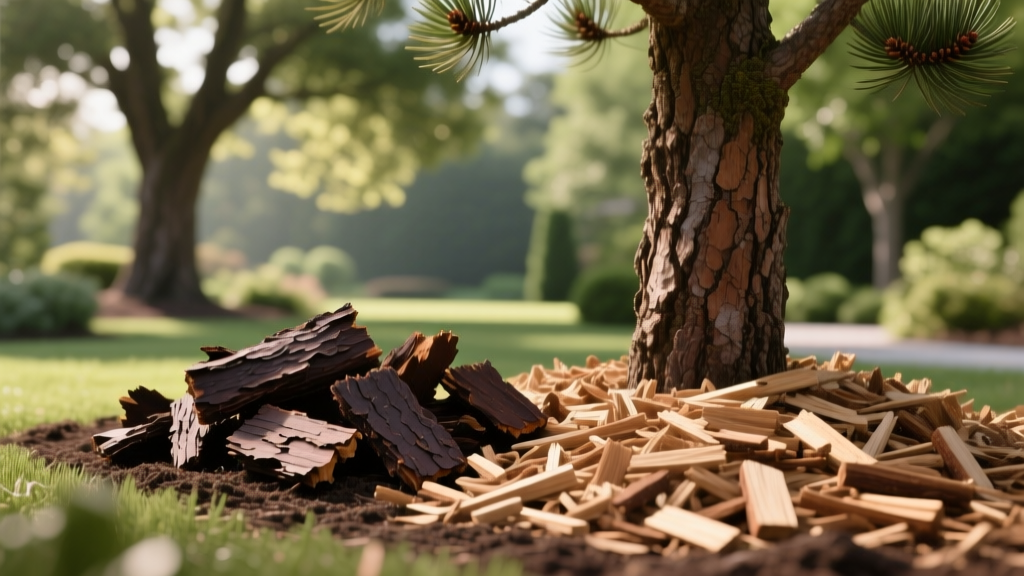
Pine Bark Nuggets vs Mulch: Best Choice for Tree Root Zones
When establishing or maintaining a tree root zone, the physical structure of your mulch dictates moisture retention, soil temperature regulation, and long-term soil health. The debate of pine bark nuggets vs mulch (specifically shredded hardwood or shredded pine) is not about which is universally superior, but rather which physical geometry matches your specific soil profile, topography, and tree species.
Pine bark nuggets are large, chunky pieces of bark (typically 1 to 3 inches in diameter) stripped from pine trees during timber milling. Shredded mulch consists of finely ground wood and bark that has been mechanically torn into fibrous strands. This structural difference fundamentally alters how water moves through the material, how quickly it decomposes, and how it interacts with the soil microbiome.
Quick Decision Framework
- Choose Pine Bark Nuggets if: Your tree bed is in a high-wind corridor, you are growing acid-loving species (Dogwoods, Pin Oaks, Magnolias), or you want a long-lasting aesthetic that requires less frequent top-dressing.
- Choose Shredded Mulch if: Your tree bed is on a slope greater than 10%, you have heavy clay soil that needs rapid organic matter integration, or you are establishing newly planted saplings that require consistent surface moisture.
Physical and Chemical Comparison Matrix
Understanding the exact breakdown rates and physical properties is critical for planning your annual landscape maintenance budget and soil amendment schedule.
| Feature | Pine Bark Nuggets | Shredded Pine/Hardwood Mulch |
|---|---|---|
| Particle Size | 1.0" - 3.0" chunks | Fibrous strands, 0.5" - 2" |
| Decomposition Rate | Slow (3 to 5 years) | Fast (1 to 2 years) |
| Moisture Permeability | High (water passes through gaps) | Moderate (absorbs and holds water) |
| Slope Stability | Poor (floats and washes away) | Excellent (fibers knit together) |
| Weed Suppression | Moderate (light penetrates gaps) | High (blocks light effectively) |
| 2026 Bulk Cost (Avg) | $38 - $48 per cubic yard | $28 - $36 per cubic yard |
The Case for Pine Bark Nuggets in Tree Beds
Pine bark nuggets are highly suberized, meaning they contain dense, cork-like tissue rich in lignin. This lignin makes them highly resistant to microbial breakdown. For established trees in flat beds, this longevity is a major advantage. You will only need to top-dress a nugget-mulched bed every three to four years, compared to annually for shredded mulch.
Furthermore, pine bark naturally maintains a slightly acidic pH (typically between 4.0 and 5.0). While it will not drastically alter the pH of your underlying soil, it creates an ideal microclimate at the soil surface for acid-loving tree species. If you are managing a landscape with Eastern White Pines, Flowering Dogwoods, or Japanese Maples, pine bark nuggets support the specific mycorrhizal fungi these trees rely on for nutrient uptake.
Arborist Warning: Because nuggets are large and porous, they do not block sunlight as effectively as shredded mulch. If your tree bed has a history of aggressive weed pressure (like crabgrass or nutsedge), you must lay down a layer of cardboard or arborist fabric before applying a 3-inch layer of nuggets to prevent weeds from germinating in the soil gaps between the chunks.
The Case for Shredded Mulch in Tree Beds
Shredded mulch, whether double-shredded hardwood or pine, excels in environments where soil amendment and erosion control are the primary goals. The mechanical shredding process creates jagged, fibrous edges that interlock when watered. This 'knitting' effect forms a cohesive mat that resists displacement from heavy rainfall and surface runoff.
According to research published by the University of Maryland Extension, shredded mulch is vastly superior for slope stabilization. If your tree is planted on a berm or a graded slope exceeding a 10% incline, pine bark nuggets will float and wash into your storm drains during heavy spring rains. Shredded mulch will lock into place, protecting the critical root zone from soil erosion.
Additionally, shredded mulch breaks down rapidly. As it decomposes, it adds vital organic matter to the topsoil, improving soil structure, increasing cation exchange capacity (CEC), and feeding the soil food web. For newly planted trees with underdeveloped root systems, the consistent surface moisture retained by the mat-like structure of shredded mulch prevents the top two inches of soil from drying out during summer heat spikes.
Debunking the Nitrogen Tie-Up Myth
A persistent myth in tree care is that pine bark and wood mulches 'steal' nitrogen from the soil, starving the tree. This misunderstanding stems from the Carbon-to-Nitrogen (C:N) ratio. Pine bark has a C:N ratio of roughly 150:1, while soil microbes require a 25:1 ratio to function. When microbes break down high-carbon mulch, they do consume nitrogen.
However, this nitrogen immobilization occurs only at the exact interface where the mulch touches the soil (the top 1/4 inch). It does not affect the deeper root zones where the tree actually absorbs its nutrients. The only time nitrogen tie-up becomes a severe issue is if a homeowner or landscaper incorrectly tills or mixes the mulch into the topsoil. Always apply mulch strictly as a surface dressing. If you are concerned about surface nitrogen depletion affecting shallow-rooted groundcovers planted beneath the tree, simply apply a light broadcast of a balanced 10-10-10 granular fertilizer (at a rate of 1 lb per 1,000 sq ft) before laying the mulch.
Step-by-Step Application Framework for Tree Beds
Regardless of whether you choose nuggets or shredded mulch, improper application is the leading cause of trunk rot and girdling roots. Follow the industry-standard 3-3-3 rule for application:
- Clear the Zone (3-foot radius minimum): Remove all turfgrass and weeds in a minimum 3-foot radius from the trunk. For mature trees, extend this to the drip line if possible. Grass competes aggressively for surface water and nutrients.
- Expose the Root Flare: Use a hand trowel or air spade to locate the root flare (where the trunk widens at the base and enters the soil). The root flare must remain completely exposed to the air. Burying the root flare causes phloem tissue to rot and invites secondary pathogens like Phytophthora.
- Apply at 3 Inches Deep: Spread your chosen mulch to a maximum depth of 3 inches. If using pine bark nuggets, you can push this to 4 inches due to their high porosity, but never exceed 4 inches, or you will restrict oxygen diffusion to the feeder roots.
- Maintain a 3-Inch Gap: Keep the mulch exactly 3 inches away from the physical trunk of the tree. This prevents 'volcano mulching,' a practice that the Missouri Botanical Garden explicitly warns against, as it traps moisture against the bark and encourages adventitious root growth that can eventually girdle and kill the tree.
2026 Sourcing and Cost Analysis
When budgeting for tree bed maintenance, buying bagged mulch from big-box stores is economically inefficient for anything more than a single small tree bed. A standard 2-cubic-foot bag of pine bark nuggets retails for $5.50 to $7.00 in 2026. To cover a standard 10x10 foot bed at 3 inches deep, you need roughly 1 cubic yard (13.5 bags), which will cost you over $80.
Ordering bulk mulch from a local landscape supply yard drops the price significantly. Bulk shredded hardwood averages $28 to $36 per cubic yard, while bulk pine bark nuggets range from $38 to $48 per cubic yard. Most suppliers charge a flat delivery fee of $50 to $125 depending on your zip code. If you are mulching more than two mature trees, bulk delivery dropped in your driveway is the most cost-effective and structurally sound option.
Frequently Asked Questions
Do pine bark nuggets attract termites?
No. Pine bark contains natural resins and terpenes that act as mild insect repellents. Termites prefer the cellulose found in shredded hardwood or untreated pine wood chips. Neither mulch type will cause a termite infestation, but keeping any mulch 6 inches away from your home's foundation is a strict structural pest control requirement.
Which mulch is less likely to grow artillery fungus?
Arillery fungus (Sphaerobolus stellatus) thrives on decaying hardwood cellulose and shoots tar-like spores onto nearby cars and siding. Pine bark nuggets are highly resistant to artillery fungus due to their slow decomposition rate and resin content. If your tree bed is near a driveway or light-colored house siding, always choose pine bark nuggets over shredded hardwood.

