
Tree Care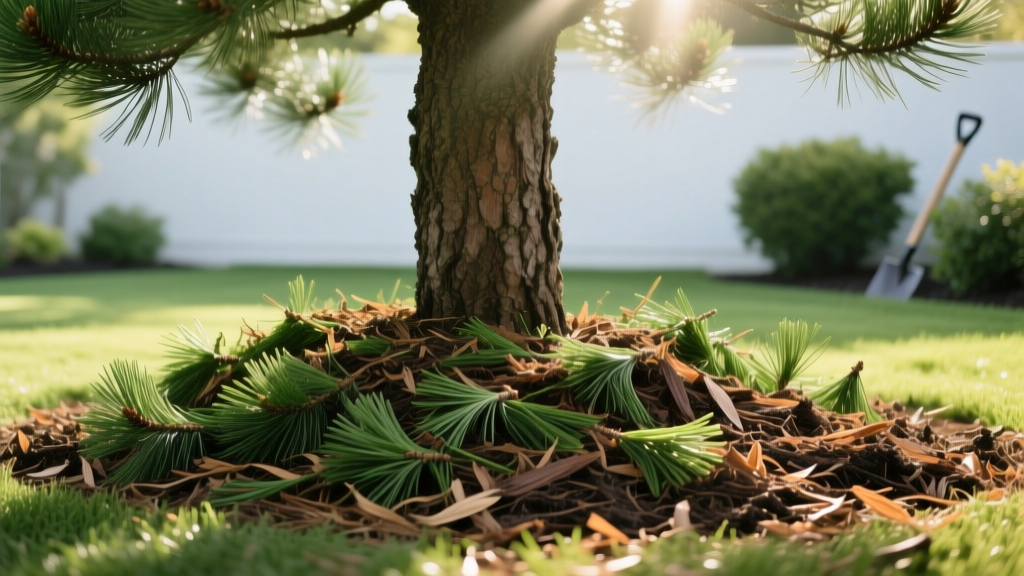
Pine Needle Mulch for Trees: Depth, pH Myths, and Application Guide
The Soil Acidity Myth: Will Pine Straw Alter Your Tree's pH?
The most persistent misconception in arboriculture is that pine needle mulch (commonly sold as pine straw) will drastically acidify your soil and harm non-acid-loving trees. This myth stems from the pH of fresh, green pine needles, which typically range from 3.2 to 3.8. However, the mulch you purchase in bales for landscaping consists of dried, brown needles that have already leached their organic acids onto the forest floor.
Dried pine straw has a near-neutral pH of 6.0 to 6.5. When applied as a surface mulch, it has virtually zero impact on the underlying soil chemistry. According to soil science research cited by Penn State Extension, surface-applied organic mulches decompose too slowly and lack the chemical concentration required to alter the pH of established garden soils. You can safely use pine needle mulch around neutral-preferring species like maples, oaks, and dogwoods without fear of acidifying the root zone.
Myth vs. Fact:
Myth: Pine straw makes soil too acidic for most trees.
Fact: Dried brown pine straw has a pH of ~6.2 and will not alter soil acidity. Only tilling fresh green needles directly into the soil will temporarily lower pH.
Myth: Pine straw makes soil too acidic for most trees.
Fact: Dried brown pine straw has a pH of ~6.2 and will not alter soil acidity. Only tilling fresh green needles directly into the soil will temporarily lower pH.
Calculating Coverage and Depth by Tree Species
Proper mulch depth is critical for tree health. The Arbor Day Foundation strictly warns against "volcano mulching," which suffocates roots and invites fungal pathogens. Pine straw is exceptionally lightweight and compresses over time, meaning you must apply it slightly thicker than heavy hardwood barks to achieve the same insulating and moisture-retaining benefits.
| Tree Species Type | Root Flare Buffer | Target Mulch Depth | Max Radius |
|---|---|---|---|
| Shallow-Rooted (e.g., Dogwood, Birch) | 4 inches | 2 to 3 inches | To drip line |
| Deep-Rooted (e.g., Oak, Hickory) | 3 inches | 3 to 4 inches | To drip line |
| Acid-Lovers (e.g., Pine, Spruce, Magnolia) | 3 inches | 3 to 5 inches | To drip line |
Step-by-Step Application for Maximum Moisture Retention
Pine needles have a unique physical structure. Their elongated, needle-like shape allows them to interlock, forming a porous matrix that resists wind scatter and water runoff. To leverage this physics, follow this specific application protocol:
- Clear the Competition Zone: Remove all turf grass and weeds within a minimum 3-foot radius of the trunk. Use a sharp spade to sever grass roots; do not use chemical herbicides near the tree's feeder roots.
- Expose the Root Flare: Brush away existing soil or old mulch until the trunk flare (where the trunk widens at the base) is completely visible. This is your absolute boundary line.
- Lay the Base Layer: Shake the pine straw bales apart loosely. Do not pack them down in clumps. Drop them gently to maintain air pockets, which facilitate gas exchange for the soil microbiome.
- Measure and Level: Use a ruler to ensure the depth does not exceed 4 inches. If the needles are heavily compacted from the baling wire, fluff them with a pitchfork to restore their 3D interlocking structure.
- Water the Matrix: Immediately after spreading, water the mulch heavily for 5 to 10 minutes. This settles the interlocking needles, preventing them from blowing away in high winds before they naturally mat together.
Pine Straw vs. Shredded Hardwood: 2026 Cost and Performance Matrix
When planning your landscape budget, comparing pine straw to shredded hardwood requires looking beyond the initial price tag. Hardwood is typically sold by the cubic yard, while pine straw is sold by the bale. As of 2026, regional pricing fluctuations have narrowed the gap, but the labor and longevity metrics tell a different story.
| Metric | Pine Needle Mulch (Bales) | Shredded Hardwood (Cubic Yards) |
|---|---|---|
| Average 2026 Cost | $7.00 - $11.00 per bale | $38.00 - $55.00 per cubic yard |
| Coverage (at 3" depth) | ~25 sq. ft. per standard bale | ~100 sq. ft. per cubic yard |
| Cost per 100 sq. ft. | $28.00 - $44.00 | $38.00 - $55.00 |
| Erosion Resistance | Excellent (interlocks on slopes) | Poor (washes away in heavy rain) |
| Decomposition Rate | Slow (lasts 9-12 months) | Fast (breaks down in 4-6 months) |
Sourcing High-Quality Bales: Longleaf vs. Slash Pine
Not all pine straw bales are created equal. The species of pine dictates the needle length, which directly impacts the mulch's interlocking ability and lifespan. When sourcing from local landscape suppliers or agricultural feed stores, check the bale tags for the specific pine species.
- Longleaf Pine (Pinus palustris): The premium standard. Needles are 8 to 14 inches long. They interlock tightly, stay in place on steep inclines, and resist compaction. Expect to pay a 20% to 30% premium for longleaf bales.
- Slash Pine (Pinus elliottii): Needles are 5 to 8 inches long. A solid mid-tier option that provides good coverage but may require a thicker application to prevent wind scatter.
- Loblolly Pine (Pinus taeda): Needles are 4 to 6 inches long. The most common and cheapest variety, but the short needles fail to interlock effectively, making them prone to blowing away in exposed areas.
Pro-Tip for Slope Retention: If you are mulching a tree situated on a grade greater than 15%, exclusively use Longleaf pine straw. Lay the needles horizontally across the slope (parallel to the contour lines) rather than pointing them up and down the hill. This creates a series of micro-terraces that slow water velocity and prevent trenching.
Common Edge Cases and Troubleshooting
Even with proper application, specific environmental factors can cause issues with pine needle mulch. Here is how to troubleshoot the most common edge cases encountered in the field:
- The Nitrogen Tie-Up Fear: Many gardeners worry that pine straw will rob the soil of nitrogen as it decomposes. This carbon-to-nitrogen imbalance only occurs when organic matter is tilled into the soil, where soil bacteria consume nitrogen to break it down. Because pine straw is applied strictly to the surface, soil microbes do not incorporate it into the root zone, meaning zero nitrogen depletion occurs. No supplemental fertilization is required.
- Fire Hazard in Drought Zones: Dried pine straw is highly combustible. If you live in a Wildland-Urban Interface (WUI) zone in states like California or Colorado, do not use pine straw within 5 feet of any combustible structure. Maintain a strict non-combustible hardscape buffer around the home, and only use pine straw for trees situated further out in the defensible space zone.
- Fungal Artillery Spots: Unlike hardwood mulch, pine straw rarely hosts Sphaerobolus stellatus (artillery fungus), the nuisance fungus that shoots black tar-like spores onto house siding and car paint. If you are mulching trees near a driveway or light-colored home exterior, pine straw is vastly superior to hardwood for preventing cosmetic property damage.

