
Tree Care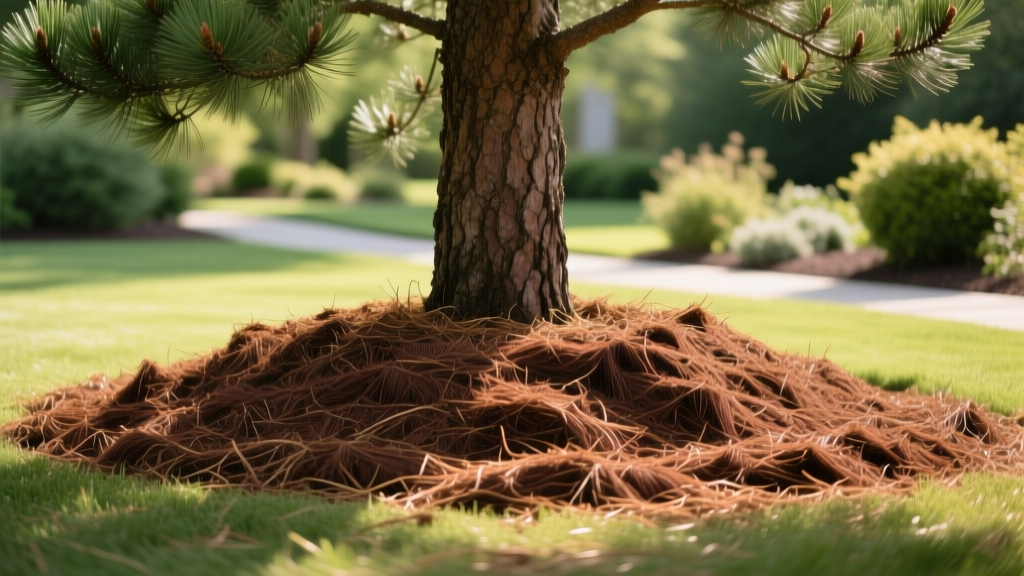
Pine Straw Mulch for Trees: Depth, Cost, and Soil pH Benefits
The Real Impact of Pine Straw Mulch on Soil pH
One of the most persistent myths in arboriculture is that pine straw mulch will drastically acidify your soil, harming trees that prefer neutral conditions. While fresh, green pine needles do have a highly acidic pH (typically between 3.2 and 3.8), the baled pine straw you purchase for landscaping has already undergone significant weathering and leaching.
According to soil science research from North Carolina State Extension, weathered pine straw has a pH ranging from 5.5 to 6.5. By the time the needles break down and interact with the soil's buffering capacity, their impact on the underlying soil pH is virtually negligible. If your soil is already highly alkaline (pH above 7.5), pine straw will not lower it enough to benefit acid-loving trees like pin oaks or dogwoods. You will still need elemental sulfur amendments to correct the pH.
The 3-3-3 Rule for Tree Mulching
When applying pine straw around trees, always follow the 3-3-3 rule to prevent trunk rot and root girdling:
- 3 Inches Deep: Apply a uniform 2 to 3-inch layer of fluffed straw. Compacting it thicker restricts oxygen to the fine feeder roots.
- 3 Inches from the Trunk: Keep the mulch exactly 3 inches away from the tree bark. "Volcano mulching" traps moisture against the cambium, inviting fungal pathogens like Phytophthora.
- 3 Feet Wide (Minimum): Extend the mulch ring at least 3 feet from the trunk in all directions, though extending to the drip line is optimal for mature trees.
2026 Cost Breakdown: Pine Straw vs. Alternatives
When budgeting for a large-scale tree care project, understanding the volumetric cost of mulch is critical. Pine straw is sold by the bale, while hardwood and bark are typically sold by the cubic yard or bagged cubic foot. A standard square bale of longleaf or loblolly pine straw yields approximately 2.5 to 3.0 cubic feet when properly fluffed.
| Mulch Type | Unit of Measure | Average 2026 Cost | Cost per Cubic Foot | Longevity |
|---|---|---|---|---|
| Pine Straw (Baled) | 1 Square Bale (~2.5 cu ft) | $6.00 - $9.00 | $2.40 - $3.60 | 12 - 18 Months |
| Double-Shredded Hardwood | 1 Bulk Cubic Yard (27 cu ft) | $35.00 - $55.00 | $1.29 - $2.03 | 10 - 14 Months |
| Pine Bark Mini-Nuggets | 1 Bulk Cubic Yard (27 cu ft) | $45.00 - $65.00 | $1.66 - $2.40 | 24 - 36 Months |
| Bagged Hardwood (Big Box) | 1 Bag (2.0 cu ft) | $3.98 - $4.98 | $1.99 - $2.49 | 8 - 12 Months |
While bulk hardwood is the cheapest option per cubic foot, pine straw offers superior water infiltration and soil aeration. Unlike shredded hardwood, which can mat and form a hydrophobic crust over time, the needle structure of pine straw maintains air pockets, ensuring vital oxygen reaches the tree's root zone.
Step-by-Step Application for Optimal Tree Health
Applying pine straw correctly requires a different technique than dumping and spreading wood chips. Follow this protocol to maximize moisture retention and weed suppression.
- Clear the Base: Remove any existing, matted mulch, weeds, or turfgrass within a 3-foot radius of the trunk. Use a hand cultivator to lightly scarify the top 1 inch of soil without severing surface roots. Never lay landscape fabric beneath pine straw; it blocks vital gas exchange between the soil and atmosphere.
- Cut the Twine: Place the bale near the tree and cut the baling twine. Remove all plastic or sisal twine to prevent wildlife entanglement and root girdling.
- Fluff, Do Not Chop: Use a pitchfork or your hands (wearing leather gloves) to pull the straw apart. Do not run pine straw through a leaf shredder; destroying the needle structure eliminates the aeration benefits and accelerates decomposition to a matter of weeks.
- Apply and Grade: Distribute the fluffed straw to a depth of 3 inches. Grade the outer edge slightly downward to create a shallow berm that captures rainwater and directs it toward the root ball.
- Water the Mulch: Lightly water the newly applied pine straw. This settles the needles, prevents them from blowing away in high winds, and kickstarts the microbial breakdown process at the soil-mulch interface.
Nitrogen Tie-Up and Decomposition Dynamics
A common concern among arborists is whether carbon-heavy mulches cause nitrogen tie-up (immobilization) in the soil. When microorganisms break down high-carbon materials, they consume soil nitrogen, potentially starving the tree. The Carbon-to-Nitrogen (C:N) ratio of pine straw is approximately 80:1, while shredded hardwood can exceed 400:1.
However, research published by the University of Florida IFAS indicates that nitrogen immobilization primarily occurs when mulch is incorporated into the soil. Because pine straw is applied as a surface dressing, the C:N ratio at the soil-mulch interface remains stable. The tree's feeder roots will not experience nitrogen deficiency unless the straw is aggressively tilled into the root zone. For established trees, a standard spring application of a balanced 10-10-10 or slow-release arborist fertilizer applied under the mulch layer is sufficient to offset any minor surface-level microbial demand.
When to Avoid Pine Straw Mulch
Despite its benefits, pine straw is not the universal solution for every landscape. Avoid using it in the following scenarios:
- High-Wind Corridors: In coastal areas or open plains with sustained winds over 25 mph, pine straw will scatter across your lawn. In these environments, heavier pine bark nuggets or shredded hardwood are necessary.
- Wildland-Urban Interface (WUI) Zones: If you live in a fire-prone region, dry pine straw is highly combustible. The Arbor Day Foundation recommends using non-combustible mulches like gravel or strictly maintaining a 5-foot defensible space around structures. Keep pine straw at least 15 feet away from your home's siding.
- Slopes Exceeding 15%: While pine straw interlocks better than wood chips, heavy rainfall on steep grades will wash it away. Use jute netting or erosion control blankets pinned beneath the straw on steep inclines.
Frequently Asked Questions
Does pine straw attract termites or carpenter ants?
No. Termites feed on cellulose found in solid wood and wood chips, not the waxy, resinous needles of pine straw. In fact, pine straw is generally less attractive to subterranean termites than shredded hardwood mulch.
How often should I replenish pine straw around my trees?
Pine straw decomposes slower than shredded leaves but faster than bark nuggets. Plan to top-dress your tree rings with an additional 1 to 1.5 inches of fresh straw every 12 to 18 months to maintain the optimal 3-inch depth.
Can I use freshly fallen pine needles from my own yard?
Yes, but with caution. Fresh, green needles contain high levels of volatile terpenes and acids that can temporarily inhibit seed germination and stunt the growth of young, shallow-rooted plants. Allow yard-raked pine needles to age and turn brown for at least three months before applying them around sensitive trees.

