
Tree Care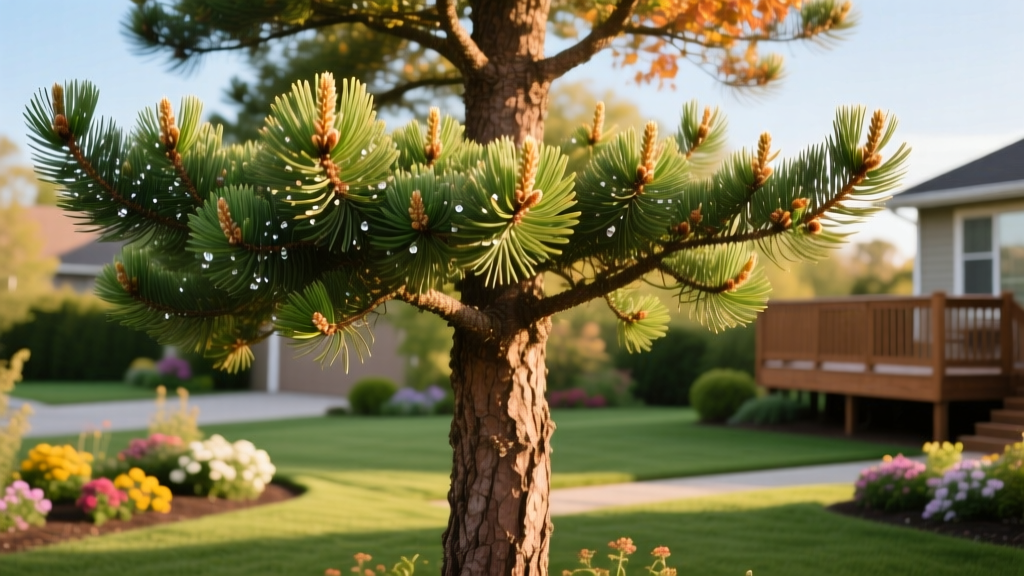
Pine Tree Allergy: Diagnosis, Symptoms, and Yard Care Solutions
For homeowners with mature conifers on their property, spring brings a highly visible and deeply frustrating phenomenon: the annual coating of bright yellow dust over every outdoor surface. While pine trees are iconic landscape staples, they are also significant sources of seasonal allergens. However, managing a pine tree allergy requires a different approach than managing other seasonal allergies due to the unique biological properties of pine pollen. This guide provides a clinical framework for diagnosing your symptoms, understanding the micro-biology of conifer pollen, and executing targeted yard maintenance solutions to drastically reduce your exposure.
Diagnosing Pine Tree Allergy vs. Spring Viral Infections
Because pine pollen season typically peaks between late March and May—depending on your USDA Hardiness Zone—its onset frequently overlaps with spring cold and flu viruses. Misdiagnosis often leads to ineffective treatments. An allergist will typically look for an IgE antibody response via skin prick testing or specific IgE blood tests to confirm sensitization to Pinus species.
Use the following diagnostic matrix to differentiate between a histamine-driven allergic response and a viral upper respiratory infection (URI):
| Symptom Profile | Pine Tree Allergy (Allergic Rhinitis) | Spring Viral URI (Common Cold) |
|---|---|---|
| Onset Speed | Sudden, often immediately after outdoor exposure | Gradual, developing over 1 to 3 days |
| Nasal Discharge | Thin, clear, and watery | Thick, cloudy, or yellowish-green |
| Eye Irritation | Intense itching, redness, and watering (allergic conjunctivitis) | Mild watering, rarely itchy |
| Fever & Body Aches | Never present | Frequently present, especially early on |
| Duration | Persists for weeks as long as pollen is in the air | Resolves within 7 to 10 days |
| Response to Antihistamines | Significant symptom reduction within 1-2 hours | No meaningful improvement |
If your symptoms align with the allergy column, you are likely reacting to the specific proteins found in pine pollen grains. For a definitive diagnosis, consult an immunologist. The Asthma and Allergy Foundation of America (AAFA) recommends tracking local pollen counts alongside your symptom diary to confirm the exact trigger window.
The Micro-Biology of Pine Pollen Exposure
To effectively mitigate a pine tree allergy, you must understand the physical properties of the allergen. Unlike birch or oak pollen, which are microscopic and can travel for miles on the wind, pine pollen grains are massive. They typically measure between 50 and 90 micrometers in diameter and possess two air-filled bladders (sacci) that aid in short-distance wind dispersal.
Because of their large size and weight, pine pollen grains do not remain suspended in the air for long. Instead, they settle rapidly. This creates a highly localized exposure zone. If you have a mature pine tree in your yard, your localized pollen load can be 10 to 50 times higher than a neighbor located just 100 yards away who does not have conifers on their property.
The yellow dust is produced exclusively by the male cones (strobili), which form in late summer, overwinter, and dehisce (open) in the spring to release pollen. The larger, woody female cones that produce pine nuts do not emit this allergenic dust.
Targeted Yard Management Solutions
You do not necessarily need to remove a mature, healthy pine tree to manage your allergies. By implementing strategic landscape management, you can intercept the pollen before it becomes airborne.
1. Pre-Emergent Cone Pruning
The most effective mechanical intervention is removing the male cones before they release their payload. Male strobili are small, soft, and clustered at the tips of lower and middle branches. They turn from green to yellowish-brown just before opening.
- Timing: In USDA Zones 5-6, inspect trees in late March. In Zones 7-9, inspect in late February.
- Execution: Use a telescoping pole saw or bypass loppers to snip the terminal ends of branches heavily laden with male cones.
- Safety: Always wear an N95 respirator and sealed safety goggles during this process to prevent stirring up trapped, older pollen from the bark.
- Cost: DIY pruning costs under $50 for tools. Hiring a certified arborist for a large canopy reduction typically ranges from $300 to $600 per tree.
2. Canopy Misting and Soil Binding
Because pine pollen is heavy, water is your best ally. Installing a simple overhead sprinkler or misting system directed at the lower canopy can weigh down emerging pollen, forcing it to drop to the soil where it binds and degrades rather than becoming airborne.
- Run a gentle overhead sprinkler for 10 minutes at dawn on dry, windy days during peak pollen season.
- Avoid high-pressure hoses, which will violently shake the branches and aerosolize the pollen.
3. Mulch and Hardscape Adjustments
Pine needles (pine straw) are a popular landscaping mulch, but they trap and hold pollen grains that drop from the canopy, creating a reservoir of allergens at ground level. When the wind blows across the mulch bed, the pollen is re-suspended.
- Replace pine straw with heavy arborist woodchips, cedar mulch, or inorganic river rock.
- Sweep hardscapes (patios, driveways) daily using a push broom rather than a leaf blower, which will instantly launch settled pollen back into your breathing zone.
Indoor Air Filtration: Catching Ruptured Pollen Granules
A common misconception is that standard HVAC filters are sufficient for pine pollen. While a basic MERV 8 filter easily catches the 50-micron whole pollen grains, it fails to address a secondary biological threat: pollen rupture.
When pine pollen grains land in high-humidity environments or are exposed to thunderstorms, they can absorb water and burst. This rupture releases hundreds of microscopic starch granules measuring between 0.5 and 2.0 micrometers. These sub-micron fragments easily penetrate deep into the lower respiratory tract, triggering severe asthma attacks even in patients who only have mild nasal allergies to whole pollen.
⚠ Filtration Specification Warning
To capture ruptured pine pollen starch granules, you must upgrade your home's defense. The Environmental Protection Agency (EPA) recommends using MERV 13 or higher filters in your central HVAC system, provided your blower motor can handle the static pressure drop. For standalone rooms, utilize a True HEPA air purifier with a Clean Air Delivery Rate (CADR) of at least 250 for smoke/pollen, which guarantees the capture of 99.97% of particles down to 0.3 microns.
Cross-Reactivity and Pine Nut Allergies
It is vital to distinguish between respiratory pine tree allergy and food allergies. According to the American Academy of Allergy, Asthma & Immunology (AAAAI), being allergic to pine pollen does not automatically mean you are allergic to pine nuts (which come primarily from the Stone Pine, Pinus pinea). However, some individuals experience Oral Allergy Syndrome (OAS), where the immune system confuses proteins in certain seeds or nuts with tree pollen proteins, leading to localized itching in the mouth and throat. If you experience tingling when consuming pesto or pine nuts, consult an allergist for component-resolved diagnosis.
Frequently Asked Questions
Does cutting down my pine tree guarantee allergy relief?
No. Because pine pollen can travel up to a quarter-mile in strong winds, removing a tree on your property will reduce your immediate, localized exposure (the heavy yellow dusting), but you will still be exposed to ambient regional pollen from neighboring forests and parks. Exhaustive yard management is usually more cost-effective than paying $1,500–$3,000 for mature tree removal and stump grinding.
Are some pine species less allergenic than others?
All true pines (Pinus genus) produce allergenic pollen. However, species like the Eastern White Pine (Pinus strobus) and Loblolly Pine (Pinus taeda) are notorious for heavy pollen production. If you are planting new windbreaks and suffer from severe allergies, consider substituting pines with low-allergen evergreens like female cultivars of Juniper or Holly, which do not produce airborne pollen.
When is the absolute worst time of day for pine pollen?
Pollen release is highly dependent on temperature and humidity. Dehiscence (the opening of the male cones) typically peaks in the late morning to early afternoon (10:00 AM to 3:00 PM) on warm, dry, and breezy days. Schedule all outdoor yard work for the early morning or immediately after a heavy rainstorm when the air is clear.

