
Tree Care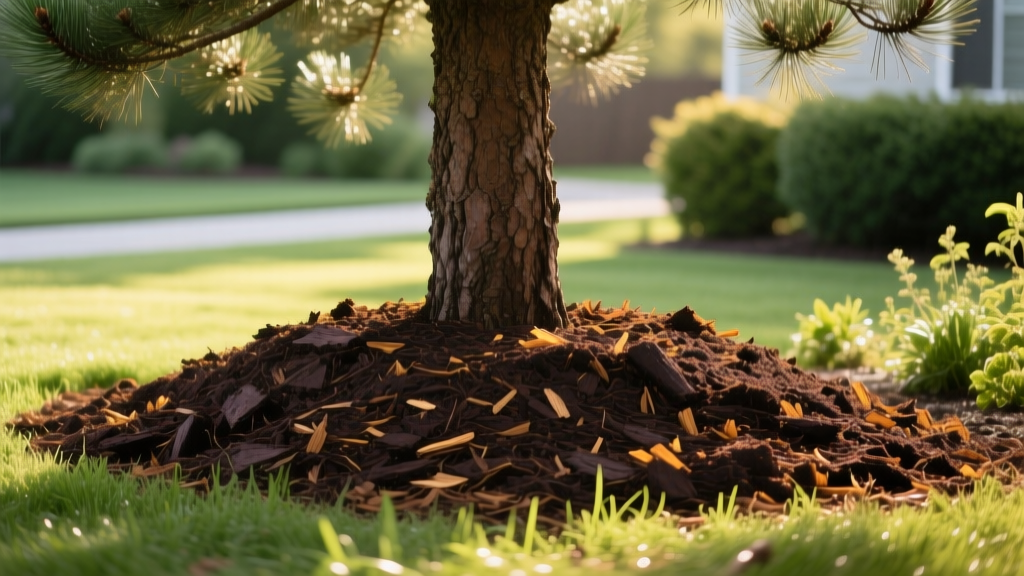
How to Use Pine Tree Mulch Without Acidifying Your Garden Soil
The Great Acidity Myth: Pine Needles vs. Pine Bark
One of the most persistent misconceptions in landscape management is that pine tree mulch will drastically lower soil pH, making it too acidic for most ornamental plants. This myth stems from the fact that fresh, green pine needles (often called pine straw) have a highly acidic pH ranging from 3.2 to 3.8. However, the biochemical reality of decomposition tells a completely different story.
The Scientific Consensus: As pine needles and pine bark age, dry out, and undergo microbial breakdown, their acidic compounds leach out and neutralize. By the time pine tree mulch is bagged, aged, or fully composted, its pH stabilizes between 6.0 and 6.5—virtually neutral. According to Penn State Extension, aged pine bark has negligible long-term impacts on the underlying soil pH, meaning you can safely use it around alkaline-loving perennials without fear of chemical lockout.
The real concern with pine tree mulch is not acidity, but rather its Carbon-to-Nitrogen (C:N) ratio and its physical water-repellent properties when applied incorrectly. Understanding these mechanical and biological factors is the key to successful soil amendment and moisture retention.
Carbon-to-Nitrogen Ratios and the 'Nitrogen Robbing' Fear
Another frequent hesitation among gardeners is the belief that pine mulch will 'rob' the soil of nitrogen. This is a half-truth that requires a precise understanding of soil microbiology. Microbes require a C:N ratio of roughly 24:1 to efficiently break down organic matter. Pine bark has a massive C:N ratio of approximately 400:1. When microbes consume high-carbon materials, they pull nitrogen from their immediate environment to fuel the process.
However, this nitrogen immobilization occurs almost exclusively at the exact interface where the mulch touches the soil. It does not penetrate deep into the root zone. To mitigate this interface tie-up, landscape professionals use a simple pre-mulching protocol.
| Mulch Type | Approximate C:N Ratio | Nitrogen Tie-Up Risk | Pre-Application Fix |
|---|---|---|---|
| Pine Bark (Aged) | 350:1 to 450:1 | Moderate (Surface only) | Apply 0.5 lbs of 46-0-0 Urea per 1,000 sq ft before mulching. |
| Pine Straw (Needles) | 60:1 to 110:1 | Low | Standard base fertilizer application is sufficient. |
| Fresh Pine Woodchips | 200:1 to 500:1 | High (Surface only) | Compost for 6 months prior to use, or heavily supplement nitrogen. |
Step-by-Step Application Framework
Applying pine tree mulch requires strict adherence to depth and setback measurements to prevent root asphyxiation and fungal collar rot. Follow this exact framework for established trees and shrubs.
- Calculate the Drip Line: Identify the outermost edge of the tree's canopy. Your mulch bed should ideally extend to at least half of this radius, but a minimum 3-foot radius from the trunk is mandatory for young trees.
- Clear the Root Flare: Using a hand trowel, gently excavate any existing soil or old mulch covering the root flare (the widening base of the trunk). The flare must be 100% exposed to the air.
- Establish the Exclusion Zone: Measure exactly 4 inches outward from the trunk. This is your 'no-mulch' zone. Piling pine bark against the bark of the tree creates a dark, moist environment that invites Phytophthora pathogens and secondary rooting into the mulch layer, which girdles the tree.
- Apply at the Correct Depth: Spread aged pine bark or pine straw to a uniform depth of 2.5 to 3 inches. Do not exceed 3 inches. University of Florida IFAS research confirms that mulch layers thicker than 4 inches become hydrophobic, shedding water away from the root zone and blocking vital oxygen exchange.
- Feather the Edges: Taper the outer edge of the mulch ring down to zero inches so it blends seamlessly with the surrounding turf or soil, preventing water runoff.
Volcano Mulching Alert: Never pile pine mulch in a cone shape against the trunk. This practice, known as volcano mulching, retains excess moisture against the bark, leading to fatal cambium decay and encouraging rodents to chew through the bark during winter months.
Troubleshooting Common Pine Mulch Failures
Even when applied correctly, pine tree mulch can present specific biological and physical challenges. Here is how to diagnose and resolve the most frequent issues.
1. Sour Mulch (Acetic Acid Toxicity)
The Symptom: The mulch smells sharply of vinegar or ammonia, and plant leaves in contact with the mulch turn yellow or brown within 24 hours of application.
The Cause: This occurs when pine bark is stockpiled in massive, anaerobic piles at the mulch yard. The lack of oxygen forces anaerobic bacteria to produce acetic acid, lowering the mulch pH to 4.0 or below.
The Fix: Smell the mulch before purchasing. If it smells sour, do not use it. If already applied, immediately rake it out to a 1-inch depth to expose it to oxygen, and water it heavily to leach the acids into the subsoil where they will neutralize.
2. Hydrophobic Crusting
The Symptom: Water beads up and rolls off the surface of the pine bark during light irrigation, leaving the underlying soil bone dry.
The Cause: Fine-grade pine bark (often labeled as 'soil conditioner' rather than 'mulch') contains high levels of suberin and waxy resins that become highly water-repellent when completely dried out.
The Fix: Switch to 'nugget' style pine bark or pine straw, which allow water to pass through the gaps. If using fine bark, incorporate 20% compost by volume before spreading to break the surface tension, or use a wetting agent (surfactant) like yucca extract diluted at 2 oz per gallon of water.
3. Artillery Fungus (Sphaerobolus stellatus)
The Symptom: Tiny, tar-like black specks appear on the siding of your home, vehicles, or nearby patio furniture.
The Cause: While artillery fungus prefers hardwood mulches, it can colonize pine tree mulch if the pine bark is blended with deciduous wood scraps during the milling process.
The Fix: Purchase 100% pure pine bark, certified by the Mulch & Soil Council (MSC), which ensures no hardwood contamination. Once the black spores are on your siding, they are nearly impossible to remove without specialized pressure washing and chemical solvents; prevention is the only viable strategy.
2026 Sourcing and Cost Guide
Market prices for pine tree mulch fluctuate based on regional timber harvesting rates and transportation costs. Below is the current pricing landscape for residential and commercial buyers.
- Bulk Aged Pine Bark (by the cubic yard): Expect to pay between $32 and $48 per cubic yard at local landscape supply yards. Delivery fees typically add $50 to $85 depending on mileage.
- Longleaf Pine Straw (by the bale): A standard 25-30 lb bale covers roughly 25 square feet at a 2-inch depth. Prices range from $45 to $65 per bale. Longleaf is preferred over slash pine straw because its needles are longer (up to 14 inches) and resist matting and wind-blow.
- Bagged Pine Bark Nuggets (2 cu ft bag): Retail prices at big-box home improvement stores sit between $4.50 and $6.00 per bag. While convenient for small touch-ups, buying bagged mulch is roughly 300% more expensive per cubic foot than bulk purchasing.
When sourcing, always look for the Mulch & Soil Council (MSC) certification logo on the packaging. This guarantees the product is free from harmful levels of heavy metals, invasive weed seeds, and construction waste wood treated with chromated copper arsenate (CCA).

