
Tree Care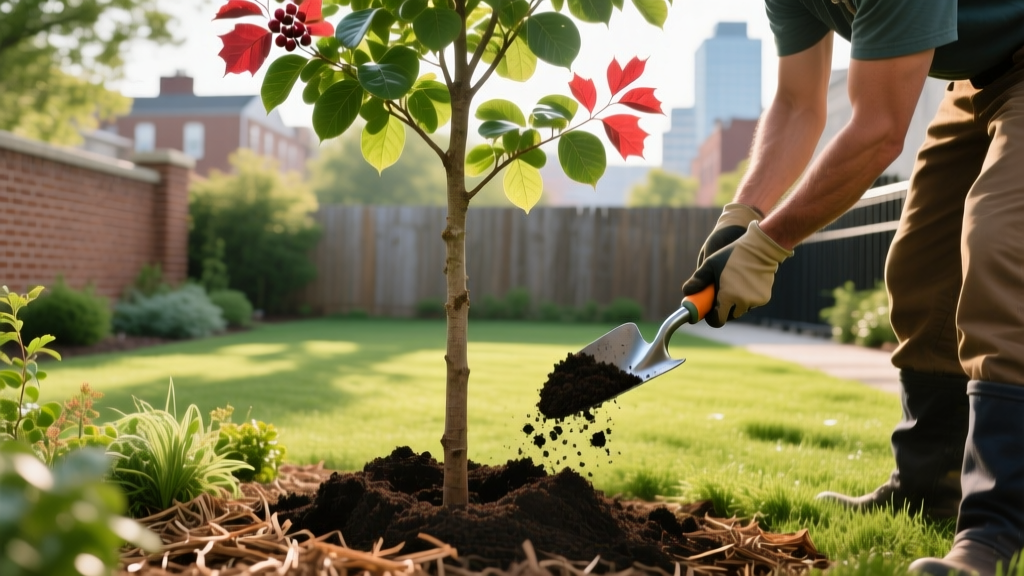
How to Plant and Care for Native DC Trees in Urban Yards
Understanding the DC Urban Soil Profile
Planting trees in Washington D.C. requires navigating a unique set of environmental challenges. The native soil across much of the District consists of heavy Ultisols—dense, red clay with poor drainage and high compaction rates. Furthermore, decades of urban development have left many residential lots with layers of construction fill, alkaline debris, and severely restricted root zones. According to the University of Maryland Extension, urban clay soils can restrict oxygen flow to roots, making proper planting depth and soil management the difference between a thriving canopy and a stunted, declining sapling.
Before selecting your species, conduct a simple percolation test. Dig a 12-inch deep hole and fill it with water. If the water drains completely within 24 hours, you have adequate drainage for most native species. If water remains after 24 hours, your soil is heavily compacted, and you will need to utilize a raised berm planting technique or select a wet-tolerant species like the Swamp White Oak.
Top Native DC Trees for Residential Yards
Choosing the right species is critical for long-term survival in the District's urban heat island. Non-native ornamentals often fail to withstand the intense mid-Atlantic summer humidity and periodic droughts. Below is a curated selection of native species that thrive in D.C.'s specific microclimates, based on regional urban forestry data.
| Species (Cultivar) | Mature Height | Canopy Spread | Sun Needs | Est. Cost (1.5' Caliper) |
|---|---|---|---|---|
| Willow Oak (Quercus phellos) | 60-80 ft | 40-50 ft | Full Sun | $220 - $280 |
| Eastern Redbud (Cercis canadensis) | 20-30 ft | 25-35 ft | Part Shade | $150 - $190 |
| Swamp White Oak (Quercus bicolor) | 50-60 ft | 50-60 ft | Full Sun | $240 - $300 |
| American Elm ('Princeton' cultivar) | 60-80 ft | 60-100 ft | Full Sun | $280 - $350 |
| Serviceberry (Amelanchier arborea) | 15-25 ft | 15-20 ft | Part Shade | $120 - $160 |
Arborist Insight: Never plant a standard American Elm without verifying it is a Dutch Elm Disease (DED) resistant cultivar. The 'Princeton' and 'Valley Forge' cultivars have proven highly resistant to DED and are the only safe choices for D.C. landscapes.
Step-by-Step Planting Protocol for Heavy Clay
The most common cause of tree death in D.C. is improper planting depth and the 'bathtub effect'—where amended soil holds water like a sponge inside dense clay, drowning the roots. Follow this exact protocol to ensure structural stability and root establishment.
- Locate the Root Flare: Before digging, brush away soil from the top of the root ball on your balled-and-burlapped (B&B) or container tree. The root flare (where the trunk widens and transitions into roots) must be visible. If it is buried in nursery soil, gently wash or scrape it away.
- Dig a Wide, Shallow Hole: Dig the hole exactly 2.5 times the width of the root ball, but 1 to 2 inches shallower than the root ball's height. The tree must sit on undisturbed native soil at the bottom to prevent settling.
- Root Washing (Crucial for Clay): For container-grown trees, use a garden hose to wash away the outer 2 inches of the potting mix. This exposes the peripheral roots, allowing them to immediately contact the native clay rather than circling inside a pocket of loose potting soil.
- Backfill with Native Soil Only: Do not mix compost, peat moss, or topsoil into the backfill. Amending the planting hole in heavy clay creates a textural interface that traps water. Backfill entirely with the native clay you just dug out, tamping it gently with your hands to remove large air pockets.
- Apply the Mulch Donut: Apply exactly 3 inches of double-shredded hardwood mulch in a 3-foot radius around the tree. Keep the mulch at least 4 inches away from the trunk itself to prevent vole damage and bark rot. Never pile mulch against the trunk in a 'volcano' shape.
The 2-Year Establishment Watering Framework
D.C. summers routinely push heat indices above 100°F, causing rapid evapotranspiration. A newly planted tree lacks the extensive root network required to draw moisture from deep soil reserves. You must act as the tree's artificial root system for the first 24 months.
Weekly Volume Requirements
- Weeks 1-4: 15 gallons every 3 days.
- Months 2-6: 20 gallons once per week (skip if over 1 inch of rain falls that week).
- Year 2 Spring/Summer: 20 gallons once every 10 days during dry spells.
Equipment Recommendation: Hand-watering with a hose is highly inefficient due to surface runoff on compacted clay. Invest in a 20-gallon Treegator slow-release watering bag (approx. $35). Zip it around the trunk, fill it with a hose in 5 minutes, and it will slowly drip water directly into the root zone over 8 to 12 hours, bypassing the clay's slow infiltration rate.
Navigating DC Tree Permits and Rebates
Washington D.C. has strict regulations protecting its urban canopy, but also offers excellent financial incentives for homeowners who contribute to it. According to DDOT Urban Forestry, you cannot plant, prune, or remove a tree located in the public right-of-way (the space between the sidewalk and the street, known as the tree lawn or parking strip) without a permit. Doing so can result in fines exceeding $500.
For private yard plantings, no permit is required. However, you should heavily leverage the Casey Trees residential rebate program. As of 2026, Casey Trees offers a $50 rebate per native tree planted on private residential property, up to $100 per household per year. To qualify, the tree must be on their approved native species list, have a minimum caliper of 1.5 inches, and you must submit a post-planting photo with your receipt. Additionally, always call Miss Utility (811) at least 48 hours before digging to have underground utility lines marked for free.
Frequently Asked Questions
Can I plant a tree near my D.C. rowhouse foundation?
Yes, but species selection is critical. Avoid large mat oaks or willows within 15 feet of a foundation. For areas within 10 feet of a brick rowhouse, stick to small understory trees like the Serviceberry or Eastern Redbud, which have less aggressive root systems and will not disrupt shallow masonry footings.
When is the best time to plant trees in the District?
Late fall (November to early December) is the optimal planting window in D.C. The soil is still warm enough to stimulate root growth, but the air is cool enough to minimize transpiration stress. Spring planting (March) is the second-best option, but requires rigorous summer watering to survive the first July heatwave.
How do I protect young trees from D.C. deer and rodents?
White-tailed deer are prevalent in wards 3, 4, and 5 near Rock Creek Park. Protect the lower 4 feet of the trunk with a rigid, welded-wire tree guard (not plastic tubing, which can harbor moisture and cause fungal cankers). Ensure the wire is at least 2 inches away from the bark to allow for trunk expansion.

