
Tree Care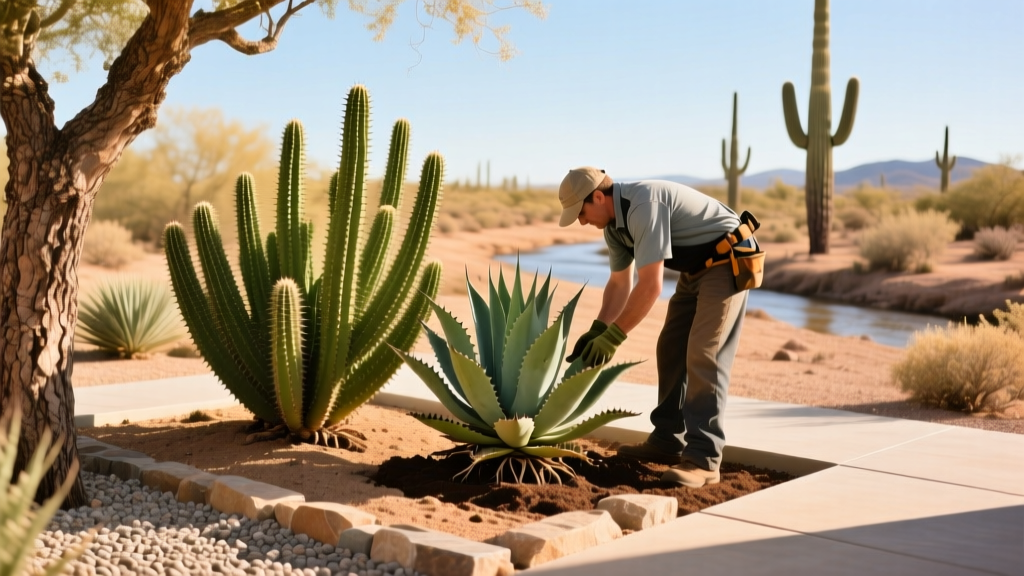
How to Plant Desert Bushes: Arizona Xeriscape Guide
The First-Year Survival Rule for Arizona Xeriscapes
Transitioning to a low-water landscape in the Sonoran Desert is one of the smartest investments a homeowner can make, but the phrase 'low-water' is dangerously misleading for new plantings. Desert bushes in Arizona require meticulous, deep-water establishment during their first 12 to 18 months. In 2026, with 5-gallon nursery shrubs like Texas Ranger and Lantana averaging $45 to $75 at Phoenix and Tucson garden centers, losing a shrub to root rot or desiccation is an expensive mistake. The difference between a thriving, blooming xeriscape and a yard full of dead twigs comes down to three factors: managing caliche soil, planting at the correct grade, and executing a precise drip-irrigation schedule.
Selecting the Right Desert Bushes for Your Yard
Not all desert-adapted shrubs perform identically in Arizona's microclimates. The low desert (Phoenix, Tucson, Yuma) experiences extreme summer heat and minimal winter chill, while the high desert (Prescott, Flagstaff) deals with freezing temperatures. Below is a comparison of three high-performance desert bushes suited for the low-to-mid Arizona elevations.
| Species | Mature Size | Sun Exposure | Bloom Season | Water Need (Established) |
|---|---|---|---|---|
| Texas Ranger (Leucophyllum frutescens) | 6x6 ft | Full Sun (8+ hrs) | Summer/Fall (Monsoon triggered) | Extremely Low |
| Brittlebush (Encelia farinosa) | 3x3 ft | Full Sun | Winter/Spring | Low |
| Desert Senna (Senna nemophila) | 5x5 ft | Full to Partial Sun | Spring | Low to Moderate |
Phase 1: Defeating the Caliche Soil Problem
The most common reason desert bushes fail in Arizona is the 'bathtub effect.' Much of Arizona's native soil contains a layer of caliche—a concrete-like calcium carbonate crust—just 12 to 18 inches below the surface.
Warning: The Bathtub Effect
If you dig a planting hole through the caliche layer and fill it with loose, amended potting soil, you create a subterranean bathtub. When your drip system runs, water fills the loose soil but cannot drain through the surrounding hardpan. The roots sit in standing water, leading to fatal Phytophthora root rot within weeks.
If you dig a planting hole through the caliche layer and fill it with loose, amended potting soil, you create a subterranean bathtub. When your drip system runs, water fills the loose soil but cannot drain through the surrounding hardpan. The roots sit in standing water, leading to fatal Phytophthora root rot within weeks.
How to Prep the Soil Correctly
- Test for Caliche: Dig your intended hole. If you hit a rock-hard layer that a standard round-point shovel cannot penetrate, you have caliche.
- Break the Hardpan: Use a digging bar or mattock to fracture the caliche layer at the bottom of the hole to ensure drainage.
- Skip the Compost: According to the Water Use It Wisely coalition, amending native desert soil with organic matter for xeriscape plants is generally counterproductive. Desert bushes are adapted to lean, alkaline, mineral-heavy soils. Adding peat or compost lowers the soil pH unnaturally and retains too much moisture.
Phase 2: Step-by-Step Planting Technique
Proper planting depth is non-negotiable for desert shrubs. Crown rot kills thousands of Arizona shrubs annually because they are planted too deep.
Step 1: Dig Wide, Not Deep
Dig the hole two to three times as wide as the nursery container, but exactly the same depth. The sides of the hole should be rough and scarified, not smooth and glazed, to encourage lateral root penetration.
Step 2: Elevate the Root Ball
Remove the shrub from its plastic nursery pot. Do not pull the plant by its stems; tip the pot and slide the root ball out. Place the root ball into the hole so that the top of the root ball sits 1 to 2 inches above the surrounding native grade. This prevents water from pooling around the sensitive root crown.
Step 3: Backfill and Slope
Backfill with the native soil you just dug out. Tamp it down gently with your hands or the handle of your shovel to remove massive air pockets, but do not compact it with your feet. Finally, build a slight soil berm around the outer edge of the planting hole to create a watering basin, and slope the soil away from the main stem.
Phase 3: The First-Year Establishment Watering Matrix
Desert bushes must be watered deeply to encourage roots to chase moisture downward, which anchors them against Arizona's intense monsoon microbursts. The Arizona Municipal Water Users Association (AMWUA) recommends the '1-2-3 Rule' for watering depth: 1 foot for groundcovers, 2 feet for shrubs, and 3 feet for trees. For shrubs, your water must penetrate 24 inches into the soil.
Use a soil probe (a long metal rod) to verify moisture depth. If the rod easily pushes down 24 inches, you have watered sufficiently.
Drip Irrigation Schedule (5-Gallon Shrubs)
Assuming you are using standard 2-gallon-per-hour (GPH) drip emitters, follow this seasonal matrix for the first year:
| Establishment Phase | Watering Frequency | Emitter Runtime (2 GPH) | Total Gallons Applied |
|---|---|---|---|
| Months 1-3 (Root Strike) | Every 3 to 4 days | 1.5 to 2 hours | 3 to 4 gallons |
| Months 4-6 (Expansion) | Every 5 to 7 days | 2.5 to 3 hours | 5 to 6 gallons |
| Months 7-12 (Hardening) | Every 10 to 14 days | 3 to 4 hours | 6 to 8 gallons |
Expert Tip: Emitter Placement
Do not place drip emitters directly against the main trunk. As the shrub grows, move the emitters outward to the edge of the canopy (the drip line). For a newly planted 5-gallon shrub, place two emitters about 12 inches away from the trunk on opposite sides.
Do not place drip emitters directly against the main trunk. As the shrub grows, move the emitters outward to the edge of the canopy (the drip line). For a newly planted 5-gallon shrub, place two emitters about 12 inches away from the trunk on opposite sides.
Acclimation: Preventing Nursery Sunburn
A frequent failure mode occurs when homeowners buy a shrub from a commercial nursery where it was grown under 30% shade cloth, and immediately plant it in an open, south-facing yard experiencing 110°F heat. The result is severe foliar bleaching and sunburn, which can defoliate and kill the plant.
To prevent this, look for 'sun-grown' tags at the nursery. If unavailable, erect a temporary shade cloth structure (using PVC pipe and 50% shade fabric) on the south and west sides of the newly planted bush for the first three weeks. Gradually remove the shade over a 14-day period to allow the plant's cuticle to thicken and adapt to the intense UV radiation.
Pruning Rules for Desert Shrubs
Many Arizona HOAs mandate heavily sheared, geometric shrubs. This practice, often called 'poodling,' is disastrous for desert bushes. Shearing creates a dense outer shell of leaves that blocks sunlight from reaching the interior of the plant. Within two years, the interior branches die off, leaving you with a hollow, fragile shrub that will split open during a windstorm.
The Selective Thinning Method: Instead of using electric hedge trimmers, use sharp bypass hand pruners. Reach deep into the canopy and cut 20% to 30% of the oldest, thickest branches all the way back to the main trunk or a lateral branch. This allows dappled sunlight to penetrate the interior, stimulating new growth from the center and maintaining a natural, wind-resistant structure.
Timing is equally critical. Prune spring-blooming shrubs like Brittlebush immediately after their flowers fade in late April. Prune summer-blooming shrubs like Texas Ranger in late January or early February, just before the spring growth flush begins. Never prune heavily in late summer, as the exposed inner bark will suffer severe sunscald in the lingering September heat.

