
Tree Care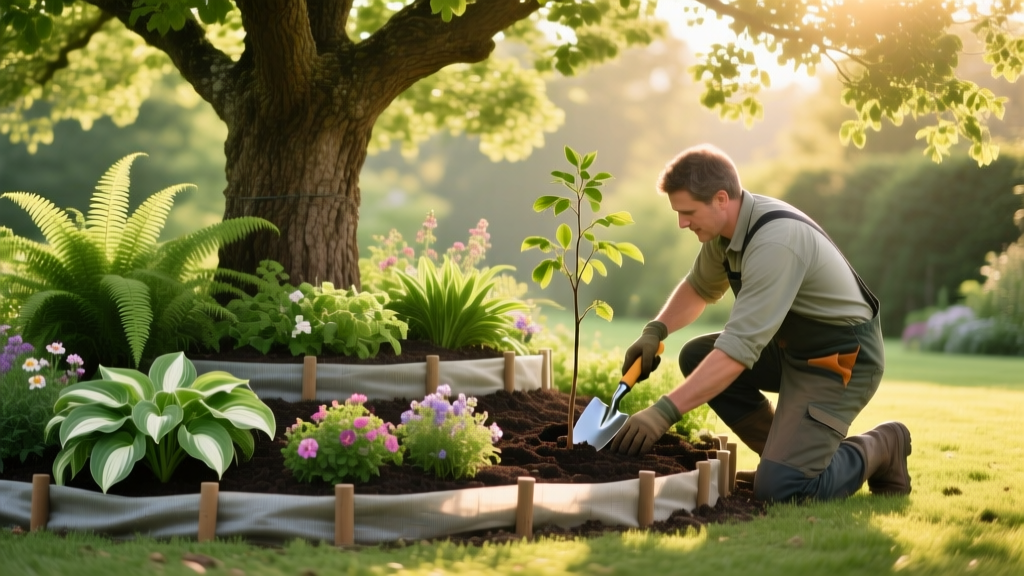
How to Plant a Thriving Garden Under Tree Canopies Without Root Damage
The Challenge of the Dry Shade Microclimate
Establishing a garden under tree canopies is widely considered one of the most difficult landscaping challenges. You are battling a microclimate defined by 'dry shade'—a scenario where the tree canopy intercepts up to 60% of rainfall, while the extensive root system aggressively monopolizes soil moisture and nutrients. Tilling the soil to prepare a traditional garden bed will sever critical feeder roots, potentially destabilizing the tree or inviting fatal fungal pathogens like Armillaria root rot.
However, with the right horticultural techniques, you can transform this barren dirt patch into a lush understory. This guide details the exact measurements, plant selections, and 'pocket planting' methods required to build a thriving garden under tree root systems without compromising the health of the mature canopy above.
Assessing the Critical Root Zone (CRZ)
Before buying a single plant, you must map the tree's Critical Root Zone. The CRZ is the area where the majority of the tree's fine, water-absorbing feeder roots are concentrated. Disturbing this zone requires extreme care.
Calculating Your CRZ Radius
Measure the tree's Diameter at Breast Height (DBH), which is the trunk diameter at 4.5 feet above the ground. Multiply the DBH (in inches) by 1.5 to find the CRZ radius in feet. For example, a mature red oak with a 20-inch DBH has a 30-foot CRZ radius. Within this circle, you must avoid deep digging, heavy foot traffic, and grade changes.
Warning: The 2-Inch Rule for Soil Grade
Never add more than 2 inches of soil or compost over a tree's existing root zone. Tree roots require oxygen exchange with the atmosphere. Burying roots under 4 to 6 inches of imported topsoil or building raised beds around the trunk will suffocate the root system, leading to canopy dieback and eventual tree death within 3 to 5 years.
Never add more than 2 inches of soil or compost over a tree's existing root zone. Tree roots require oxygen exchange with the atmosphere. Burying roots under 4 to 6 inches of imported topsoil or building raised beds around the trunk will suffocate the root system, leading to canopy dieback and eventual tree death within 3 to 5 years.
Soil Preparation: The No-Till Approach
Forget the rototiller. To prepare the soil for an under-tree garden, use a no-till top-dressing method. Apply a 1-inch layer of high-quality, screened leaf compost (such as Coast of Maine Quoddy Blend, typically $18-$22 per 1-cubic-foot bag) directly over the bare soil. This slowly integrates into the soil profile via earthworm activity and natural water percolation without severing roots.
Selecting Plants for Root Competition
Not all shade plants survive the aggressive moisture theft of tree roots. You need perennials with shallow, fibrous root systems that can occupy the top 4 inches of soil, or plants that are highly drought-tolerant once established. Avoid planting deep-rooted shrubs that will compete directly with the tree's structural roots.
Top 5 Perennials for Under-Tree Gardens
| Plant Species | Root Tolerance | Moisture Need | Avg. Cost (1-Gal) |
|---|---|---|---|
| Epimedium (Barrenwort) | Exceptional | Very Low | $14 - $18 |
| Helleborus (Lenten Rose) | High | Low | $16 - $24 |
| Heuchera (Coral Bells) | Moderate | Moderate | $12 - $16 |
| Hosta (Plantain Lily) | Moderate | High | $10 - $15 |
| Tiarella (Foamflower) | High | Moderate | $12 - $18 |
Edge Case Note: If you are planting under a Black Walnut (Juglans nigra), the tree exudes juglone, a chemical toxic to many plants. Stick to juglone-tolerant species like Hosta, Heuchera, and Astilbe, and avoid Helleborus or Epimedium which may suffer allelopathic stress.
The 'Pocket Planting' Method: Step-by-Step
To install plants without destroying the tree's root network, use the pocket planting technique. This involves digging small, individual holes rather than trenching or tilling a continuous bed.
- Probe for Roots: Use a narrow soil probe or a 12-inch steel rebar rod to test the soil. Push it into the ground; if it hits resistance within the top 3 inches, move 6 inches to the left or right until you find a gap between the structural roots.
- Dig Small Pockets: Using a 4-inch hand trowel, dig a hole only slightly wider and deeper than the specific plant's root ball. For 1-gallon perennials, this usually means a hole 5 inches wide and 5 inches deep.
- Sever Only Fine Roots: If you encounter roots thinner than a pencil (less than 0.25 inches), it is safe to cut them with clean bypass pruners. Never cut roots thicker than a pencil, as these are structural or primary transport roots.
- Plant and Backfill: Place the perennial in the pocket. Backfill with the native soil you removed, mixing in a handful of mycorrhizal fungi inoculant (like Myke, approx. $12 per box) to help the new plant's roots establish a symbiotic relationship and compete for water.
- Space Generously: Keep plants at least 12 to 18 inches apart to minimize the total number of root disturbances required.
Irrigation and Mulching Strategies
Newly planted perennials cannot compete with a mature tree for water during their first two growing seasons. Overhead sprinklers are highly inefficient here, as the tree canopy intercepts the spray and the shallow watering encourages surface roots.
Installing Sub-Canopy Drip Irrigation
Invest in a 50-foot soaker hose kit (typically $25-$35 in 2026). Weave the soaker hose in a serpentine pattern through your new plant pockets, keeping it at least 12 inches away from the main tree trunk. Connect it to a programmable digital timer (e.g., Orbit B-hyve, approx. $45). Set the timer to deliver a deep, slow soak once a week, providing roughly 1 inch of water directly to the root zones of the perennials without waterlogging the tree's crown.
The 3-3-3 Mulching Rule
Mulch is non-negotiable for under-tree gardens to retain moisture and suppress weeds, but improper mulching kills trees. Follow the 3-3-3 rule:
- 3 Inches Deep: Apply no more than 2 to 3 inches of double-shredded hardwood mulch (approx. $35-$45 per cubic yard). Any deeper, and you block oxygen to the tree roots.
- 3 Inches from Trunk: Keep the mulch at least 3 inches away from the tree's trunk flare. Piling mulch against the bark ('volcano mulching') traps moisture against the cambium layer, inviting rot and rodent damage.
- 3 Feet Wide (Minimum): Ensure the mulched area extends at least 3 feet from the trunk, ideally covering the entire planted understory bed to unify the moisture profile.
Common Mistakes to Avoid
Even with the right plants, homeowners frequently make structural errors that doom both the garden and the tree. Avoid these critical failures:
- Building Retaining Walls Around Trunks: Creating a raised brick ring around a tree to hold in topsoil will suffocate the root flare and girdle the trunk as the tree grows.
- Using Landscape Fabric: Woven weed barriers block the vital gas exchange between the soil and the atmosphere. In dry shade beds, rely on a 3-inch layer of organic mulch for weed suppression instead.
- Planting Spring Bulbs Incorrectly: While daffodils and snowdrops are great for under-tree gardens, digging deep trenches for them in the fall severs roots. Use a bulb auger attached to a cordless drill to bore precise, narrow 6-inch holes that minimize root disruption.
For further reading on protecting tree health during landscape renovations, consult the University of Minnesota Extension's guide on planting under trees, which details the biological impact of grade changes. Additionally, the Clemson University HGIC shade gardening factsheet provides excellent regional plant lists for dry shade environments. By respecting the tree's root architecture and utilizing the pocket planting method, you can successfully cultivate a vibrant, low-maintenance garden under tree canopies.

