
Tree Care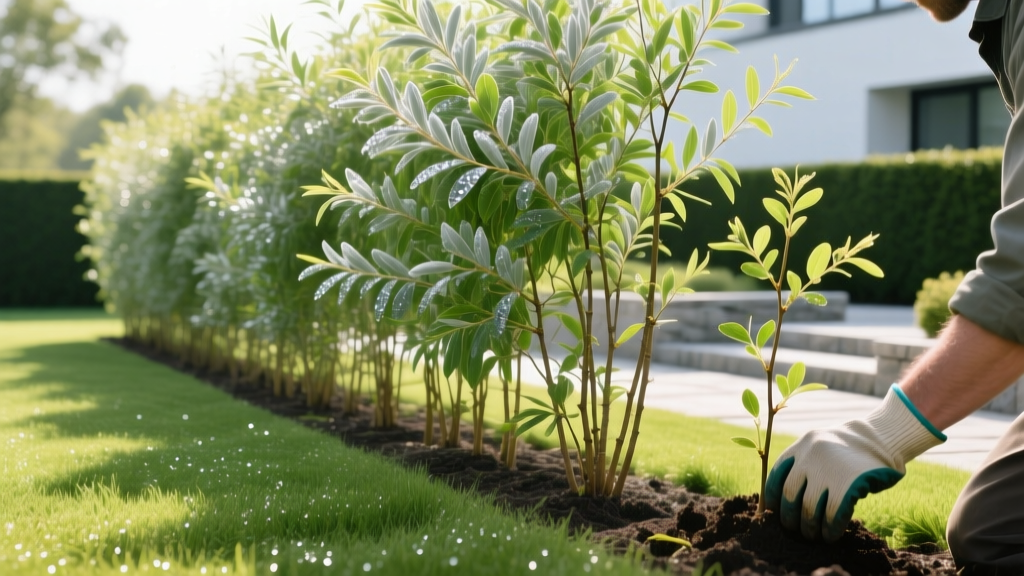
How to Plant and Grow a Hybrid Willow Privacy Screen Fast
When you need a privacy screen or windbreak in a hurry, few trees outpace the hybrid willow (Salix crosses). By combining the hardiness of native willows with the vigorous growth traits of select Asian and European species, hybrid willows can add 6 to 10 feet of vertical growth in their first year. As of 2026, bare-root hybrid willow whips typically cost between $3 and $6 each from wholesale nurseries, making them a highly cost-effective alternative to expensive cedar or arborvitae fencing.
However, their explosive growth rate comes with specific structural and maintenance trade-offs. This guide provides the exact spacing, soil preparation, and pruning frameworks required to establish a dense, structurally sound hybrid willow screen that will last for decades.
Why Choose a Hybrid Willow for Your Yard?
Hybrid willows are engineered for biomass production and rapid screening. They thrive in wet soils where other privacy trees (like Leyland cypress) would succumb to root rot. Before purchasing, weigh these specific advantages against their inherent limitations.
The Trade-Off Matrix
- Pros: Reaches 15-20 feet in 3 years; tolerates heavy clay and poor drainage; excellent winter windbreak when planted densely; highly resistant to deer browsing.
- Cons: Brittle wood prone to storm damage if not pruned correctly; aggressive root systems seek out water lines; drops small twigs and catkins in spring; relatively short lifespan (30-50 years) compared to oaks or maples.
Selecting the Right Hybrid Willow Cultivar
Not all hybrid willows grow identically. Nurseries generally sell a few specific crosses optimized for different hardiness zones and screen heights. According to the University of Wisconsin-Madison Extension, selecting a cultivar matched to your USDA zone is critical for winter survival.
| Cultivar / Cross | Mature Height | USDA Zones | Best Use Case |
|---|---|---|---|
| Austree (S. alba x matsudana) | 35-45 ft | 4-8 | Tall privacy screens, windbreaks |
| Flamenco (S. viminalis hybrid) | 15-20 ft | 4-7 | Medium hedges, coppicing for biomass |
| Hakuro Nishiki (Dappled Willow) | 8-12 ft | 4-9 | Low ornamental screens, color contrast |
Step-by-Step Planting Guide for Maximum Growth
Proper establishment in year one dictates the screen's density and structural integrity for the next twenty years. Follow these exact parameters for planting bare-root or container-grown hybrid willows.
1. Site Preparation and Spacing
For a solid, gap-free privacy screen, space hybrid willows 3 to 5 feet apart in a single row. If you have space for a double row, stagger the trees in a zig-zag pattern with 4 feet between trees and 4 feet between rows. Till the planting strip 12 inches deep to break up soil compaction, which allows the shallow willow root system to expand laterally.
2. Digging and Soil Amendment
Dig a hole twice the width of the root ball, but no deeper than the root ball itself. The root flare must sit exactly at or slightly above grade. Do not amend the backfill soil with heavy peat moss or compost. According to the University of Minnesota Extension, creating a highly organic "bathtub" in heavy clay soil traps water and rots willow roots. Backfill with the native soil you removed from the hole.
3. Root Barrier Installation (Critical Step)
Willow roots are notorious for invading sewer lines, septic drain fields, and shallow foundations. If your planting site is within 40 feet of underground infrastructure, install a 24-inch deep HDPE root barrier (such as DeepRoot UB 24-2) on the side of the tree facing the pipes.
Warning: Never plant hybrid willows closer than 50 feet to a septic leach field or older clay/cast-iron sewer lines. Their roots exude acids that can penetrate microscopic cracks in plumbing.
First-Year Watering and Fertilization Schedule
Hybrid willows are hydrophilic (water-loving). During the first growing season, they require 1.5 to 2 inches of water per week. Relying on a hose and sprinkler is inefficient; use drip irrigation.
- Irrigation Setup: Wrap 1/2-inch drip tubing around the base of each tree. Install two 2-GPH (gallons per hour) button emitters per tree. Run the system for 2.5 hours twice a week to deliver 10 gallons per tree per watering session.
- Fertilization: Wait until the trees push 6 inches of new growth before fertilizing. Apply a balanced, slow-release 10-10-10 NPK fertilizer at a rate of 1 lb of actual nitrogen per 1,000 square feet of root zone. Broadcast the granules under the drip line, keeping them 3 inches away from the main trunk to prevent bark burn.
Pruning and Maintenance: Avoiding the "Weak Wood" Trap
The most common failure mode of hybrid willow screens is branch breakage during ice storms or high winds. Willows naturally form narrow, weak "V" crotch angles. You must train the tree for structural integrity during the first three winters.
The Central Leader Training Method
- Timing: Prune only in late winter (February to early March) while the tree is fully dormant. Pruning in spring or summer invites fungal pathogens like willow scab.
- Select the Leader: Identify the single strongest, most vertical central trunk. If two trunks are competing, remove the weaker one entirely at the trunk collar.
- Fix Crotch Angles: Inspect all lateral branches. Any branch forming an angle narrower than 45 degrees with the main trunk is a structural liability. Remove these branches entirely, or use spacers to widen the angle if the branch is essential for the screen's density.
- The Cut: Make 45-degree angle cuts exactly 1/4 inch above an outward-facing bud. This forces new growth away from the center of the canopy, improving airflow and reducing fungal disease pressure.
Always sterilize your bypass pruners with 70% isopropyl alcohol between every single tree to prevent the spread of black canker and crown gall.
Common Pests and Diseases to Watch For
While vigorous, hybrid willows are susceptible to specific biological threats. The USDA National Agroforestry Center notes that dense willow plantings can create microclimates that harbor fungal spores if airflow is restricted.
- Willow Scab (Venturia saliciperda): Appears as dark, olive-green velvety spots on young leaves, followed by rapid shoot dieback. Treatment: Prune out infected shoots 6 inches below visible discoloration. Apply a copper-based fungicide in early spring just as buds break.
- Willow Leaf Beetle (Plagiosterna aenea): Small, metallic blue-black beetles that skeletonize leaves in late spring. Treatment: Spray the foliage with a Spinosad-based organic insecticide at dusk to avoid harming foraging bees.
- Aphid Infestations: Often cluster on the tender, fast-growing apical tips. They secrete sticky honeydew that attracts sooty mold. Treatment: A strong blast of water from a hose nozzle or applications of insecticidal soap usually resolve minor outbreaks.
Frequently Asked Questions
Can I propagate hybrid willows from cuttings?
Yes. Willows contain high levels of natural rooting hormones (salicylic acid). In late winter, take 10-to-12-inch hardwood cuttings from last year's growth (about the thickness of a pencil). Push them 6 inches deep into a pot filled with a 50/50 mix of perlite and peat moss. Keep the medium consistently moist, and they will root and push leaves within 4 to 6 weeks without the need for synthetic rooting powders.
Why are the leaves on my newly planted willow turning yellow and dropping?
Yellowing leaves (chlorosis) on a newly planted hybrid willow are almost always a sign of overwatering or poor drainage, not underwatering. If the soil feels boggy 4 inches below the surface, reduce your irrigation frequency. Conversely, if your soil pH is above 7.5 (alkaline), the tree cannot absorb iron. Test your soil pH and apply elemental sulfur at a rate of 1 lb per 100 square feet to lower the pH into the optimal 5.5 to 7.0 range.
Will a hybrid willow screen block my neighbor's view in the winter?
Most hybrid willows are deciduous, meaning they drop their leaves in autumn, leaving only the branch structure visible in winter. If you require year-round, opaque privacy, you must interplant the willows with an evergreen species (like Eastern Redcedar or American Holly), or choose a different evergreen screening solution entirely.

