
Tree Care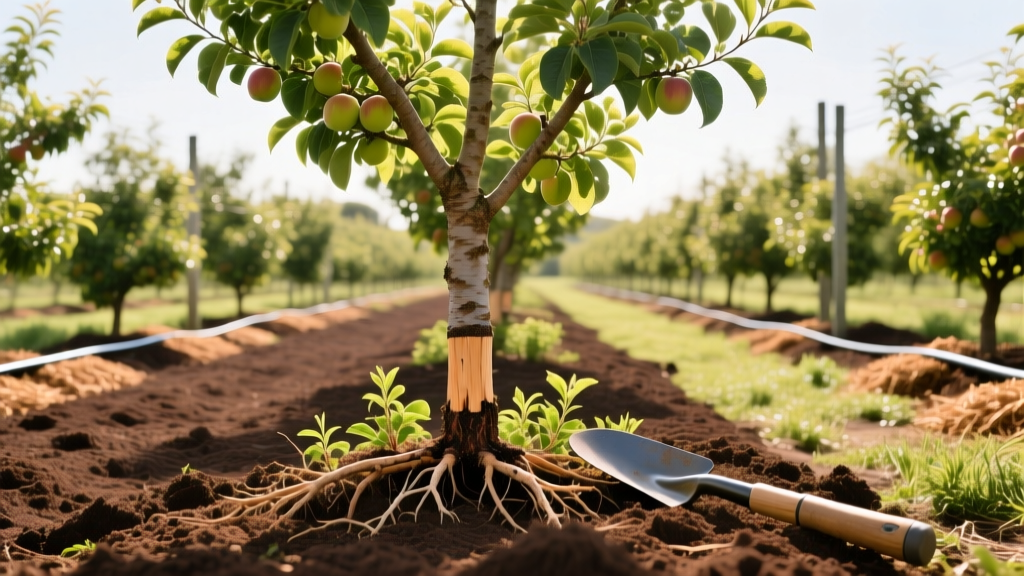
The Ultimate Guide to Planting Fruit Trees: Rootstocks & Spacing
Why Most Backyard Orchards Fail Before Year Three
Approximately 40% of backyard fruit trees die or fail to produce within their first three years. The culprits are rarely mysterious diseases; they are almost always mechanical and horticultural errors made on day one. Improper planting depth, ignored soil percolation rates, and mismatched rootstocks lead to girdling roots, scion rooting, and drought stress. When planting fruit trees, success is determined by the precision of your site preparation and your understanding of the specific rootstock's vigor. This guide bypasses generic advice to provide exact measurements, rootstock codes, and establishment protocols used by commercial orchardists, scaled for the residential landscape.
The Rootstock Decision Matrix
The scion (the fruiting variety grafted on top) determines the fruit you eat, but the rootstock dictates the tree's mature size, disease resistance, anchorage, and years to first harvest. Buying a tree labeled simply 'dwarf' is insufficient. You must know the specific rootstock code to calculate exact spacing and structural support needs.
| Rootstock Code | Vigor Class | Mature Height | In-Row Spacing | Years to Fruit | Support Required? |
|---|---|---|---|---|---|
| B.9 / M.9 | True Dwarf | 6 - 10 ft | 4 - 6 ft | 2 - 3 | Yes (Permanent trellis or 10-ft metal conduit stake) |
| G.41 / G.890 | Semi-Dwarf | 10 - 14 ft | 8 - 12 ft | 3 - 4 | Temporary (Stake for first 3 years) |
| MM.106 | Semi-Dwarf | 12 - 16 ft | 12 - 15 ft | 4 - 5 | No (Freestanding in well-drained soil) |
| MM.111 | Semi-Standard | 15 - 18 ft | 18 - 22 ft | 5 - 7 | No (Excellent anchorage, drought tolerant) |
Warning: The Scion Rooting Trap
If you plant a dwarf tree (like M.9) and bury the graft union, the scion wood will develop its own root system. This completely bypasses the dwarfing influence of the rootstock, resulting in a vigorous 25-foot tree that delays fruiting for years and is highly susceptible to fire blight. The graft union must remain 2 to 3 inches above the final soil grade.
If you plant a dwarf tree (like M.9) and bury the graft union, the scion wood will develop its own root system. This completely bypasses the dwarfing influence of the rootstock, resulting in a vigorous 25-foot tree that delays fruiting for years and is highly susceptible to fire blight. The graft union must remain 2 to 3 inches above the final soil grade.
Site Selection and the Percolation Test
Fruit trees require a minimum of eight hours of direct, unfiltered sunlight during the growing season. However, light is secondary to drainage. Phytophthora crown rot thrives in saturated soils and will kill a newly planted tree within a single wet spring. Before purchasing your trees, conduct a formal percolation test.
How to Execute the Perc Test
- Dig a test hole 12 inches deep and 12 inches wide in your proposed planting area.
- Fill the hole completely with water and let it drain overnight to saturate the surrounding soil profile.
- Refill the hole to the top and measure the water level drop after exactly one hour.
- The Metric: Ideal drainage is a drop of 1 to 2 inches per hour. If the water drops less than 1 inch per hour, you have heavy clay or a hardpan layer. You must either install a French drain, plant on a raised berm (18 inches high, 4 feet wide), or choose a tolerant rootstock like MM.111.
According to Penn State Extension, soil pH should be adjusted to between 6.0 and 6.5 prior to planting. If your soil test reveals a pH above 7.2, micronutrients like iron and zinc become chemically locked, leading to severe chlorosis. Apply pelletized elemental sulfur at a rate of 1.5 lbs per 100 square feet to lower the pH by one full point, ideally six months before planting.
The 24-Inch Planting Protocol
Abandon the old adage of 'digging a $10 hole for a $1 tree.' Modern arboriculture demands wide, shallow holes that encourage lateral root expansion and prevent the 'bathtub effect' where water pools in loose backfill surrounded by compacted native clay.
Step-by-Step Execution
- Hydrate Bare-Roots: Submerge bare-root trees in a bucket of water mixed with a vitamin B1 transplant solution for 4 to 12 hours before planting. Do not exceed 24 hours, or the roots will suffocate.
- Dig the Hole: Excavate a hole 24 inches wide, but only as deep as the root system (usually 14 to 18 inches). The bottom of the hole should remain undisturbed, compacted native soil to prevent the tree from sinking over time.
- Build a Mound: Create a 4-inch cone of native soil in the center of the hole. Drape the bare roots over this cone to ensure they point downward and outward, preventing J-rooting.
- Set the Depth: Use a flat board laid across the hole to measure the root flare. The root flare must be level with or 1 inch above the surrounding grade. The graft union must be exactly 2 to 3 inches above the board.
- Backfill with Native Soil: Do not add compost, peat moss, or fertilizer to the backfill. Amending the planting hole creates a textural interface that discourages roots from expanding into native soil. Use only the soil you dug out, breaking up clods larger than a golf ball.
- Initial Watering: Apply 15 gallons of water immediately to collapse air pockets. Do not tamp the soil with your foot, which destroys soil structure and compacts clay.
Pro-Tip: Mulch Geometry
Apply a 3-inch layer of arborist wood chips in a 3-foot diameter ring around the tree. Crucially, keep the mulch 4 inches away from the trunk base in a 'donut' shape. Volcano mulching against the trunk traps moisture against the bark, inviting crown rot and encouraging girdling adventitious roots.
Apply a 3-inch layer of arborist wood chips in a 3-foot diameter ring around the tree. Crucially, keep the mulch 4 inches away from the trunk base in a 'donut' shape. Volcano mulching against the trunk traps moisture against the bark, inviting crown rot and encouraging girdling adventitious roots.
First-Year Irrigation Math and 2026 Costs
Establishment irrigation is not about keeping the soil wet; it is about maintaining consistent field capacity in the root zone. A newly planted fruit tree lacks the lateral root network to forage for water and relies entirely on the 24-inch planting zone.
The Caliper-Based Watering Formula
Water requirements scale directly with trunk caliper (the diameter of the trunk measured 6 inches above the soil). The standard metric is 10 gallons of water per week per inch of caliper. A typical 1/2-inch caliper bare-root tree requires 5 gallons per week. A 1.5-inch caliper potted tree requires 15 gallons per week. During weeks with less than 1 inch of rainfall, you must supply this volume via a slow-drip soaker hose or a 5-gallon bucket with a 1/16-inch weep hole drilled in the bottom.
Backyard Orchard Budget (5 Trees)
As of 2026, establishing a high-quality backyard orchard requires a realistic budget. Cheap, box-store trees are often mislabeled or grafted onto unvigorous seedling rootstocks.
- Premium Bare-Root Trees (Specialty Nurseries): $45 - $75 each (Total: $225 - $375)
- Soil Testing (University Lab): $25
- Elemental Sulfur & Lime Amendments: $30
- Heavy-Duty Steel Stakes & Tree Ties: $60
- Bulk Arborist Wood Chips: Often free via local municipal drop-offs, or ~$80 for delivery.
- Total Estimated Investment: $420 - $570
Troubleshooting Establishment Failures
Even with perfect planting technique, environmental variables can trigger physiological stress. Monitor your trees for these specific symptoms during the first 12 months.
- Symptom: Interveinal Chlorosis (Yellow leaves with green veins).
Cause: Iron deficiency induced by high soil pH or waterlogged roots. Fix: Apply a liquid chelated iron (Fe-EDDHA) foliar spray for immediate relief, and follow up with a soil drench. Verify drainage. - Symptom: Southwest Winter Injury (Vertical bark splitting on the lower trunk).
Cause: Winter sun warms the dark bark on the southwest side, activating cambium cells. When the sun sets, temperatures plummet, freezing and rupturing the active cells. Fix: Wrap the lower 24 inches of the trunk with white, reflective tree wrap from Thanksgiving until April, or paint the trunk with a 50/50 mix of white interior latex paint and water. - Symptom: Stunted Top Growth with Suckering at the Base.
Cause: The scion has died back due to winter desiccation or borers, and the rootstock is pushing its own vegetative growth. Fix: Scratch the bark of the main trunk. If it is brown and dry underneath, the scion is dead. The tree must be removed; you cannot train a rootstock sucker into the desired fruiting variety.
Mastering the mechanics of planting fruit trees transforms a costly landscaping gamble into a multi-generational food source. By respecting rootstock vigor, executing precise soil preparation, and adhering to strict irrigation metrics, you establish a resilient root architecture capable of supporting heavy annual yields.

