
Tree Care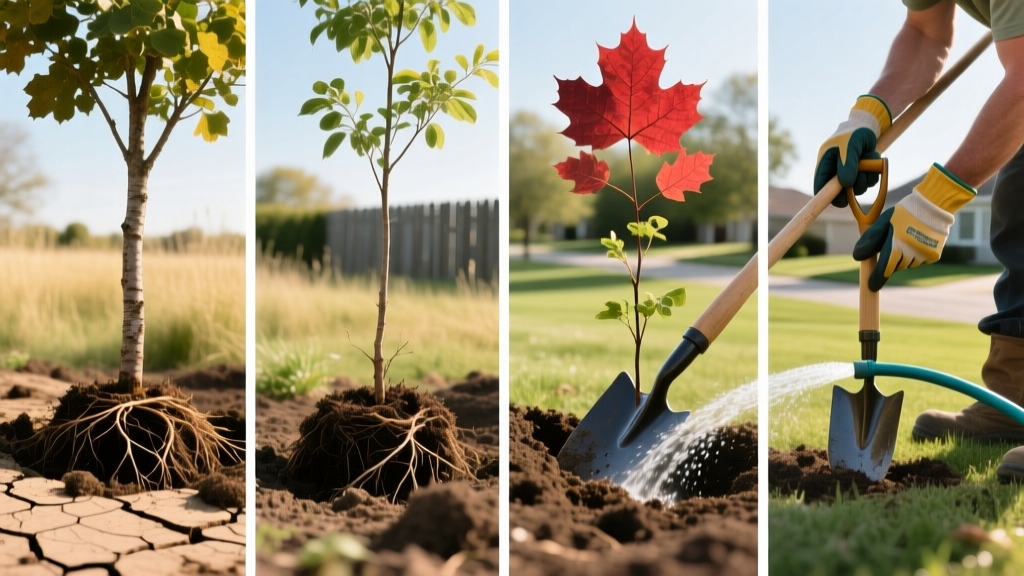
Step-by-Step Guide to Planting and Growing Trees in Kansas
Kansas presents a unique horticultural gauntlet. With USDA Hardiness Zones ranging from 5b in the northwest to 7a in the southeast, extreme temperature swings, relentless prairie winds, and heavy alkaline soils, generic planting advice will quickly lead to dead saplings. Successfully establishing trees in Kansas requires abandoning standard landscaping templates and adopting region-specific techniques designed to combat soil compaction and summer drought.
This practical guide details exactly how to select, plant, and maintain trees that will thrive in the Sunflower State's challenging environment.
Decoding Kansas Soil and Climate Variables
The primary obstacle to tree establishment in Kansas is the soil. Much of the state sits on expansive smectite clay. This soil type holds moisture tightly but restricts oxygen flow to roots, leading to root rot in wet springs and concrete-like cracking in dry summers. Furthermore, Kansas soils are typically alkaline, with pH levels ranging from 7.2 to 8.2.
Soil Testing First Step: Before purchasing any tree, send a soil sample to the K-State Research and Extension soil testing lab. A standard test costs around $15 to $20 and will reveal your exact pH and nutrient profile, saving you hundreds of dollars in dead plant material and unnecessary fertilizers.
Selecting the Right Species: A Performance Matrix
Choosing a tree adapted to alkaline clay and drought is non-negotiable. Species like Pin Oak (Quercus palustris) or River Birch (Betula nigra) will rapidly succumb to iron chlorosis in Kansas soil. Instead, focus on native or highly adapted species that tolerate high pH and heavy soils.
| Tree Species | Drought Tolerance | Clay Adaptability | Mature Size (H x W) | Best Use Case |
|---|---|---|---|---|
| Bur Oak (Quercus macrocarpa) | Exceptional | High | 70-80 ft x 70-80 ft | Large shade tree, windbreak |
| Shumard Oak (Quercus shumardii) | High | Moderate-High | 60-80 ft x 50-60 ft | Urban street tree, fall color |
| Eastern Redcedar (Juniperus virginiana) | Exceptional | Exceptional | 40-50 ft x 15-20 ft | Privacy screens, windbreaks |
| American Sycamore (Platanus occidentalis) | Moderate | High | 75-100 ft x 75-100 ft | Large open spaces, riparian zones |
The 'High-and-Dry' Planting Method for Heavy Clay
The most common cause of tree death in Kansas is planting too deep. In sandy soils, planting at grade works fine. In smectite clay, planting at grade suffocates the root system. You must use the 'high-and-dry' method.
Step 1: Locate the Root Flare
Before digging, brush away the topsoil from the root ball of your balled-and-burlapped (B&B) or container-grown tree. You must find the root flare—the exact point where the trunk widens and transitions into structural roots. If you cannot see the flare, the tree is buried too deep in its nursery soil and must be carefully excavated.
Step 2: Dig a Shallow, Wide Hole
Dig a hole that is two to three times the width of the root ball, but two inches shallower than the root ball's height. The goal is to have the root flare sit two inches above the surrounding natural grade. This compensates for the clay soil settling over the first two years and prevents water from pooling around the trunk.
Step 3: Backfill with Native Soil Only
Do not amend the backfill soil with compost, peat moss, or sand. Adding organic matter to the planting hole creates a 'bathtub effect' where water collects in the loose amended soil and drowns the roots, while the roots refuse to grow outward into the dense native clay. Backfill entirely with the native soil you just dug out, breaking up large clods as you go.
Step 4: Apply the 3-Inch Mulch Ring
Apply a 3-inch layer of hardwood mulch in a 4-foot diameter ring around the tree. Keep the mulch exactly 3 inches away from the trunk to prevent bark rot and rodent damage. Mulch regulates soil temperature and reduces evaporation, which is critical during Kansas summers.
Establishing a Drought-Proof Watering Schedule
Kansas summers routinely feature weeks with zero precipitation and temperatures exceeding 95°F. A newly planted tree cannot rely on rainfall for its first two growing seasons.
The 1.5 Gallon Rule: Apply 1.5 gallons of water per caliper inch of trunk diameter per watering session. For a 2-inch caliper tree, apply 3 gallons of water. Water deeply twice a week during the first summer, dropping to once a week in the fall. Use a slow-drip soaker hose or a tree watering bag (like a Treegator) to ensure the water penetrates the clay rather than running off the surface.
Troubleshooting Iron Chlorosis in Alkaline Soils
If you notice the leaves of your new tree turning yellow while the veins remain green, you are likely dealing with iron chlorosis. In Kansas soils with a pH above 7.0, iron becomes chemically locked up and unavailable to the roots.
- The Mistake: Applying standard iron sulfate or Fe-EDTA chelates. These bind to the alkaline soil and become useless within days.
- The Solution: Apply Fe-EDDHA chelated iron. This specific chelate remains stable in high-pH soils up to 9.0. Apply it as a soil drench in early spring before bud break. Expect to pay $40 to $60 for a high-quality Fe-EDDHA product, but it is the only proven chemical fix for alkaline-induced chlorosis.
Winter Wind and Desiccation Protection
Kansas winters bring harsh, drying north winds that can strip moisture from evergreens and crack the bark of thin-barked deciduous trees like maples and honeylocusts.
For thin-barked trees planted in the fall, wrap the trunk with white, reflective tree wrap or use a white plastic tree guard from November through March. This prevents 'southwest injury,' where the winter sun warms the bark on the southwest side, activating cells that then freeze and split when the sun sets. Remove the wrap in April to prevent girdling and trap moisture.
For evergreen windbreaks, consult the Kansas Forest Service guidelines on proper spacing and staggered row planting to ensure the windbreak survives its vulnerable first three years without suffering severe windburn.
Common Kansas Tree Planting Mistakes to Avoid
- Staking Every Tree: Trees need to sway in the wind to develop reaction wood and trunk taper. Only stake trees planted in extreme wind tunnels or those with top-heavy canopies. If you must stake, use wide, flat canvas straps and remove them after exactly 12 months.
- Fertilizing at Planting: High-nitrogen synthetic fertilizers will burn tender new roots and force top growth that the damaged root system cannot support. Rely on the nutrients naturally present in the clay soil for the first year.
- Ignoring the Hardiness Zone Shift: Western Kansas (Zone 5b/6a) experiences significantly colder winter lows than the southeast corner (Zone 7a). A Southern Magnolia that survives in Coffeyville will die in Goodland. Always verify the specific cold hardiness of a cultivar against your exact zip code.

