
Tree Care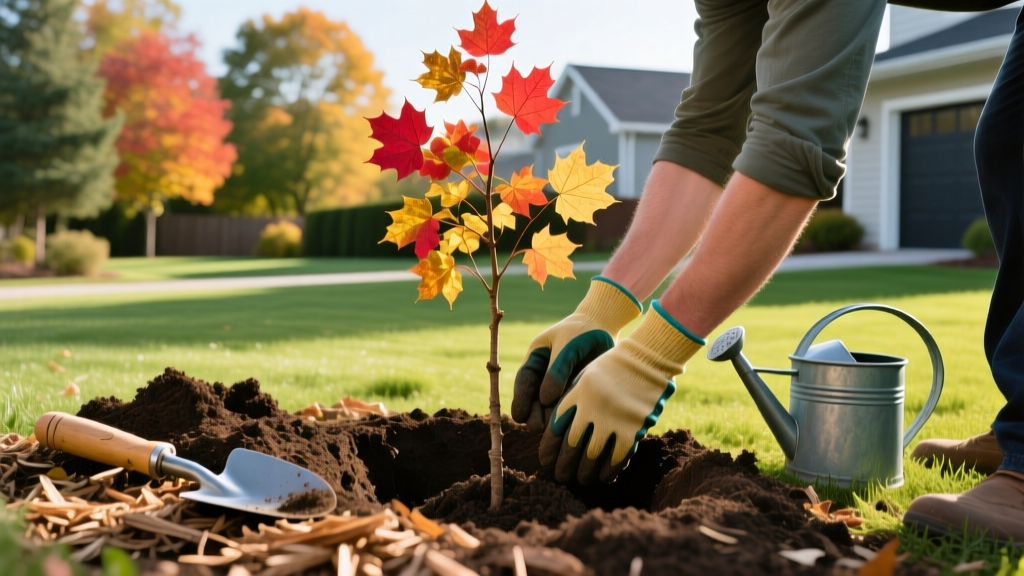
How to Plant and Maintain Colorful Trees for Year-Round Yards
Selecting the Best Colorful Trees for Your Hardiness Zone
Achieving a vibrant landscape requires more than just picking a tree with pretty leaves at the nursery. The intensity and longevity of foliage, bark, and floral color are heavily dictated by the specific cultivar and its compatibility with your local microclimate. When sourcing colorful trees in 2026, prioritize named cultivars over generic seed-grown species, as seedlings exhibit massive genetic variance in fall coloration and disease resistance.
Below is a curated selection of high-performance cultivars that deliver reliable, intense color across different seasons, along with current 2026 nursery pricing for standard 15-gallon container sizes.
| Cultivar | Primary Color Feature | USDA Zones | Mature Size (H x W) | Avg. 15-Gal Cost (2026) |
|---|---|---|---|---|
| Acer rubrum 'October Glory' | Brilliant crimson/red fall foliage | 5-9 | 40-50 ft x 25-35 ft | $140 - $185 |
| Malus 'Prairifire' | Dark pink spring flowers, maroon fall leaves | 4-8 | 20-25 ft x 20-25 ft | $120 - $150 |
| Lagerstroemia 'Natchez' | White summer blooms, exfoliating cinnamon bark | 7-9 | 25-30 ft x 15-25 ft | $130 - $160 |
| Liquidambar styraciflua 'Slender Silhouette' | Columnar form, deep purple-red fall color | 5-8 | 30-40 ft x 4-6 ft | $160 - $210 |
| Acer palmatum 'Bloodgood' | Deep burgundy leaves spring through fall | 5-8 | 15-20 ft x 15-20 ft | $180 - $250 |
Step-by-Step Planting Guide for Maximum Color Retention
The way you plant a tree directly impacts its ability to synthesize pigments. Stress from improper planting depth or poor root establishment will cause colorful trees to drop leaves prematurely or produce muted, yellowish foliage instead of vibrant reds and purples.
- Locate the Root Flare: Brush away the top 2 to 3 inches of soil in the nursery container to expose the root flare (where the trunk widens at the base). The root flare must sit 1 to 2 inches above the surrounding grade. Planting too deep is the leading cause of trunk girdling and chronic stress, which destroys fall color potential.
- Excavate a Wide, Shallow Hole: Dig a hole that is 2 to 3 times the width of the root ball, but no deeper than the root ball itself. The sides of the hole should be rough and jagged, not smooth, to allow lateral root penetration into native soil.
- Amend with Mycorrhizal Fungi: Instead of heavily amending the backfill with compost (which can create a 'bathtub' effect in clay soils), dust the exposed root ball with an endomycorrhizal inoculant (such as RootGrow or a professional-grade equivalent) at a rate of 1 tablespoon per gallon of root ball volume. This symbiotic fungi network expands the root system's nutrient uptake capacity by up to 40%, crucial for phosphorus absorption needed for anthocyanin (red pigment) production.
- Backfill and Eliminate Air Pockets: Use the native soil you excavated to backfill the hole. Tamp it down gently with your hands or the blunt end of a shovel, and water heavily every 4 inches of backfill to collapse hidden air pockets that could dry out fine feeder roots.
- Apply Mulch Correctly: Spread a 2 to 3-inch layer of shredded hardwood mulch in a 4-foot diameter ring around the tree. Crucial: Keep the mulch at least 3 inches away from the trunk itself to prevent rot and rodent damage.
The Science of Foliage Color: Managing Soil pH and Nutrients
The brilliant reds, purples, and oranges in colorful trees are driven by anthocyanins and carotenoids. However, these pigments are highly sensitive to soil chemistry. If your soil pH is off, the tree cannot access the micronutrients required to produce these compounds, leading to a condition called iron chlorosis.
Expert Tip: The pH Sweet Spot for Red Maples
Red maples (Acer rubrum) and Japanese maples (Acer palmatum) require acidic soil with a pH between 4.5 and 6.5. In alkaline soils (pH > 7.0), iron becomes chemically locked up. The tree will produce yellow, sickly leaves instead of deep reds. Before planting, test your soil with a digital probe or a university extension lab test. If your pH is above 7.0, incorporate elemental sulfur at a rate of 1 pound per 100 square feet to lower it gradually over 6 to 12 months.
Nitrogen management is equally critical. While nitrogen promotes rapid vegetative growth, excessive nitrogen in late summer (August and September) delays the tree's dormancy cycle. It forces the tree to keep producing chlorophyll (green pigment) well into autumn, which masks the underlying red and orange pigments. According to the Morton Arboretum, you should cease all high-nitrogen fertilization by mid-July to allow the tree to harden off and initiate vibrant fall coloration.
Seasonal Maintenance and Pruning for Vibrant Canopies
Maintaining colorful trees requires a proactive, season-specific approach to pruning and hydration. The goal is to maximize light penetration into the canopy, as sunlight exposure directly triggers anthocyanin synthesis in the leaves.
- Late Winter Pruning (Feb-March): Prune deciduous colorful trees while they are fully dormant. Remove crossing branches, water sprouts, and any canopy growth that blocks interior sunlight. For flowering trees like the 'Prairifire' crabapple, prune immediately after flowering to avoid cutting off next year's buds.
- Summer Hydration Protocol: Drought stress in August causes premature leaf scorch and early leaf drop, ruining the fall display. Provide 1 inch of water per week (about 10 gallons for a newly planted 15-gallon tree) using a slow-drip soaker hose placed at the dripline, not directly at the trunk.
- Autumn Cleanup: Rake and remove fallen leaves from trees prone to fungal diseases, such as crabapples (apple scab) and sweetgums (leaf spot). Leaving infected debris on the soil surface allows spores to overwinter and reinfect the canopy the following spring, which dulls the summer foliage color.
Warning: Avoid 'Weed and Feed' Products Near Trees
Many broadleaf herbicides used in lawn 'weed and feed' granular products contain dicamba or 2,4-D. These chemicals are readily absorbed by the shallow feeder roots of colorful trees and can cause severe leaf cupping, browning, and permanent canopy dieback. Maintain a strict 4-foot grass-free buffer zone around the trunk of all ornamental trees.
Troubleshooting Faded or Premature Leaf Drop
Even with proper planting, environmental factors can suppress color. Use this diagnostic framework to identify and correct issues when your colorful trees fail to perform.
Symptom: Leaves Turn Brown and Crispy in Late Summer
Cause: Hydrophobic soil or root girdling. The topsoil may be shedding water, or roots are circling the base of the trunk, choking off the vascular system.
Fix: Perform a root collar excavation. Use an air spade or gently hand-trowel to expose the root flare and cut away any circling roots. Apply a wetting agent (like Yucca extract) to the soil to break surface tension and improve water infiltration.
Symptom: Leaves Turn Pale Yellow with Green Veins (Interveinal Chlorosis)
Cause: Iron or manganese deficiency induced by high soil pH, commonly seen in pin oaks and red maples planted near concrete foundations where soil alkalinity is leached.
Fix: Apply chelated iron (Fe-EDDHA form, which remains stable in high pH soils) as a soil drench in early spring. For immediate rescue, use a trunk injection of iron citrate performed by a certified arborist, as recommended by the Clemson University Home & Garden Information Center.
Symptom: Fall Color is Muted, Mostly Yellow/Brown Instead of Red
Cause: Excessive late-season nitrogen, overcast weather during the critical color-change window, or inadequate temperature differentials (warm nights).
Fix: While you cannot control the weather, you can control soil nutrients. Switch to a low-nitrogen, high-potassium fertilizer (like a 5-10-10 NPK ratio) in early autumn to promote cellular hardening and sugar accumulation in the leaves, which drives red pigment production.
By carefully selecting named cultivars, respecting the root flare during planting, and actively managing soil pH and late-season nutrients, you can ensure your colorful trees reach their maximum genetic potential and provide striking visual impact for decades.

