
Tree Care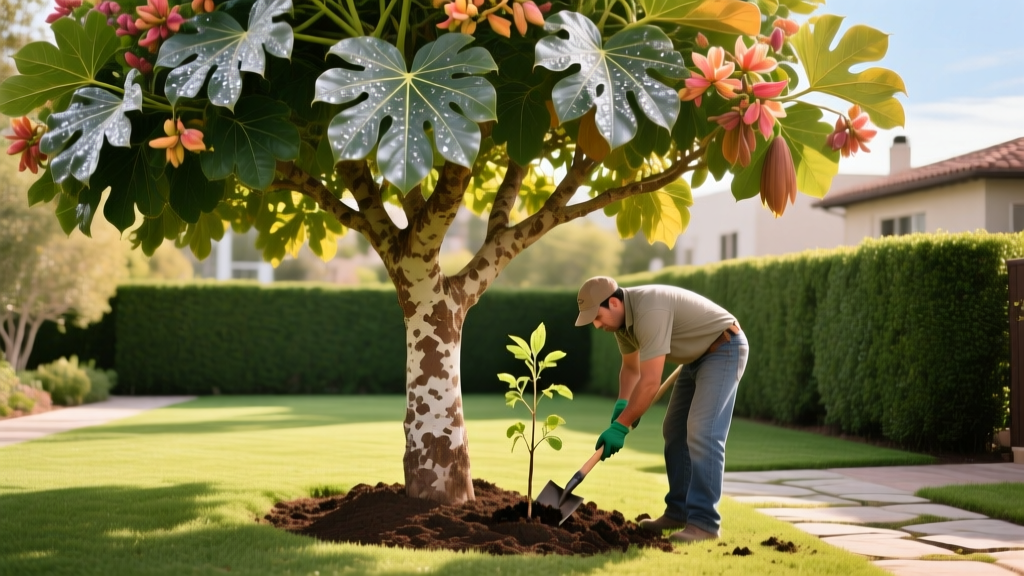
How to Plant and Grow Mexican Sycamore Trees Successfully
Why Choose the Mexican Sycamore Over the American Sycamore?
The Mexican sycamore (Platanus mexicana) has rapidly become the premier choice for large-scale shade in arid and semi-arid landscapes, largely displacing the American sycamore (Platanus occidentalis). While both offer massive canopies and striking exfoliating bark, the Mexican variant provides superior resilience in modern urban environments. According to the Urban Forest Ecosystems Institute at Cal Poly, Platanus mexicana exhibits significantly higher tolerance to alkaline soils, prolonged drought, and urban heat island effects.
Perhaps its most valuable trait is its natural resistance to sycamore anthracnose, a fungal disease that severely defoliates American sycamores during cool, wet springs. Furthermore, the Mexican sycamore's leaves feature a distinct, striking silver-white underside that creates a beautiful shimmering effect in the wind, a visual characteristic absent in its American cousin.
| Feature | Mexican Sycamore (P. mexicana) | American Sycamore (P. occidentalis) |
|---|---|---|
| Leaf Underside | Silvery-white, highly reflective | Pale green, slightly fuzzy |
| Anthracnose Resistance | High (rarely defoliated) | Low (severe spring defoliation common) |
| Drought Tolerance | Excellent once established | Moderate (prefers riparian zones) |
| Alkaline Soil Tolerance | High (thrives up to pH 8.5) | Moderate (prefers pH 6.0-7.5) |
| 2026 Nursery Pricing (15-gal) | $140 - $220 | $90 - $130 |
Pre-Planting Checklist: Site and Soil Preparation
Mexican sycamores are massive trees, routinely reaching 50 to 70 feet in height with a canopy spread of 40 to 50 feet. Planting them too close to infrastructure is the most frequent cause of premature removal. Ensure your planting site offers at least 25 feet of clearance from building foundations and 20 feet of vertical clearance from overhead power lines.
Soil Testing and Drainage Assessment
While highly adaptable, these trees require adequate drainage to prevent root asphyxiation. Perform a percolation test before planting: dig a 12-inch deep hole, fill it with water, and let it drain. Refill it and measure the drop. If the water level drops less than 1 inch per hour, your soil is heavily compacted clay. In these scenarios, you must plant the tree slightly higher than grade (creating a bermed planting mound) to prevent the root ball from sitting in a subterranean bathtub.
Pro Tip for Heavy Clay: Do not amend the backfill soil with heavy compost or peat moss. Amending the planting hole creates a "texture interface" where water pools inside the loose hole rather than draining into the surrounding native clay. Always backfill with the exact native soil you excavated.
Step-by-Step Planting Instructions
Proper installation dictates the next 50 years of the tree's structural integrity. Follow these exact measurements to avoid the most common planting failures.
- Locate Utilities: Call 811 at least three business days before digging to have underground utilities marked. Sycamore root systems are aggressive and will exploit leaking water or sewer lines.
- Find the Root Flare: Brush away the top layer of soil from the nursery root ball. The root flare (where the trunk widens and transitions into roots) must be visible. If the nursery buried the flare 2 inches deep, carefully excavate that soil before planting.
- Dig the Hole: Excavate a hole that is 2.5 times the width of the root ball, but no deeper than the root ball itself. The bottom of the hole must be solid, undisturbed native soil to prevent the tree from sinking post-planting.
- Set the Elevation: Place the tree in the hole. The root flare must sit 1.5 to 2 inches above the surrounding finished grade. This accounts for inevitable soil settling over the first two years.
- Backfill and Eliminate Air Pockets: Shovel the native soil back into the hole. Use a blunt shovel handle to gently tamp the soil every 4 inches to eliminate large air pockets, but avoid aggressive compaction that destroys soil structure.
- Remove Nursery Stakes: Cut away all nursery stakes and ties. Sycamores need to sway in the wind to develop reaction wood, which builds trunk caliper and taper. Leaving nursery stakes results in a weak, top-heavy tree prone to snapping.
Establishment Watering and Mulching Framework
A newly planted Mexican sycamore lacks the extensive root network required to forage for water. During the first 24 months, you must act as its artificial taproot. The golden rule for tree establishment is providing 10 gallons of water per inch of trunk caliper, per week, during the growing season.
| Trunk Caliper at Planting | Weekly Water Volume | Application Method |
|---|---|---|
| 1.5 inches | 15 Gallons | Slow drip over 4 hours via soaker hose |
| 2.0 inches | 20 Gallons | Two 10-gallon slow-release watering bags |
| 2.5 inches | 25 Gallons | Slow drip over 5 hours via soaker hose |
Apply a 3-inch layer of coarse arborist wood chips in a 4-foot diameter ring around the tree. Keep the mulch strictly 3 inches away from the trunk bark. Piling mulch against the trunk (volcano mulching) keeps the bark perpetually wet, inviting fungal pathogens and encouraging girdling roots to sprout from the trunk base.
Structural Pruning to Prevent Co-Dominant Stem Failure
Sycamores are naturally predisposed to developing co-dominant stems—two or more main leaders of equal size growing from the same junction. These junctions often trap "included bark" (bark that grows inward between the stems), creating a structurally weak union that will inevitably split under the weight of ice, wind, or the tree's own mature canopy weight.
"The most critical maintenance task for a young Mexican sycamore is establishing a single, dominant central leader during its first five years. Once a co-dominant stem reaches half the diameter of the main trunk, removing it creates a massive wound that compromises the tree's structural integrity." — International Society of Arboriculture (ISA) Pruning Guidelines
To correct this, use subordination cuts. Identify the weaker of the two competing leaders and reduce its length by one-third. Make the cut just above a lateral branch that is at least one-third the diameter of the stem you are cutting. This slows the growth of the subordinate stem, allowing the dominant leader to overtake it and assume structural control without creating a large, unmanageable pruning wound.
Troubleshooting Common Issues
While highly resilient, Mexican sycamores are not immune to environmental stressors. Consult resources like Texas A&M AgriLife Extension for localized pest alerts, but keep an eye out for these specific failure modes:
- Sycamore Lace Bug: Identified by stippling (tiny yellow dots) on the upper leaf surface and black, varnish-like frass (excrement) on the silver underside. While unsightly, lace bugs rarely kill a healthy tree. Avoid broad-spectrum insecticides; instead, apply horticultural oil (2% concentration) in late winter to smother overwintering eggs.
- Sycamore Borer (Synanthedon resplendens): These clearwing moths target stressed trees, particularly those suffering from drought. Look for small exit holes and sawdust-like frass on the lower trunk. Prevention is the only cure: maintain the 10-gallon-per-inch watering rule during drought years to keep the tree's natural sap pressure high enough to drown invading larvae.
- Chlorosis in Highly Alkaline Soils: Though tolerant of alkaline conditions, soils with a pH above 8.2 can lock up iron, causing the new foliage to turn pale yellow while the veins remain green. Treat this with a chelated iron (Fe-EDDHA) soil drench applied in early spring, which remains bioavailable in high-pH soils unlike standard iron sulfates.

