
Tree Care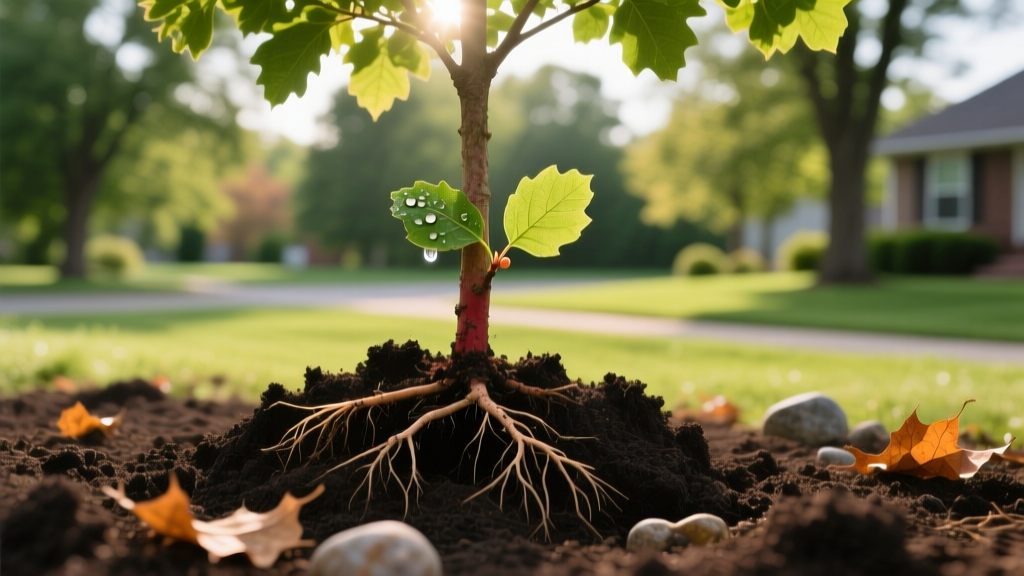
How to Plant and Establish Native Minnesota Trees in Clay Soil
Establishing a healthy canopy in the Upper Midwest requires more than just digging a hole and dropping in a root ball. Minnesota's unique environmental profile—characterized by USDA Hardiness Zones 3a through 4b, extreme winter temperature fluctuations, and dense glacial till soils—demands a specialized approach to tree installation. Standard planting guidelines designed for loamy, well-draining soils often lead to catastrophic root suffocation and crown rot when applied to Minnesota's heavy clay landscapes.
This guide provides a precise, field-tested protocol for selecting, planting, and establishing native and adapted Minnesota trees in clay-dominant yards, ensuring long-term structural integrity and vigorous growth.
The Minnesota Soil Challenge: Why Standard Planting Fails
Most of Minnesota's urban and suburban soils are classified as clay loam or heavy clay, a direct result of glacial deposition. These soils have a percolation rate of less than 1 inch per hour and a high bulk density, which restricts oxygen flow to the root zone.
When homeowners amend a planting hole with organic matter like peat moss or compost in heavy clay, they inadvertently create a "bathtub effect." Water drains rapidly through the loose amended soil but hits the impermeable clay walls and pools at the bottom, drowning the tree's fine feeder roots. According to the University of Minnesota Extension, the most successful establishment strategy for clay soils involves planting slightly above grade and using native backfill to encourage roots to adapt to the surrounding soil matrix immediately.
Selecting the Right Minnesota Trees for Clay and Cold
Species selection is the most critical variable in long-term tree survival. Trees adapted to bottomland or riparian environments naturally tolerate the poor aeration and seasonal waterlogging inherent to clay soils. Below is a decision matrix for high-performance Minnesota trees that thrive in USDA Zones 3-4 and heavy soils.
| Common Name (Botanical) | Mature Size (H x W) | Clay Tolerance | Best Use Case |
|---|---|---|---|
| Bur Oak (Quercus macrocarpa) | 70-80 ft x 60-80 ft | Exceptional | Large shade tree, drought-tolerant once established |
| Northern Hackberry (Celtis occidentalis) | 40-60 ft x 40-50 ft | High | Street tree, windbreaks, urban parkways |
| Swamp White Oak (Quercus bicolor) | 50-60 ft x 50-60 ft | Exceptional | Low-lying areas, rain gardens, heavy clay basins |
| American Linden (Tilia americana) | 60-80 ft x 40-50 ft | Moderate-High | Specimen shade, pollinator support (fragrant blooms) |
Step-by-Step Planting Protocol for Heavy Clay
Follow these exact measurements and techniques to mitigate the risks of clay soil compaction and poor drainage.
1. Perform a Percolation Test
Before purchasing your tree, dig a 12-inch deep test hole and fill it with water. If it takes more than 24 hours to drain completely, your site has severe drainage restrictions. You must plant the tree 2 to 4 inches above the existing soil grade to elevate the root crown above the seasonal water table.
2. Dig a Wide, Shallow Hole
Excavate a hole that is exactly three times the width of the root ball, but 2 inches shallower than the root ball's height. The goal is to provide loose lateral soil for horizontal root expansion while keeping the root ball resting on undisturbed, firm native soil at the base to prevent settling.
3. Locate the Trunk Flare and Score the Roots
Brush away all soil from the top of the root ball until the trunk flare (the point where the trunk widens at the base) is fully exposed. Using a sharp pruning saw, shave off the outer 1/2 inch of the root ball's perimeter. This severs circling "girdling" roots formed in the nursery and stimulates outward radial growth.
4. Set and Backfill with Native Soil
Place the tree in the hole so the trunk flare sits 2 inches above the surrounding grade. Backfill the hole using the native clay soil you just excavated. Do not add fertilizers or organic amendments to the backfill. Tamp the soil gently with your hands to eliminate large air pockets, but avoid compacting it with tools.
5. Apply a Proper Mulch Ring
Spread a 3-inch layer of coarse hardwood mulch over the planting area, extending out to a 4-foot diameter. Crucially, maintain a strict 4-inch "donut" gap between the mulch and the tree trunk. Piling mulch against the bark (volcano mulching) traps moisture against the cambium layer, inviting fungal pathogens and rodent damage.
Expert Insight: For balled-and-burlapped (B&B) trees, leave the natural burlap intact on the bottom of the root ball to maintain structural integrity, but cut away all burlap and wire cages from the top third of the root ball before backfilling. Synthetic burlap will not decompose and will girdle the trunk over time.
Winter Protection and Establishment Watering
Minnesota's winters pose a severe threat to newly planted trees. Young bark is highly susceptible to "sunscald"—a condition where winter sun warms the south-facing bark, activating cambial cells that freeze and die when the sun sets and temperatures plummet.
Winter Desiccation Alert: Evergreens planted in fall continue to lose moisture through their needles during winter. When the ground is frozen, roots cannot replace this water. Apply an anti-desiccant spray like Wilt Stop in late November when temperatures are above 40°F to seal the needles and prevent fatal winter burn.
Trunk Wrapping: Wrap the trunks of deciduous trees (especially Lindens, Maples, and Hackberries) with white, reflective tree wrap starting from the base up to the first major scaffold branch. Install the wrap in November and remove it by early April to prevent trapping spring moisture and harboring insects.
Watering Metrics: During the first two growing seasons, a newly planted 2-inch caliper tree requires approximately 10 to 15 gallons of water per week. Use a slow-release watering bag (like a Treegator) that drips water over 5 to 9 hours, allowing it to penetrate dense clay rather than running off the surface.
Cost Breakdown: DIY vs. Professional Planting (2026 Estimates)
Budgeting for native Minnesota trees requires accounting for both the specimen cost and the labor of handling heavy root balls. A 2.5-inch caliper B&B Bur Oak weighs between 350 and 500 pounds, making professional installation a practical necessity for most homeowners.
- Tree Cost (2.5" Caliper B&B): $280 - $450 at local MN nurseries.
- Professional Planting Labor: $200 - $350 per tree (includes equipment, digging, and backfilling).
- Soil Amendments & Mulch: $40 - $60 (Hardwood mulch and mycorrhizal root dip).
- Winter Protection Kit: $25 (White trunk wrap, anti-desiccant spray, and tree stakes if in high-wind corridor).
Common Minnesota Tree Planting Mistakes to Avoid
Even with the right species, minor installation errors can cause delayed mortality 3 to 5 years after planting. Avoid these frequent pitfalls identified by the University of Minnesota Extension:
- Planting Too Deep: Burying the trunk flare is the number one cause of tree death in clay soils. Always err on the side of planting high.
- Over-Staking: Trees need to sway in the wind to develop reaction wood and trunk taper. Only stake trees in extreme wind corridors, and remove stakes after one full growing season.
- Fall Planting Evergreens: While deciduous trees can be planted in September, evergreens like Arborvitae and Spruce should be planted in spring (April-May) in Minnesota to allow adequate time for root establishment before winter freeze.
"A tree planted two inches too high will eventually settle to the perfect grade. A tree planted two inches too deep in heavy clay is already dead; it just doesn't know it yet." — Midwestern Arboriculture Best Practices

