
Tree Care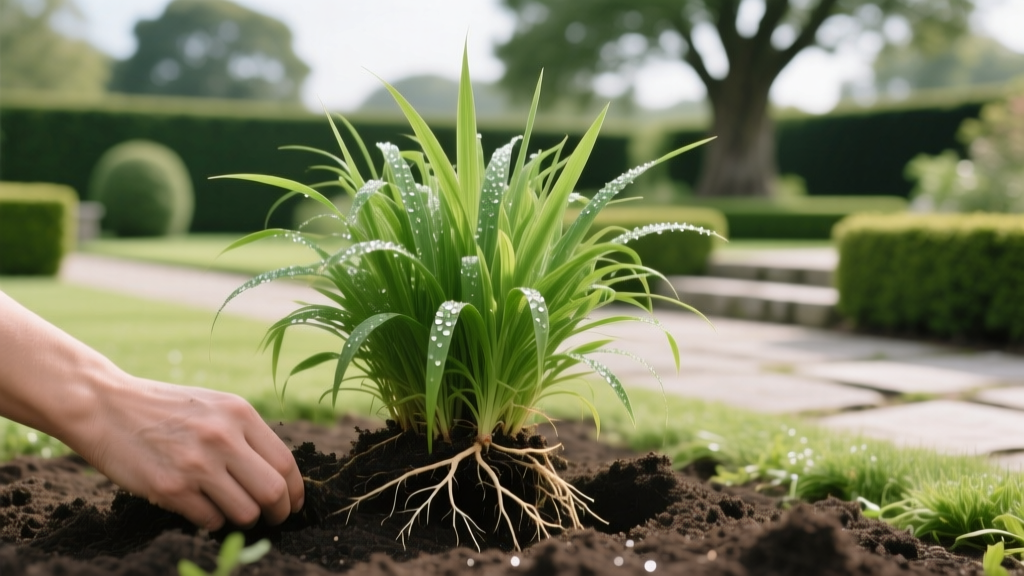
Planting an Ornamental Grass Bush Plant: Establishment Guide
Defining the Grass Bush Plant in Modern Landscaping
In horticultural terms, a grass bush plant refers to large, clumping ornamental grasses that mimic the visual weight, privacy screening, and structural presence of traditional woody shrubs. Unlike turf grasses that spread via stolons, these perennial specimens grow in dense, non-invasive tussocks. Species like Miscanthus sinensis (Maiden Grass) and Cortaderia selloana (Pampas Grass) can reach heights of 6 to 10 feet, providing rapid establishment and architectural movement that static shrubs cannot replicate. According to Penn State Extension, ornamental grasses require significantly less long-term maintenance than woody bushes, provided the initial 90-day establishment phase is executed with precision.
Quick Establishment Stats:
- Time to Maturity: 2 to 3 growing seasons for full structural size.
- Average Cost: $25 to $65 per 3-gallon nursery container.
- Optimal Planting Window: Mid-spring to early summer (allowing roots to anchor before winter freeze).
Selecting the Right Cultivar for Your Hardiness Zone
Choosing the correct cultivar is the first critical failure point. A grass bush plant must be matched not only to your USDA Hardiness Zone but also to your specific microclimate's wind exposure and soil drainage. Below is a comparison matrix of the most reliable shrub-alternative grasses for residential landscapes.
| Cultivar | USDA Zones | Mature Height x Spread | Drought Tolerance | Avg. Nursery Price (3-Gal) |
|---|---|---|---|---|
| Miscanthus sinensis 'Gracillimus' | 5 - 9 | 5-8 ft x 3-5 ft | High | $35 - $45 |
| Pennisetum alopecuroides 'Hameln' | 5 - 9 | 2-3 ft x 2-3 ft | Moderate | $20 - $30 |
| Calamagrostis x acutiflora 'Karl Foerster' | 4 - 9 | 4-5 ft x 2-3 ft | High | $25 - $35 |
| Cortaderia selloana 'Pumila' (Dwarf Pampas) | 7 - 10 | 6-8 ft x 4-6 ft | Very High | $45 - $65 |
Site Preparation and Soil Amendment Protocols
The most common cause of transplant shock in a grass bush plant is improper soil amendment. While woody shrubs often tolerate heavy organic amendments, ornamental grasses are highly susceptible to crown rot (Phytophthora) if planted in moisture-retentive soils. Clemson University's Home & Garden Information Center emphasizes that these plants thrive in lean, well-draining environments.
Warning: Avoid Peat Moss
Never amend planting holes for ornamental grasses with peat moss or heavy compost. These materials act like sponges, holding water directly against the root crown. If your native soil is heavy clay, amend the backfill with 30% expanded shale or pine bark fines by volume to increase macroporosity without sacrificing drainage.
Never amend planting holes for ornamental grasses with peat moss or heavy compost. These materials act like sponges, holding water directly against the root crown. If your native soil is heavy clay, amend the backfill with 30% expanded shale or pine bark fines by volume to increase macroporosity without sacrificing drainage.
Before digging, conduct a percolation test. Dig a test hole 12 inches deep and fill it with water. If the water drains completely within 1 to 2 hours, the site is ideal. If it takes longer than 4 hours, you must either install a French drain, plant on a raised berm (mounding the soil 6 to 8 inches above grade), or select a moisture-tolerant species like Chasmanthium latifolium.
Step-by-Step Planting Execution
Proper physical installation dictates the long-term vigor of your grass bush plant. Follow this exact sequence to prevent planting depth errors.
- Root Ball Hydration: Submerge the nursery container in a tub of water mixed with a liquid kelp root stimulator (1 ml per liter of water) for 20 minutes prior to planting. This eliminates dry pockets in the coir or bark-based nursery media.
- Excavation Dimensions: Dig a hole exactly twice the width of the root ball, but only half the depth. This ensures the plant sits high, preventing the crown from sinking below the soil line as the backfill settles.
- Scoring the Roots: Use a sterilized hori-hori knife to make four vertical slices down the sides of the root ball, and cross-hatch the bottom. This severs circling roots that will otherwise girdle and choke the plant within three years.
- Setting the Grade: Place the plant in the hole. The top of the root crown must sit exactly 1 inch above the surrounding native soil grade.
- Backfilling and Tamping: Backfill with your native (or shale-amended) soil. Do not add synthetic fertilizers to the hole, as high nitrogen salts will burn emerging feeder roots. Tamp the soil lightly with your heel to remove large air pockets.
The 90-Day Establishment Watering Matrix
Overwatering is just as lethal as underwatering during the establishment phase. The goal is to encourage deep root penetration by allowing the top 2 inches of soil to dry out between watering cycles. Adjust the following matrix based on local rainfall and ambient temperatures exceeding 85°F.
| Establishment Phase | Watering Frequency | Volume per Application | Soil Moisture Target |
|---|---|---|---|
| Days 1 - 14 | Every 48 hours | 1.0 Gallon | Moist to 4-inch depth |
| Days 15 - 45 | Every 72 hours | 1.5 Gallons | Moist to 6-inch depth |
| Days 46 - 90 | Weekly (1x per week) | 2.0 Gallons | Dry top 2 inches, moist below |
First-Year Dormancy and Winter Protection
A critical mistake homeowners make is cutting back a newly planted grass bush plant in late autumn. The standing foliage is not merely aesthetic; it serves a vital biological function. The hollow culms (stems) channel precipitation away from the sensitive root crown, while the dense above-ground biomass insulates the root zone against freeze-thaw cycles that can heave young plants out of the ground.
"Leave the plumes and foliage completely intact through the winter. Wait until you see new green shoots emerging at the base in early spring—typically when soil temperatures consistently reach 50°F—before cutting the previous year's growth down to a 4-inch stubble using battery-powered hedge shears."
Common Establishment Failures and Troubleshooting
Even with meticulous planting, environmental variables can cause stress. Use this diagnostic framework to identify and correct issues during the first growing season.
- Symptom: Center of the clump turns brown and dies out.
Diagnosis: This is rarely a disease in young plants; it is a natural aging process in grasses older than 4 years. However, if it happens in year one, it indicates the crown was planted too deep, causing the center meristems to rot. Fix: Lift the plant, add soil to the base of the hole to raise the crown, and replant immediately. - Symptom: Foliage flops over and breaks in mild wind.
Diagnosis: Excessive nitrogen or insufficient sunlight. If the plant receives less than 6 hours of direct, unfiltered sunlight, the internodes will elongate weakly. Fix: Relocate the plant to full sun in early spring and cease all fertilizer applications. Ornamental grasses thrive on neglect and rarely require supplemental feeding. - Symptom: Leaf margins turning rust-brown in mid-summer.
Diagnosis: Fungal leaf spot (Helminthosporium) exacerbated by overhead irrigation wetting the foliage. Fix: Switch to a drip emitter or soaker hose placed at the base of the plant. Prune out severely infected leaves and apply a copper-based fungicide if the spread is aggressive.
By treating your grass bush plant with the same rigorous site-preparation and watering protocols used for high-value specimen trees, you will secure a resilient, low-maintenance landscape anchor that delivers year-round architectural interest.

