
Tree Care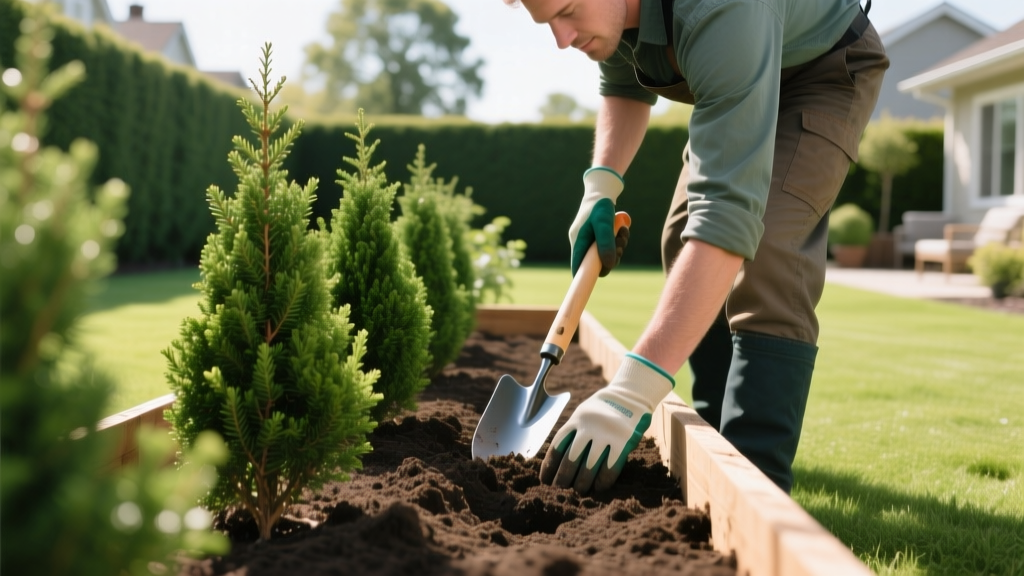
Beginner's Guide to Planting Tall Hedges for Backyard Privacy
Installing a standard 6-foot wooden privacy fence costs between $40 and $75 per linear foot in 2026, excluding permit fees, HOA approvals, and maintenance. Planting tall hedges offers a living alternative that costs roughly $15 to $25 per linear foot, provides superior windbreak capabilities, and actively absorbs street noise. However, a hedge is a long-term biological system, not a static structure. Success depends entirely on precise species selection, calculated spacing, and structural pruning protocols. This guide breaks down the exact specifications required to establish a dense, 8-foot-plus privacy screen that thrives for decades.
Choosing the Right Species for 8-Foot+ Privacy
Not all evergreens are suitable for tall hedges. Species selected for privacy must tolerate close spacing, resist common fungal pathogens, and respond well to annual shearing. Below is a comparison of the four most reliable cultivars for residential privacy screens, based on current nursery availability and performance data.
| Cultivar / Species | Mature Height (Unpruned) | Annual Growth Rate | Est. Cost (7-Gallon) | Best Use Case & Limitations |
|---|---|---|---|---|
| 'Green Giant' Arborvitae (Thuja standishii x plicata) | 30–40 ft | 3–5 ft / year | $55 – $75 | Fastest privacy screen. Highly resistant to bagworms. Fails in deep shade or poorly drained clay soils. Clemson University HGIC notes its superiority over older 'Emerald Green' varieties for rapid screening. |
| Nellie Stevens Holly (Ilex x 'Nellie R. Stevens') | 15–25 ft | 1–2 ft / year | $85 – $110 | Best broadleaf option. Extremely deer resistant and drought tolerant once established. Slower to fill in laterally than conifers. NC State Extension recommends it for southern landscapes. |
| Leyland Cypress (x Cuprocyparis leylandii) | 40–50 ft | 3–4 ft / year | $60 – $80 | Dense, dark green foliage. Highly susceptible to Seiridium canker in humid climates. The RHS warns against planting in tight, unventilated rows. |
| English Laurel (Prunus laurocerasus) | 15–20 ft | 2–3 ft / year | $45 – $65 | Excellent for heavy shade where conifers fail. Requires aggressive annual pruning to prevent woody, bare bases. Toxic if ingested. |
Calculating Spacing and Plant Quantities
The most common beginner mistake is planting tall hedges too closely together. While tighter spacing yields faster privacy, it creates intense root competition, stunts vertical growth, and creates a humid microclimate that breeds fungal diseases like Cercospora needle blight.
The Hedge Spacing Formula:
For a solid screen, space plants at a distance equal to 50% to 75% of their mature unpruned width.
Example: 'Green Giant' Arborvitae has a mature width of 12 feet. Plant them 6 to 8 feet apart (center-to-center).
Total Plants Needed = (Total Linear Footage ÷ Spacing Distance) + 10% buffer for transplant mortality.
For a solid screen, space plants at a distance equal to 50% to 75% of their mature unpruned width.
Example: 'Green Giant' Arborvitae has a mature width of 12 feet. Plant them 6 to 8 feet apart (center-to-center).
Total Plants Needed = (Total Linear Footage ÷ Spacing Distance) + 10% buffer for transplant mortality.
For a 100-foot property line using 'Green Giant' at 6-foot spacing: (100 ÷ 6) = 16.6. Round up to 17, add a 10% buffer (2 plants), and purchase exactly 19 trees. Buying in bulk from a wholesale nursery rather than a big-box garden center can reduce your per-plant cost by 30% to 40%.
Step-by-Step Trenching and Planting Protocol
Do not dig individual holes for a tall hedge. Individual holes in heavy clay soil create a "bathtub effect," where water pools in the loose backfill and drowns the roots. Instead, use a continuous trenching method.
- Call 811 Before Digging: Have underground utilities marked at least 48 hours before breaking ground. This is a legal requirement and prevents catastrophic damage to irrigation or gas lines.
- Dig a Continuous Trench: The trench should be twice as wide as the root ball of your nursery stock, but no deeper than the root ball itself. For a standard 7-gallon 'Green Giant', this means a trench 18 inches wide and 14 inches deep.
- Locate the Root Flare: Brush away the top inch of soil from the nursery pot to expose the root flare (where the trunk widens into the roots). The root flare must sit 1 to 2 inches above the surrounding grade. Planting too deep is the number one cause of hedge mortality.
- Backfill with Native Soil: Do not amend the backfill with heavy peat moss or rich compost. Amending the planting hole creates a textural interface that discourages roots from expanding into the native soil. Use the soil you dug out, breaking up large clods.
- Establish a Watering Berm: Build a 3-inch-high soil berm on the outer edges of the trench to create a watering basin. This ensures deep water penetration directly to the root zone during the critical first year.
Year-One Maintenance and the A-Frame Pruning Rule
Tall hedges require a specific pruning geometry to remain dense from top to bottom. If you shear a hedge flat across the top and straight down the sides, the upper canopy will cast a shadow over the lower branches. Deprived of sunlight, the lower branches will defoliate, leaving you with a screen that only blocks the view of your neighbor's second-story windows.
WARNING: The A-Frame Pruning Rule
Always prune tall hedges so the base is wider than the top, creating a subtle "A" or trapezoid shape. For an 8-foot-tall hedge that is 3 feet wide at the base, taper the top width to 18–24 inches. This allows sunlight to reach the lowest branches, maintaining dense foliage all the way to the soil line.
Always prune tall hedges so the base is wider than the top, creating a subtle "A" or trapezoid shape. For an 8-foot-tall hedge that is 3 feet wide at the base, taper the top width to 18–24 inches. This allows sunlight to reach the lowest branches, maintaining dense foliage all the way to the soil line.
Timing your cuts: For conifers like Arborvitae and Cypress, prune in late spring or early summer after the first flush of new growth has hardened off. Never cut back into old, brown, needle-less wood on conifers; they lack latent buds in old wood and will not regenerate foliage, leaving permanent holes in your privacy screen. Broadleaf hedges like Nellie Stevens Holly can be pruned more aggressively in late winter before spring bud break.
Troubleshooting Common Hedge Failures
Even with perfect planting, environmental stressors can impact your hedge. Use this diagnostic matrix to identify and correct issues before they compromise the entire row.
| Visual Symptom | Probable Cause | Actionable Fix |
|---|---|---|
| Interior browning on Arborvitae | Natural seasonal needle drop or poor air circulation | Thin outer growth slightly to improve airflow; ignore if restricted to the innermost 1/3 of foliage near the trunk. |
| Dieback on Leyland Cypress branches | Seiridium canker or Botryosphaeria dothidea | Prune 3 inches below the canker margin; sterilize shears with a 10% bleach solution between every cut. Remove severely infected plants immediately to protect the row. |
| Sparse, dead foliage at the base | Improper pruning (flat top) shading out lower branches | Re-establish an A-frame taper immediately. Note: Conifers will not regenerate foliage on old brown wood; broadleaf hedges may push new buds if cut back hard. |
| Yellowing foliage (Chlorosis) | High soil pH locking up iron, or poor drainage | Test soil pH. If above 7.0, apply chelated iron and elemental sulfur to lower pH. If soil is waterlogged, aerate the trench margins. |
Establishing a robust, tall hedge is a multi-year investment. By selecting disease-resistant cultivars, utilizing trenching methods to prevent root rot, and strictly adhering to the A-frame pruning geometry, you will cultivate a living privacy wall that outlasts and outperforms traditional timber fencing.

