
Tree Care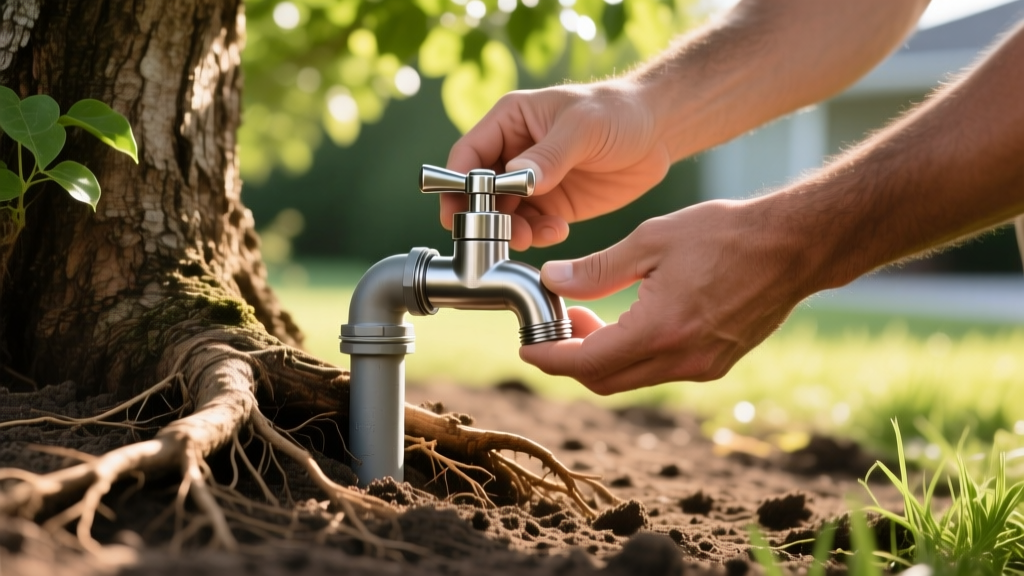
Do You Need a Plumber to Replace Outdoor Spigot Near Tree Roots?
The Short Answer: DIY vs. Professional Plumbing
When homeowners ask, 'do you need a plumber to replace outdoor spigot fixtures?', the answer depends entirely on the connection type and the surrounding landscape. If your hose bibb is a standard wall-mounted frost-free sillcock with accessible interior plumbing, a confident DIYer can replace it in under an hour for roughly $45 to $80 in parts. However, if the supply line runs underground through your yard's Critical Root Zone (CRZ), or if the spigot is mounted on a freestanding brick pillar, hiring a licensed plumber—and potentially consulting an arborist—is mandatory to prevent catastrophic tree damage and code violations.
Replacing an outdoor faucet is rarely just a plumbing issue; it is a landscaping and soil health issue. A leaking spigot can dump hundreds of gallons of water into the soil, creating anaerobic conditions that suffocate tree feeder roots and invite destructive pathogens like Phytophthora root rot. This guide breaks down the exact decision matrix for replacing your spigot while protecting your yard's most valuable assets: your trees.
The Landscaping Intersection: Why Tree Roots Complicate Plumbing
Before you grab a pipe wrench or a trenching shovel, you must map your yard's subterranean biology. Trees do not have taproots that mirror their canopy; instead, 80% of a tree's structural and feeder roots reside in the top 12 to 18 inches of soil, extending far beyond the drip line.
Arborists use the Critical Root Zone (CRZ) formula to determine where digging is prohibited. The standard calculation dictates a 1-foot radius of protected soil for every 1 inch of trunk Diameter at Breast Height (DBH, measured at 4.5 feet above ground). If you have a mature red oak with a 24-inch DBH, its CRZ extends 24 feet in all directions from the trunk. If your outdoor spigot's supply line trenches through this zone, traditional mechanical trenching will sever structural roots, leading to canopy dieback, structural instability, and eventual tree death within three to five years.
⚠️ Arborist Warning: The 2-Inch Rule
Never sever a tree root larger than 2 inches in diameter. Cutting roots of this size compromises the tree's structural anchoring and removes a massive percentage of its water-uptake capacity. If a plumber needs to route a new PEX or copper line through a root-dense area, they must use pneumatic Air Spade excavation to safely blow away soil and tunnel under the roots without cutting them.
Never sever a tree root larger than 2 inches in diameter. Cutting roots of this size compromises the tree's structural anchoring and removes a massive percentage of its water-uptake capacity. If a plumber needs to route a new PEX or copper line through a root-dense area, they must use pneumatic Air Spade excavation to safely blow away soil and tunnel under the roots without cutting them.
Decision Matrix: Should You DIY or Call a Plumber?
Use this matrix to determine your next steps based on your specific spigot setup and landscape constraints.
| Scenario | DIY or Pro? | Estimated Cost | Tree Root Risk |
|---|---|---|---|
| Wall-mounted swap (accessible interior pipe) | DIY | $45 - $85 | None |
| Wall-mounted swap (corroded/galvanized pipe) | Plumber | $250 - $450 | None |
| Freestanding yard pillar spigot replacement | Plumber | $400 - $800 | Moderate |
| Trenching new line through tree Critical Root Zone | Plumber + Arborist | $800 - $1,500+ | Severe |
Step-by-Step: Replacing a Wall-Mounted Frost-Free Sillcock
If your spigot is mounted directly to your home's exterior siding or brick, and you have confirmed the interior shut-off valve and piping are in good condition, you can perform this swap yourself. For freezing climates, always upgrade to a high-quality frost-free model like the Woodford Model 19 or Woodford Model 17, which feature built-in anti-siphon vacuum breakers and extended inner tubes that keep the actual water shut-off valve inside the heated envelope of your home.
- Shut Off and Drain: Close the interior dedicated shut-off valve for the outdoor line. Open the exterior spigot and the interior bleeder cap to drain residual water.
- Remove the Old Unit: Use a tubing cutter or reciprocating saw to cut the pipe just behind the interior shut-off valve. Unscrew the mounting flange from the exterior wall.
- Measure the Penetration: Frost-free sillcocks come in varying lengths (4-inch to 12-inch). Measure the thickness of your wall, including siding, sheathing, and interior drywall, to ensure the new spigot's vacuum breaker sits flush against the exterior.
- Set the Downward Pitch: This is the most common DIY failure. A frost-free spigot must pitch downward at a 1/4-inch per foot angle toward the exterior. If it pitches upward or sits perfectly level, water will pool inside the copper tube, freeze, and burst the pipe inside your wall during winter.
- Connect Interior Piping: Transition to your home's plumbing using a brass threaded adapter or a sweat-soldered copper joint. Never use push-to-connect fittings (like SharkBite) inside enclosed exterior walls. While convenient, they are prone to UV degradation if exposed outside and are often flagged by building inspectors when concealed behind drywall without an access panel.
- Seal the Exterior: Apply a generous bead of polyurethane exterior sealant (like OSI QUAD) behind the mounting flange to prevent water and carpenter ants from entering the wall cavity.
The Hidden Cost of Leaking Spigots on Tree Health
Many homeowners delay replacing a dripping spigot, viewing it as a minor nuisance. From a tree care perspective, a constant drip of just one drop per second wastes over 3,000 gallons of water a year. When this water pools near the base of a tree or over its structural roots, it causes severe soil compaction and displaces oxygen.
Tree roots require oxygen for cellular respiration. Waterlogged soil creates anaerobic conditions, effectively drowning the fine feeder roots responsible for nutrient uptake. Furthermore, the constant moisture creates an ideal breeding ground for Phytophthora, a devastating water mold that causes root and collar rot. According to the University of Minnesota Extension, altering the soil grade or moisture dynamics around a mature tree is one of the leading causes of delayed tree mortality in residential landscapes. Replacing a $50 spigot promptly is a vital preventative tree care measure.
When to Call a Licensed Plumber (Red Flags)
Stop your DIY efforts and hire a professional if you encounter any of the following scenarios:
- Galvanized Steel Pipes: If your home was built before 1970 and the supply line is galvanized steel, the interior threads are likely corroded. Attempting to unscrew the old spigot will often twist and snap the pipe inside the wall, turning a $50 job into a $1,500 drywall and repiping emergency.
- Roots Encasing the Pipe: If you are replacing a yard pillar spigot and dig down to find tree roots wrapped tightly around the copper or PVC supply line, do not cut the roots. Call an arborist to evaluate if the pipe can be abandoned and rerouted outside the CRZ.
- Missing Interior Shut-Off: If your home lacks a dedicated interior shut-off valve for the exterior line, a plumber must install one. Operating without a local shut-off means you must turn off the main water supply to the entire house every time you need to do yard maintenance or winterize the line.
Frequently Asked Questions
Can I use PEX pipe for an outdoor spigot supply line?
Yes, PEX-A or PEX-B is excellent for underground supply lines routing to yard spigots because it is flexible and can withstand minor freezing expansion without bursting. However, PEX is highly susceptible to UV degradation. It must be buried below the frost line and transitioned to copper, brass, or a UV-rated polymer before it exits the ground and connects to the exterior spigot flange.
How do I winterize a spigot near my landscaping beds?
If you have a standard (non-frost-free) spigot, you must shut off the interior valve, drain the line, and install a foam insulation cover. Never leave a hose attached to the spigot over winter; the hose traps water in the brass housing, guaranteeing a freeze fracture. For detailed seasonal tree and landscape prep, refer to the International Society of Arboriculture's tree care guidelines.
What is the best vacuum breaker for protecting my garden soil?
Always install an anti-siphon hose bibb vacuum breaker (such as the Watts LF15A). This device prevents a sudden drop in municipal water pressure from siphoning contaminated water—such as liquid fertilizer, pesticides, or stagnant water from a garden hose submerged in a puddle—back into your home's drinking water supply.

