
Tree Care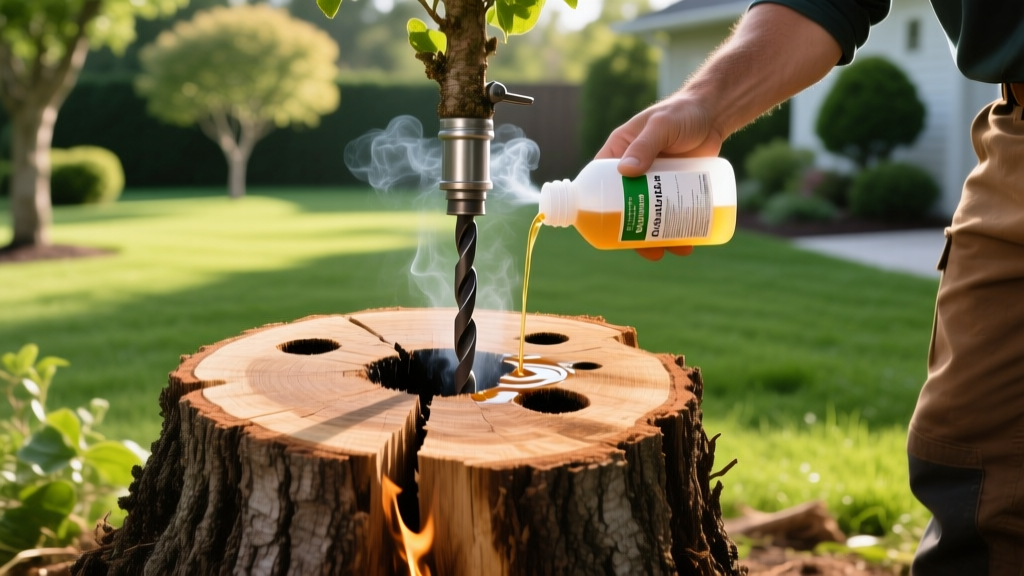
How to Use a Stump Burning Chemical for Fast Removal
The Chemistry of Stump Burning Chemicals
When a tree is felled, the remaining stump and extensive lateral root system present a significant landscaping obstacle. While mechanical grinding is the fastest solution, it is expensive and leaves behind a massive hole filled with woodchips. For homeowners seeking a cost-effective alternative, a stump burning chemical—specifically potassium nitrate (KNO3)—offers a highly effective method to accelerate decay and prepare the wood for a complete, controlled burn.
Potassium nitrate is a powerful oxidizer. According to the National Center for Biotechnology Information (PubChem), KNO3 provides its own oxygen source during combustion. When introduced into the cellular structure of a dead tree stump, it does not merely rot the wood; it impregnates the xylem and phloem tissues with oxygen-rich compounds. This drastically lowers the ignition temperature of the wood and allows the stump to burn slowly, deeply, and completely down to the root flare without requiring constant tending or massive amounts of external fuel.
Commercial Potassium Nitrate Products Compared
Not all stump removers are designed for burning. Some rely on high-nitrogen fertilizers to promote fungal decay over several years. For the burning method, you must select a product where potassium nitrate is the primary active ingredient (typically 98% or higher concentration).
| Product Name | Active Ingredient | Average Cost (1 lb) | Max Stump Diameter | Best For |
|---|---|---|---|---|
| Bonide Stump-Out | 98% Potassium Nitrate | $12 - $15 | 24 inches | Granular application in deep drill holes |
| Spectracide Stump Remover | 98% Potassium Nitrate | $10 - $14 | 24 inches | Budget-friendly large stump treatment |
| Hi-Yield Stump Remover | 98% Potassium Nitrate | $14 - $18 | 30 inches | Older, highly lignified hardwood stumps |
Step-by-Step Protocol for Chemical Stump Burning
Successfully burning a stump requires precise preparation. Simply pouring the chemical on the surface of the bark will yield zero results, as the bark acts as a waterproof barrier. The chemical must be introduced directly into the heartwood and sapwood.
Phase 1: Preparation and Drilling
Begin by cutting the stump as close to the ground as possible, ideally leaving only 2 to 3 inches above the soil line. Use a chainsaw for this task, ensuring the chain does not touch the dirt, which will instantly dull the cutters.
Next, equip a heavy-duty power drill with a 3/4-inch or 1-inch spade bit (or an auger bit) that is at least 10 to 12 inches long. Drill holes vertically into the top of the stump. Space the holes 3 to 4 inches apart in a grid pattern. For maximum effectiveness, drill the outer ring of holes at a 45-degree angle pointing inward toward the center of the stump. This ensures the chemical intersects with the lateral roots extending outward beneath the soil. Drill each hole to a depth of 8 to 12 inches, stopping just before you break through the bottom of the stump.
Phase 2: Chemical Loading and Activation
Pour the potassium nitrate granules into each drilled hole, filling them to within 1/2 inch of the top. A standard 1-pound bottle will typically treat a 24-inch diameter stump with 10 to 15 drilled holes. Once the holes are filled with the stump burning chemical, pour warm water into each hole to dissolve the granules. The warm water accelerates the dissolution process and helps carry the KNO3 solution deep into the wood's capillary network.
Cover the entire stump with a dark plastic tarp and weigh down the edges with bricks or stones. This serves two purposes: it prevents heavy rain from washing the chemical solution out of the holes, and it traps heat and moisture to accelerate the chemical penetration into the dense heartwood.
Phase 3: The 4-to-6-Week Waiting Period
Patience is mandatory. The potassium nitrate requires 4 to 6 weeks to fully saturate the stump and alter its cellular structure. During this time, check the stump weekly. If the water level in the holes drops, top them off with a small amount of water to keep the chemical active. By week six, the wood should feel noticeably spongy when probed with a screwdriver, indicating it is ready for ignition.
The Controlled Burn: Ignition and Safety Rules
Once the wood is spongy and fully saturated with the oxidizer, it is time to burn the stump. Remove the plastic tarp and clear all dry leaves, twigs, and flammable mulch within a 10-foot radius of the stump. As noted by the University of Minnesota Extension, local fire ordinances and seasonal burn bans must be strictly observed before initiating any outdoor burning.
Build a small chimney of charcoal briquettes directly on top of the treated stump. Douse the charcoal with kerosene and ignite it. The charcoal will burn hot enough to ignite the potassium-nitrate-soaked wood. Once the stump catches fire, the KNO3 will sustain a slow, deep, smoldering burn that will gradually consume the stump and the upper lateral roots over the next 12 to 24 hours.
CRITICAL SAFETY WARNING: NEVER USE GASOLINE
Never use gasoline, lighter fluid, or any highly volatile accelerant to ignite a chemically treated stump. Gasoline produces heavy, explosive vapors that can travel down the porous, chemically treated root system and ignite underground, causing a dangerous vapor flash or subterranean explosion. Kerosene and charcoal burn slower and hotter, providing safe, sustained ignition without the flashpoint risk.
Cost and Time Matrix: Chemical Burning vs. Mechanical Grinding
Choosing between a stump burning chemical and hiring a professional with a stump grinder depends on your budget, timeline, and physical capability. Below is a direct comparison of the two methods for an average 24-inch oak stump.
| Factor | Chemical Burning (KNO3) | Mechanical Stump Grinding |
|---|---|---|
| Total Material/Labor Cost | $25 - $40 (Chemicals + Charcoal/Kerosene) | $150 - $400 (Professional Service) |
| Time to Complete Removal | 5 to 7 weeks (including waiting period) | 1 to 3 hours |
| Physical Labor Required | Moderate (Drilling, monitoring burn) | None (if hired) / Extreme (if rented) |
| Fate of the Root System | Upper lateral roots are consumed by fire | Roots remain intact underground to decay naturally |
| Site Cleanup | Minimal (Ash can be left or swept away) | Extensive (Requires removing cubic yards of woodchips) |
When to Skip the Chemical Burn
While a stump burning chemical is highly effective, it is not universally applicable. You must avoid this method under the following conditions:
- Proximity to Structures: If the tree was located within 10 feet of a home foundation, retaining wall, or underground utility line, do not burn the stump. The smoldering fire can travel along the lateral roots and ignite subterranean peat, dry utility trench backfill, or damage shallow PVC plumbing lines.
- Rocky or Clay-Heavy Soil: In extremely dense clay or rocky soil, the lateral roots may not absorb the chemical effectively, and the restricted oxygen flow underground can cause the fire to prematurely suffocate before reaching the root flare.
- Active Burn Bans: During drought conditions or high-wind seasons, local municipalities frequently issue strict burn bans. A smoldering stump fire can easily be fanned into a surface fire by high winds, making mechanical grinding the only legal and safe option.
By understanding the oxidizing properties of potassium nitrate and adhering to strict drilling and ignition protocols, homeowners can safely leverage a stump burning chemical to eliminate unsightly tree stumps for a fraction of the cost of professional grinding services.

