
Tree Care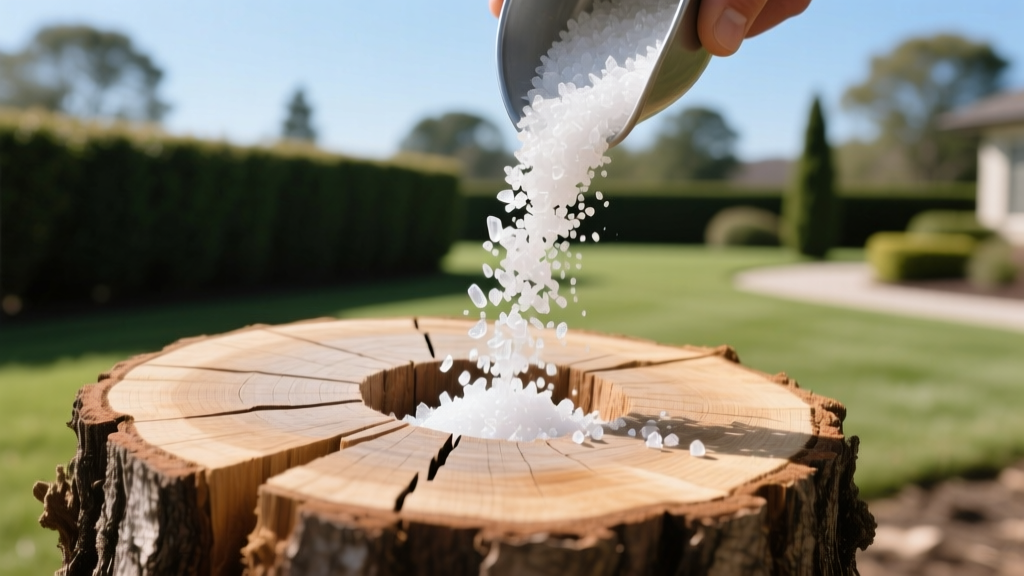
Stump Removal Chemicals: Potassium Nitrate Application Playbook
The Chemistry of Stump Decay: Why Potassium Nitrate?
When addressing yard cleanup, stump removal chemicals are frequently misunderstood as acidic dissolvers that melt wood on contact. In reality, commercial stump removers rely almost entirely on potassium nitrate (KNO3) at concentrations of 99%. This compound does not destroy wood directly; instead, it acts as a high-nitrogen catalyst that accelerates the metabolism of wood-decaying fungi.
Left untreated, a mature oak stump can take 10 to 15 years to decompose naturally. By saturating the wood's cellular structure with potassium nitrate, you create an ideal feeding ground for saprophytic fungi, compressing the decay timeline to 4–8 weeks for softwoods and 8–12 weeks for dense hardwoods. This rapid breakdown is critical for pest management, as lingering stumps serve as primary breeding grounds for carpenter ants, termites, and fungal pathogens that can spread to nearby healthy trees.
Active Ingredient Breakdown
- Potassium Nitrate (99%): The industry standard (found in Spectracide Stump Remover and Bonide Stump-Out). Costs $14–$18 per 1 lb bottle in 2026. Highly effective for accelerating rot.
- Epsom Salt (Magnesium Sulfate): A common DIY internet myth. While it desiccates (dries out) wood, it does not introduce the nitrogen required to feed decay fungi. It preserves the stump rather than rotting it.
- Triclopyr / Glyphosate: These are systemic herbicides, not decay accelerators. They are used exclusively to kill the root system and prevent epicormic sprouting, but they do not speed up physical decomposition.
Stump Removal Chemicals vs. Mechanical Grinding
Choosing between chemical acceleration and mechanical grinding depends on your budget, timeline, and soil health goals. According to the University of Minnesota Extension, mechanical grinding is immediate but disruptive, while chemical removal is slow but preserves the surrounding soil ecology.
| Metric | Chemical Removal (KNO3) | Mechanical Grinding |
|---|---|---|
| Average Cost (24" Stump) | $15 – $25 (Materials) | $150 – $350 (Professional) |
| Time to Completion | 6 – 12 Weeks | 1 – 2 Hours |
| Soil Impact | Leaves nitrogen-rich organic matter | Leaves wood chips that deplete soil nitrogen |
| Root System | Roots decay naturally over time | Roots remain intact and may sprout |
Step-by-Step Application Playbook
The most common reason stump removal chemicals fail is improper application to green or freshly cut wood. Freshly cut trees exhibit positive root pressure, pushing sap outward and repelling chemical absorption. You must wait until the stump is dead and dry (typically 6–12 months after felling) so the wood acts like a sponge, drawing the chemical solution deep into the root flare.
Phase 1: Preparation and Drilling
- Reduce the Height: Use a chainsaw to cut the stump as close to the ground as possible (1–2 inches above grade). This minimizes the volume of wood that needs to decay.
- Select the Right Bit: Attach a 1/2-inch or 1-inch spade bit to a high-torque cordless drill. Standard twist bits will clog with sawdust and overheat.
- Drill the Grid: Bore vertical holes 8 to 12 inches deep into the top of the stump. Space the holes 3 inches apart in a grid pattern. Keep the holes at least 2 inches away from the outer bark edge to prevent the chemical from washing out onto the surrounding soil.
- Angle the Perimeter: Drill additional holes at a 45-degree angle around the outer edge, aiming toward the center base to target the critical root collar.
Phase 2: Chemical Saturation and Microclimate Creation
- Fill with KNO3: Pour potassium nitrate granules into each hole until they are nearly full. A standard 24-inch stump will require approximately 1 to 1.5 lbs of chemical.
- Add Water: Slowly pour warm water into the holes to dissolve the granules. The water acts as a carrier, pulling the nitrogen deep into the wood's xylem.
- Seal the Stump: Cover the entire stump with a heavy-duty black plastic trash bag. Weigh down the edges with bricks or soil. This blocks sunlight (preventing photosynthesis in any remaining cambium) and creates a high-humidity, high-heat microclimate that exponentially accelerates fungal metabolism.
Troubleshooting Common Failure Modes
Even with perfect application, certain biological and environmental factors can stall the decay process. Address these edge cases proactively:
- Resinous Softwoods (Pine, Spruce): Coniferous stumps are saturated with pitch and resin that block water and chemical absorption. Fix: Use a hatchet to deeply score the bark and outer sapwood in a crosshatch pattern before applying the chemical to bypass the resin barrier.
- Wet Climates and Heavy Rain: Excessive rain can wash the potassium nitrate out of the drill holes before it penetrates the wood. Fix: Plug the top of the drill holes with a small piece of foam backer rod or silicone caulk immediately after adding the water to lock the solution inside.
- Extreme Drought: Fungi require moisture to break down lignin and cellulose. If the stump dries out completely, the rot process halts. Fix: Lift the black plastic bag every two weeks and add a gallon of water directly to the stump surface.
Managing Epicormic Sprouting Before Treatment
Species like Elm, Poplar, and Willow are notorious for aggressive epicormic sprouting—sending up dozens of new shoots from the root system after the main trunk is removed. If you apply potassium nitrate to a sprouting stump, the tree's active vascular system will prioritize pushing sap upward, rejecting the decay accelerator.
"To effectively eradicate aggressive root systems, apply a systemic herbicide containing Triclopyr or Glyphosate to the freshly cut cambium layer within 15 minutes of felling the tree. This kills the root network. Once the roots are dead and the stump has dried for several months, proceed with the potassium nitrate decay protocol."
— Adapted from EPA Guidelines on Targeted Herbicide Use
Environmental Safety and Soil Remediation
Once the stump has turned into a spongy, crumbly mass (usually after 8–12 weeks), break it apart with a mattock or digging bar and mix the remaining wood fibers into the surrounding soil. Because potassium nitrate is a primary component of agricultural fertilizers, the soil immediately surrounding the treated stump will be heavily saturated with nitrogen.
This nitrogen-rich environment is highly beneficial for establishing new turfgrass or planting nitrogen-loving shrubs. However, it can cause severe root burn if you attempt to plant a delicate sapling or young tree in that exact spot immediately. If replanting a tree in the same location, wait at least one full growing season to allow the excess nitrogen to leach through the soil profile, or excavate the top 12 inches of soil and replace it with fresh topsoil.

