
Tree Care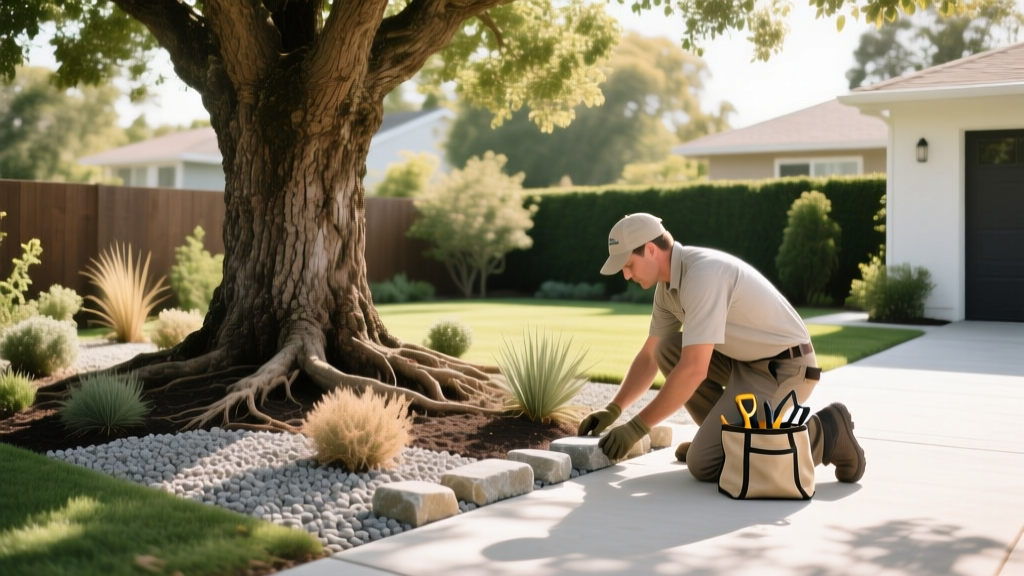
Safe Landscaping Ideas Around Tree Roots: A Practical How-To Guide
The Biological Reality of Surface Roots
When designing landscapes beneath established canopies, homeowners often prioritize aesthetics over arboreal biology. The vast majority of a tree's fine, water-and-nutrient-absorbing roots exist in the top 6 to 12 inches of soil. These roots require a constant exchange of oxygen and water. Smothering them with heavy topsoil, compacted pavers, or excessive mulch cuts off this lifeline, leading to a slow decline that often takes three to five years to become visibly apparent.
Executing safe landscaping ideas around tree roots requires a fundamental shift from traditional gardening. You must design with the root system, not over it. This guide provides exact measurements, material costs, and installation techniques to enhance your yard's visual appeal while preserving the structural and biological integrity of your trees.
Calculating the Critical Root Zone (CRZ)
Before purchasing materials or breaking ground, you must map the Critical Root Zone (CRZ). The CRZ is the minimum soil area required to sustain the tree's current canopy. Altering the soil grade or compacting the earth inside this zone poses a severe risk to the tree's survival.
The CRZ Formula:
Measure the trunk Diameter at Breast Height (DBH) in inches (measured at 4.5 feet above ground). Multiply the DBH by 1.5 to find the CRZ radius in feet.
Example: A tree with a 20-inch DBH has a CRZ radius of 30 feet from the trunk center.
Measure the trunk Diameter at Breast Height (DBH) in inches (measured at 4.5 feet above ground). Multiply the DBH by 1.5 to find the CRZ radius in feet.
Example: A tree with a 20-inch DBH has a CRZ radius of 30 feet from the trunk center.
5 Safe Landscaping Ideas Around Tree Roots
1. Shade-Tolerant Groundcovers via No-Till Plugs
Bare soil under trees invites weeds and erosion, but traditional tilling to plant a garden severs vital surface roots. The solution is planting shade-tolerant groundcovers using 2-inch or 4-inch plugs. Species like Liriope muscari (Big Blue Lilyturf), Pachysandra terminalis, or Vinca minor thrive in dry shade and require minimal soil disruption.
- Cost: $0.80 to $1.50 per plug (2026 pricing).
- Spacing: 8 to 12 inches apart, navigating between visible surface roots.
- Benefit: Eliminates the need for mowing near the trunk, preventing lawnmower bark damage (a leading cause of tree disease).
2. The "Donut" Mulch Ring
Mulch is excellent for moisture retention and temperature regulation, but only if applied correctly. "Volcano mulching" (piling mulch against the trunk) traps moisture against the bark, inviting fungal pathogens like Phytophthora and encouraging girdling roots. According to the NC State Extension, mulch should mimic the shape of a donut.
- Depth: Maximum 2 to 3 inches. Any deeper restricts soil oxygen.
- Trunk Gap: Maintain a strict 3-inch gap between the mulch and the tree trunk.
- Material: Shredded hardwood or pine bark. Avoid dyed mulches, which can contain heavy metals, and avoid rubber mulch, which leaches toxic compounds and retains excessive heat.
3. Permeable Hardscaping with Washed Gravel
If you need a seating area or walkway under a sprawling oak, avoid pouring concrete or laying mortar-set pavers. Instead, use 3/4-inch washed crushed stone over a thin layer of geotextile fabric. Washed gravel allows rainwater and air to penetrate the soil profile while providing a stable, level surface for foot traffic or lightweight furniture.
4. Elevated Boardwalks on Helical Piers
For heavy foot traffic areas within the CRZ, elevated wooden or composite decking is the safest hardscaping option. However, traditional concrete footings (sonotubes) require massive excavation that destroys roots. Instead, use helical piers. These steel shafts are mechanically screwed into the soil, displacing dirt rather than removing it, and can be installed with minimal impact to roots larger than 2 inches in diameter.
5. Pedestal Container Gardens
If you desire seasonal color (like impatiens or begonias) under a tree, never pile potting soil directly onto the tree's root flare. Use large, lightweight resin or fiberglass planters elevated on 4-inch brick or concrete pedestals. This elevation ensures air circulation beneath the pots, preventing the soil underneath from becoming compacted and anaerobic.
Step-by-Step: Installing Groundcover Without Root Damage
Follow this precise methodology to plant groundcover plugs safely within the CRZ.
- Map the Zone: Identify surface roots. Never cut a root that is thicker than your thumb (approx. 1 inch in diameter).
- Select the Tool: Use a narrow-bladed tool like a Fiskars 9-inch Aluminum Hori-Hori Knife ($25-$30). Avoid wide spades or tillers.
- Excavate Plugs: Press the knife straight down to create a narrow slit just deep enough for a 2-inch plug (usually 3 inches deep). Gently pry the soil back.
- Plant and Backfill: Drop the plug into the slit, press the surrounding native soil firmly against the roots, and water immediately with a slow-trickle hose.
- Top Dress: Apply a very light (1-inch) layer of fine compost over the newly planted area to retain moisture without suffocating the broader root zone.
Material Comparison Matrix for Root-Zone Landscaping
| Material | Oxygen Permeability | Est. Cost (2026) | Maintenance Level | Root Risk Factor |
|---|---|---|---|---|
| Shredded Hardwood Mulch | High (if < 3 inches) | $4.50 - $6.00 / 2 cu ft bag | Medium (Annual top-dressing) | Low (if kept off trunk) |
| 3/4" Washed Gravel | Very High | $60 - $85 / ton | Low (Occasional raking) | Low |
| Mortar-Set Pavers | Zero | $18 - $25 / sq ft installed | Low | Severe (Suffocation) |
| Composite Decking (Helical Piers) | High (Elevated) | $45 - $65 / sq ft installed | Very Low | Low |
| Artificial Turf | Very Low | $9 - $14 / sq ft installed | Medium (Requires rinsing) | High (Heat & Compaction) |
Troubleshooting Common Root-Zone Mistakes
Warning: Plastic Edging and Girdling Roots
Many homeowners install rigid plastic lawn edging around mulch rings to keep the border crisp. As the tree trunk expands radially over the years, this inelastic plastic cuts into the bark and cambium layer, creating a girdling root that will eventually strangle the tree. Always use flexible steel bender board or natural stone edging placed at least 2 feet away from the trunk flare.
Many homeowners install rigid plastic lawn edging around mulch rings to keep the border crisp. As the tree trunk expands radially over the years, this inelastic plastic cuts into the bark and cambium layer, creating a girdling root that will eventually strangle the tree. Always use flexible steel bender board or natural stone edging placed at least 2 feet away from the trunk flare.
Symptom: Yellowing Leaves and Dieback in Upper Canopy
Cause: This is often a sign of root suffocation due to grade changes (adding topsoil over roots) or excessive mulch depth. The fine feeder roots are dying from hypoxia (lack of oxygen).
Fix: Perform root collar excavation. Carefully use an air-spade (or gently hand-dig with a trowel) to remove excess soil and mulch until the root flare—the point where the trunk widens at the base—is fully exposed to the air. Consult an ISA Certified Arborist if more than 2 inches of soil was previously added.
Symptom: Fungal Conks or Mushrooms at the Base
Cause: Constant moisture against the trunk from "volcano mulching" or irrigation heads spraying directly onto the bark, leading to basal rot or Armillaria root rot.
Fix: Pull all mulch back to a 3-inch radius from the trunk. Adjust irrigation sprinkler heads to ensure they do not hit the trunk. The Arbor Day Foundation emphasizes that keeping the trunk base dry is critical for preventing fungal infections that compromise structural stability.
Advanced Soil Management: Vertical Mulching
If your tree's root zone has already been lightly compacted by foot traffic or construction, consider vertical mulching. This technique involves drilling 2-inch wide holes, 12 to 18 inches deep, in a grid pattern throughout the CRZ (avoiding major structural roots). These holes are then filled with a porous mix of expanded shale, pea gravel, and slow-release organic fertilizer. This creates permanent vertical channels for air and water to bypass compacted surface layers, directly feeding the deeper root profile. While it requires renting a 2-inch earth auger (approx. $65/day), it is one of the most effective remediation strategies for stressed urban trees.
By selecting permeable materials, respecting the Critical Root Zone, and avoiding grade alterations, you can create a stunning, functional landscape that supports the long-term health of your trees. For further reading on soil biology and tree preservation, review the extensive resources provided by Penn State Extension regarding proper soil management around established woody plants.

