
Tree Care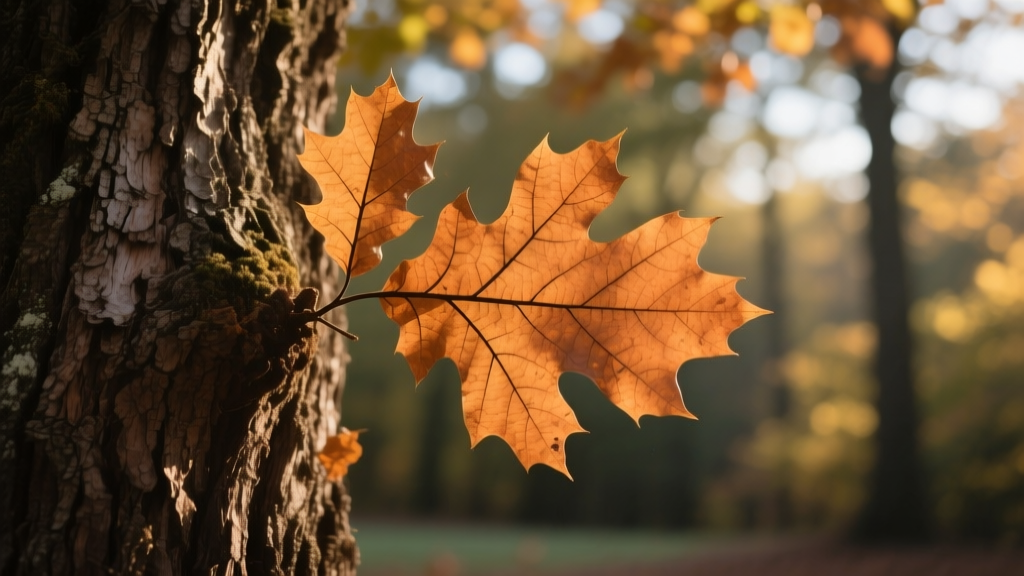
Mastering Tree Identification in Missouri: A Practical Guide
Missouri sits at a unique ecological crossroads where the eastern deciduous forest meets the Great Plains. This geographic overlap yields a highly diverse urban and rural canopy, featuring over 150 native tree species alongside dozens of naturalized and invasive varieties. For homeowners, land managers, and arborists, accurate tree identification in Missouri is not merely an academic exercise; it is the foundational step for proper pruning schedules, disease management, and targeted pest control. Misidentifying a tree can lead to catastrophic pruning errors or the misapplication of systemic herbicides.
The Core Framework: Leaf, Bark, and Form
Successful identification requires moving beyond superficial glances and adopting a systematic diagnostic approach. Professional arborists rely on a triad of physical characteristics: leaf morphology, bark texture, and overall branching form. To execute this in the field, you need the right tools.
Essential Field Gear for Missouri Yards
- Hastings 10x Triplet Loupe ($20–$35): Essential for examining leaf stomata, bud scales, and the fine pubescence (hairs) on twigs. Avoid cheap magnifying glasses; a 10x triplet lens eliminates edge distortion.
- 15m Fiberglass Measuring Tape: Used for measuring mature leaf lengths and trunk circumferences at breast height (DBH).
- Munsell Soil Color Chart (Optional, ~$150): While primarily for soil, arborists use it to accurately document subtle variations in bark and autumn foliage hues that standard color names fail to capture.
- Sharp Folding Knife: For making clean transverse cuts through twigs to examine the pith (the central core of the stem).
When examining leaves, document the margin (edge) precisely. Is it serrate (toothed like a saw), dentate (teeth pointing outward), or crenate (rounded teeth)? Note the venation pattern: pinnate (feather-like, common in oaks and elms) versus palmate (radiating from a central point, common in maples and sycamores).
Decoding Missouri’s Dominant Hardwoods
The Show-Me State is renowned for its oak-hickory forests. However, distinguishing between the white oak group and the red oak group is critical, as they respond differently to environmental stress and require different pruning protocols to prevent oak wilt transmission.
| Species | Leaf Morphology | Bark Characteristics | Acorn & Cap Details |
|---|---|---|---|
| White Oak (Quercus alba) |
7 to 9 rounded lobes; deep sinuses near the base. | Ash-gray, scaly, and flaky; often reflects light. | Cap covers only 1/4 of the nut; warty scales; matures in 1 year. |
| Bur Oak (Quercus macrocarpa) |
Highly variable; upper lobes broad, lower lobes narrow and deeply cut. | Deeply furrowed, rugged, dark gray-brown ridges. | Massive acorn; cap is heavily fringed and covers 1/2 to 3/4 of the nut. |
| Shumard Oak (Quercus shumardii) |
7 to 9 lobes with sharp, bristle-tipped points; wide U-shaped sinuses. | Dark gray to black; tight, interlacing ridges; shallow furrows. | Cap covers 1/3 of the nut; smooth scales; takes 2 years to mature. |
Conifer vs. Broadleaf Evergreen Identification
While Missouri is heavily dominated by deciduous hardwoods, several native and planted evergreens anchor the winter landscape. Identifying these requires examining needle fascicles (bundles) and cone morphology.
- Shortleaf Pine (Pinus echinata): The only native pine in Missouri. Needles occur in fascicles of 2 (occasionally 3), measuring 3 to 5 inches long. Look for the distinctive 'foxtail' appearance of the needle clusters and small, sharply spined cones.
- Eastern Redcedar (Juniperus virginiana): Technically a juniper, not a cedar. Mature trees feature scale-like leaves pressed tightly against the twig, while juvenile growth (often seen on lower branches or stump sprouts) displays sharp, awl-like needles. It produces fleshy, blue-gray berry-like cones.
Spotting Invasive Lookalikes in the Show-Me State
Accurate tree identification in Missouri frequently involves separating aggressive invasives from native lookalikes. The most notorious imposter is the Tree of Heaven (Ailanthus altissima), which is routinely confused with native Ash (Fraxinus spp.) and native Sumac (Rhus spp.).
⚠️ Warning: The Ailanthus Odor Test
Tree of Heaven can grow up to 6 feet in a single season and releases allelopathic chemicals that kill surrounding turf and shrubs. To definitively separate it from native Ash or Sumac, pick a leaflet and crush the base near the stem. Tree of Heaven emits a highly distinct, foul odor resembling burnt peanuts or cat urine. Native Ash and Sumac lack this glandular notch at the leaflet base and do not produce this odor.
For a comprehensive, state-specific database of both native and invasive flora, cross-reference your field findings with the USDA Plants Database. Filtering by county within Missouri will immediately narrow down your potential species list based on localized distribution data.
Seasonal Shifts: Winter Twig and Bud Identification
Between November and March, Missouri's deciduous trees drop their most obvious identifiers. Winter identification relies on branching architecture, bud arrangement, and pith structure.
- Branching Arrangement: Memorize the mnemonic MAD BUCKHORSE (Maple, Ash, Dogwood, Buckeye, Horsechestnut). These are the primary native Missouri trees with opposite branching (buds and limbs emerging directly across from one another). Almost all other native species (Oaks, Hickories, Elms, Sycamores) exhibit alternate branching.
- Terminal vs. Lateral Buds: Examine the tip of the twig. A true terminal bud caps the end. If the twig ends in a sharp point or a leaf scar, the tree relies on lateral buds for next year's growth (common in Elms and Sycamores).
- Pith Color and Structure: Slice a 1-inch twig segment longitudinally. Hickories (Carya) feature a solid, star-shaped, brown pith. Black Walnuts (Juglans nigra) possess a chambered pith that looks like a ladder of empty pockets separated by brown diaphragms.
Leveraging State Resources for Complex Diagnoses
Even experienced arborists encounter ambiguous specimens, particularly hybrid cultivars planted in modern suburban developments. When field guides fall short, utilize the Missouri Department of Conservation (MDC) digital resources. The MDC provides localized phenology charts, showing exactly when specific native species break bud, flower, and drop leaves across Missouri's distinct climate zones (from the Bootheel in the south to the Glaciated Plains in the north).
Mastering tree identification in Missouri requires patience and tactile engagement. By combining the 10x loupe for micro-features, the MAD BUCKHORSE mnemonic for winter architecture, and sensory tests like the Ailanthus odor check, you transition from guessing to diagnosing with arborist-level precision.

