
Tree Care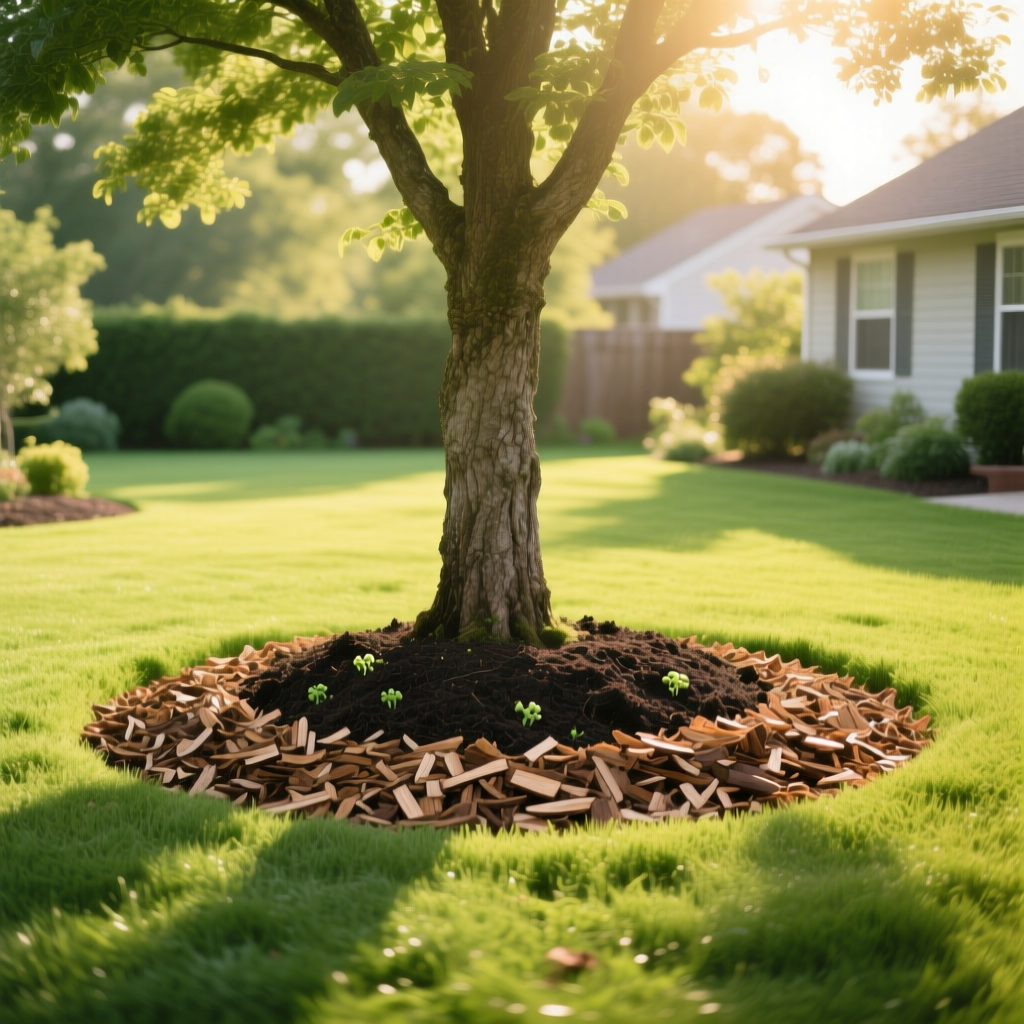
How to Properly Mulch Around Trees Without Root Damage
James MillerPublished
Mulching around trees is one of the simplest & most effective ways to improve soil health, conserve moisture, & protect delicate root systems. Yet, when done incorrectly, mulch can become one of the most damaging things you put near a tree. Improper mulching — often called “volcano mulching” — suffocates roots, invites fungal diseases, encourages girdling roots, & can ultimately kill an otherwise healthy tree over time.
The good news? With the right technique, materials, & timing, mulching becomes a powerful tool in your tree care routine. This guide walks you through everything you need to know about properly mulching around trees without causing root damage, from choosing the best mulch type to maintaining your mulch bed throughout the seasons.
Why Mulch Matters for Tree Health & Root Protection
Before diving into technique, it helps to understand why mulch is so beneficial for trees in the first place. In nature, trees are surrounded by a thick layer of decomposing leaves, twigs, & organic matter. This natural duff layer insulates roots, feeds soil organisms, & maintains consistent moisture levels. Mulching replicates this forest-floor environment in your landscape.
Key Benefits of Proper Mulching
- Moisture retention: A proper mulch layer reduces water evaporation from the soil surface by up to 70 percent, meaning less frequent watering & more consistent hydration for roots.
- Temperature regulation: Mulch acts as insulation, keeping soil cooler in summer & warmer in winter, protecting roots from extreme temperature swings.
- Weed suppression: A thick enough mulch layer blocks sunlight from reaching weed seeds, reducing competition for nutrients & water.
- Soil improvement: Organic mulches decompose over time, adding nutrients & improving soil structure, aeration, & microbial activity.
- Root protection: Mulch creates a buffer zone that prevents lawn mowers & string trimmers from damaging the trunk & surface roots.
- Erosion control: Mulch reduces soil compaction from heavy rain & prevents topsoil from washing away around the root zone.
When you pair proper mulching with a solid lawn care routine, the overall health of your landscape improves dramatically. Trees & turfgrass often compete for the same resources, & a well-defined mulch bed helps establish clear boundaries that benefit both.
Choosing the Right Mulch for Tree Health
Not all mulches are created equal, & selecting the wrong type can contribute to root damage, nutrient deficiencies, or pest problems. Understanding the differences between organic & inorganic mulches — & knowing which specific materials work best around trees — is essential for long-term success.
Organic Mulches: The Best Choice for Trees
Organic mulches are generally the best option for trees because they decompose over time, enriching the soil & feeding the root system. Here are the top choices:
- Shredded hardwood bark: One of the most popular & effective mulches for trees. It interlocks to resist washing away, decomposes at a moderate rate, & adds organic matter to the soil. Shredded bark is widely available & affordable.
- Wood chips & arborist chips: Often available for free from local tree services, wood chips are excellent for tree mulching. They decompose slowly, provide excellent moisture retention, & support beneficial fungal networks in the soil.
- Pine straw (pine needles): Ideal for acid-loving trees like oaks, pines, & magnolias. Pine straw allows water to penetrate easily, does not compact heavily, & stays in place on slopes.
- Composted leaves (leaf mold): A free & nutrient-rich option if you have deciduous trees on your property. Composted leaves improve soil structure significantly & encourage earthworm activity.
- Cedar & cypress mulch: These decay-resistant mulches last longer than hardwood bark but break down more slowly, meaning less frequent replenishment but also slower nutrient release.
Inorganic Mulches: Use With Caution
Inorganic mulches like gravel, river rock, & rubber mulch do not decompose & do not improve soil health. While they can work in certain landscape designs, they tend to retain & radiate heat, which can stress surface roots. Rubber mulch in particular can leach chemicals into the soil over time. If you do use inorganic mulch around trees, place a layer of landscape fabric underneath & monitor soil moisture levels carefully.
Mulches to Avoid Around Trees
- Fresh grass clippings: These mat down, create anaerobic conditions, & can generate enough heat during decomposition to damage roots. Learn more about managing clippings in our mowing tips guide.
- Dyed or treated mulch: Some colored mulches contain chemical dyes or are made from recycled wood that may have been pressure-treated. These can introduce harmful substances into the root zone.
- Fine sawdust: Sawdust compacts heavily, repels water when dry, & can tie up nitrogen in the soil as it decomposes, starving your tree of this essential nutrient.
- Plastic sheeting: Never use plastic under mulch around trees. It blocks water & air from reaching roots & creates a greenhouse effect that can cook root systems.
The Correct Way to Mulch Around Trees: Step-by-Step
Now that you know which mulch to use, it is time to apply it correctly. The goal is to mimic a natural forest floor while avoiding the common mistakes that lead to root suffocation, trunk rot, & girdling roots. Follow these steps for a mulch application that protects & nourishes your tree.
Step 1: Determine the Right Mulch Ring Size
The mulch ring should extend at least three to six feet from the trunk in all directions. For larger, mature trees, extending the mulch bed to the drip line (the outer edge of the canopy) is ideal. The wider the mulch bed, the more root zone you protect from compaction, mower damage, & competition from turfgrass.
If you are converting a grassy area into a mulch bed, remove the existing turf first. You can do this by cutting it out with a spade or using a sheet mulching technique with cardboard. Our soil preparation guide offers additional tips on transitioning landscape areas.
Step 2: Remove Weeds & Debris
Before laying mulch, clear the area of weeds, large rocks, & construction debris. Any perennial weeds should be pulled by the root, as they will push through mulch if left in place. Avoid using chemical herbicides near the tree's root zone, as these can be absorbed by roots & cause damage.
Step 3: Check for Existing Root Issues
Before mulching, inspect the base of the tree for girdling roots, circling roots, or signs of trunk damage. Girdling roots wrap around the trunk or other roots & slowly strangle the tree. If you find girdling roots near the surface, consult a certified arborist for guidance on root pruning before you apply mulch.
Step 4: Apply Mulch at the Correct Depth
This is where most people go wrong. The ideal mulch depth is two to four inches. Never pile mulch deeper than four inches, as excessive depth restricts oxygen flow to roots, encourages roots to grow upward into the mulch (where they become vulnerable to drought), & creates excess moisture that leads to rot.
For poorly drained soils or heavy clay, aim for the thinner end of the range — around two inches. For sandy soils that drain quickly, three to four inches helps retain moisture more effectively. If you are unsure about your soil type, our soil testing guide can help you identify your soil composition.
Step 5: Keep Mulch Away From the Trunk
This is the single most important rule of tree mulching: never let mulch touch the trunk. Leave a gap of three to six inches between the mulch & the base of the tree. Mulch piled against the bark holds moisture against the trunk, which leads to:
- Bark decay & fungal infections
- Insect infestations (borers, beetles, & ants are attracted to moist, decaying bark)
- Girdling root development (roots grow into the mulch & wrap around the trunk)
- Rodent damage (voles & mice tunnel through mulch & chew on bark, especially in winter)
Think of the finished result as a donut shape — mulch encircling the tree with an open center around the trunk — rather than a volcano mound.
Step 6: Feather the Edges
The outer edge of the mulch bed should taper gradually down to ground level rather than forming a steep berm. A feathered edge looks more natural, allows water to flow into the mulch bed rather than running off, & makes mowing around the bed easier. This also ties into good landscape design principles that complement a healthy lawn maintenance routine.
Common Mulching Mistakes That Damage Tree Roots
Even well-intentioned gardeners can harm their trees by making a few preventable errors. Understanding these common mistakes helps you avoid costly damage & the need for professional tree intervention later.
Volcano Mulching
Volcano mulching is the practice of piling mulch high against the trunk in a cone shape. This is arguably the most damaging mulching mistake. It traps moisture against the bark, promotes rot, encourages girdling roots, & creates a habitat for pests. Over time, the tree's root flare (the area where the trunk transitions to roots) becomes buried, cutting off oxygen to the root system. If you see a tree that looks like it is planted in a mulch volcano, gently pull the mulch back to expose the root flare.
Over-Mulching (Too Thick)
Applying more than four inches of mulch creates an anaerobic environment. Roots need oxygen to function, & a thick mat of mulch prevents gas exchange between the soil & the atmosphere. Over-mulched trees often show symptoms like yellowing leaves, stunted growth, & dieback in the canopy — signs that are easily confused with nutrient deficiencies or disease.
Using the Wrong Mulch Material
As discussed earlier, fresh grass clippings, fine sawdust, & dyed mulches can all harm tree roots. Additionally, mulch sourced from diseased trees can spread pathogens to your healthy trees. Always source mulch from reputable suppliers & avoid using material of unknown origin.
Ignoring Old Mulch Buildup
Many homeowners add a fresh layer of mulch every spring without removing or breaking up the old layer. Over several seasons, this creates a thick, compacted mat that repels water & blocks air. Each time you re-mulch, rake the existing layer to break up any matting & check the total depth. If it exceeds four inches, remove some of the old mulch before adding new material.
Mulching Too Close to the Trunk
Even a thin layer of mulch pressed against the trunk can cause problems over time. The root flare should always be visible & exposed to air. If you cannot see the root flare, the tree is likely buried too deep in mulch, soil, or both.
Seasonal Mulching Tips for Year-Round Root Health
Mulching is not a one-time task. The needs of your trees change with the seasons, & adjusting your mulching strategy accordingly ensures consistent root protection & soil health throughout the year.
Spring Mulching
Spring is the most popular time to refresh mulch, & for good reason. After winter, the existing mulch layer is often depleted, matted, or displaced. Wait until the soil warms up slightly before applying new mulch — applying it too early over cold, wet soil can slow root activity. Rake the existing mulch to fluff it up, remove any compacted layers, & add fresh material to bring the depth back to two to four inches. Spring is also a great time to check for common tree diseases that may have developed over winter.
Summer Mulching
Summer heat stresses tree roots, especially in the top few inches of soil where fine feeder roots are concentrated. A proper mulch layer keeps soil temperatures moderate & reduces water loss. During summer, check mulch depth periodically & water deeply through the mulch layer during dry spells. Avoid adding large amounts of fresh mulch in peak summer heat, as decomposition generates additional warmth.
Fall Mulching
Fall is an excellent time to mulch, especially for newly planted trees. A fresh layer applied in autumn insulates roots against freezing temperatures & helps retain moisture during cold, dry winter winds. Fallen leaves can be shredded & added to the mulch bed as a free, nutrient-rich top layer. Shredding leaves before using them as mulch prevents matting & allows water penetration. Our guide on fall lawn care includes tips on managing leaves across your entire landscape.
Winter Mulching
In regions with harsh winters, mulch acts as a blanket that prevents the freeze-thaw cycle from heaving young trees out of the ground. Apply a slightly thicker layer (up to four inches) around newly planted or cold-sensitive trees in late fall. Avoid piling snow directly against mulched tree beds when shoveling, as the weight & additional moisture can compact the mulch & suffocate roots. Remove any excess mulch in early spring to prevent moisture buildup.
Year-Round Maintenance Checklist
- Inspect mulch depth every few months & replenish as needed
- Rake mulch periodically to prevent matting & improve water penetration
- Keep mulch pulled back three to six inches from the trunk at all times
- Check for fungal growth, slime mold, or insect activity in the mulch bed
- Ensure the root flare remains visible & exposed
- Water through the mulch layer during extended dry periods
Consistent mulch maintenance pairs naturally with a strong overall fertilization program, as decomposing organic mulch slowly releases nutrients that complement your soil amendment strategy.
Frequently Asked Questions
How often should I replace mulch around my trees?
Most organic mulches need to be refreshed once or twice per year. Shredded hardwood bark & wood chips typically last one to two years before they decompose enough to need replenishment. Pine straw may need topping off every six to twelve months. Rather than adding new mulch on top of old, rake the existing layer first to check the total depth. Only add enough new mulch to bring the total back to two to four inches. Over time, the decomposing lower layers become valuable topsoil that feeds your tree's root system.
Can mulch attract pests or cause fungal problems around trees?
Mulch itself does not inherently attract pests, but improper application can create conditions that invite problems. Mulch piled against the trunk holds moisture that attracts borers, carpenter ants, & fungal pathogens. Thick, matted mulch can also harbor slugs, earwigs, & voles. To minimize pest & fungal issues, keep mulch away from the trunk, maintain proper depth, rake periodically to improve airflow, & avoid overwatering. If you notice fungal fruiting bodies (mushrooms) in the mulch, this is usually a sign of healthy decomposition & is not a cause for concern unless you see them growing directly on the tree trunk or roots.
Should I use landscape fabric or weed barrier under tree mulch?
In most cases, landscape fabric is not recommended under organic mulch around trees. While it suppresses weeds initially, it eventually blocks water & air from reaching the soil as organic matter accumulates on top of it. Tree roots need unobstructed gas exchange, & fabric creates a barrier that interferes with this process. Additionally, weeds eventually grow on top of the fabric anyway, rooted in the decomposing mulch layer. A thick enough layer of organic mulch (two to four inches) suppresses weeds effectively on its own. The one exception is when using inorganic mulch like gravel, where fabric helps prevent stones from sinking into the soil.
How far from the trunk should the mulch ring extend?
At a minimum, the mulch ring should extend three feet from the trunk in all directions. However, the ideal mulch bed extends to the tree's drip line — the outer edge of the canopy — because this is where the majority of the tree's feeder roots are located. For large mature trees, this can mean a mulch bed ten to twenty feet in diameter or more. Obviously, this is not always practical in a maintained lawn, so extend the bed as far as your landscape allows. Even a modest six-foot ring provides significantly more root protection than a narrow two-foot circle. Expanding your mulch bed gradually over the years is a practical approach that reduces lawn area while improving tree health.
Is it safe to mulch around newly planted trees?
Yes, mulching around newly planted trees is highly recommended & is one of the best things you can do to help them establish. Newly planted trees have limited root systems & are especially vulnerable to drought, temperature extremes, & weed competition. Apply two to three inches of organic mulch in a ring around the tree, keeping it three to four inches away from the trunk. Water the mulch thoroughly after application to settle it in place & eliminate air pockets. For the first year or two, monitor the mulch bed more frequently than you would for established trees, as the young root system depends heavily on consistent moisture & temperature. Check out our tree planting guide for a complete walkthrough on establishing new trees in your landscape.
Proper mulching is one of the most impactful — & most overlooked — practices in tree care. By choosing the right material, applying it at the correct depth, keeping it away from the trunk, & maintaining it throughout the seasons, you create an environment where tree roots thrive rather than struggle. Avoid the temptation to pile mulch high, & remember that more is not always better. A modest, well-maintained mulch ring protects your trees for decades, reduces your watering workload, & keeps your landscape looking clean & intentional. Whether you are caring for a single shade tree or managing a property full of mature specimens, these mulching principles will serve you & your trees well.

