
Tree Care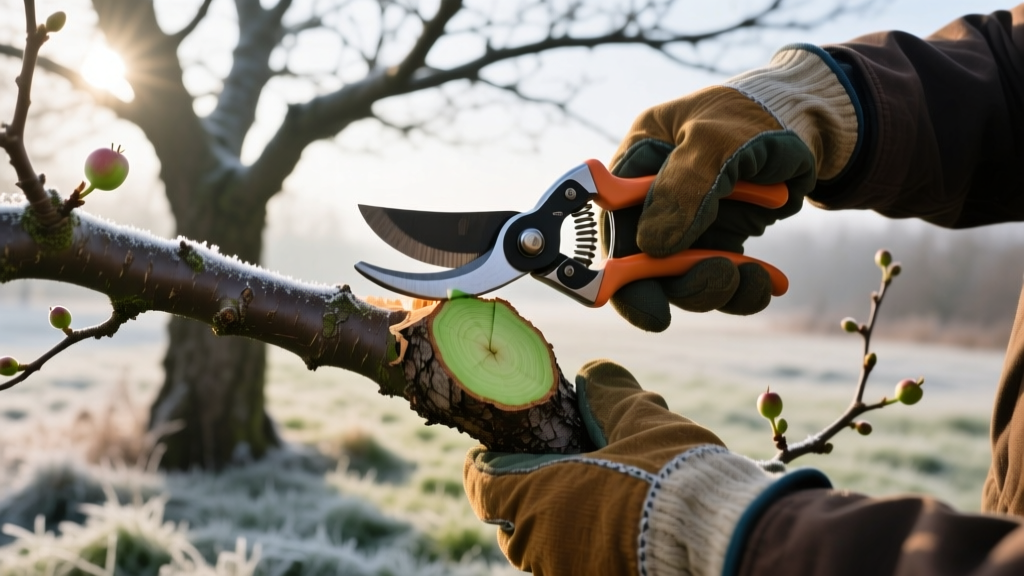
How to Prune an Apple Tree: Step-by-Step Dormant Guide
Pruning an apple tree (Malus domestica) is a physiological intervention that dictates fruit quality, disease resistance, and structural longevity. When beginners first search for how to prune and apple tree, they often encounter generic advice that leads to water sprout explosions, structural splitting, or fire blight infections. Proper pruning requires an understanding of apical dominance, branch collar anatomy, and precise timing.
This guide provides exact, actionable protocols for dormant-season pruning, moving beyond basic aesthetics to focus on canopy architecture and long-term orchard health.
The Physiology of Apple Pruning: Timing and Hormones
Apple trees must be pruned during the dormant season—specifically late winter (February to early March in most temperate zones), just before bud swell but after the coldest freezes have passed. Pruning in early winter leaves the tree vulnerable to winter injury and desiccation, while pruning in spring after sap flow begins wastes the tree's stored carbohydrate reserves.
Every cut you make alters the flow of auxins (growth hormones produced in the terminal buds). Removing the terminal bud breaks apical dominance, stimulating lateral buds to grow. Understanding this mechanism is the difference between a productive fruiting canopy and a chaotic thicket of vegetative water sprouts.
⚠ WARNING: Fire Blight Protocol
If your region is prone to Fire Blight (Erwinia amylovora), avoid pruning during warm, wet spring weather when the bacteria are most active. If you must prune infected wood during the growing season, cut at least 12 inches below the visible canker into healthy wood, and sterilize your tools between every single cut.
Essential Tools for Precision Cuts
Using the wrong tool crushes the vascular cambium layer, delaying the formation of callus tissue and inviting fungal pathogens like Chondrostereum purpureum (Silver Leaf disease). Invest in professional-grade bypass tools; anvil pruners should never be used on live apple wood.
| Tool & Model | Cut Type | Max Diameter | 2026 Est. Price |
|---|---|---|---|
| Felco F-2 Classic Bypass Pruner | Precision thinning & heading | Up to 1 inch | $60 - $65 |
| Corona SL 3266 Bypass Lopper | Scaffold branch removal | 1 to 2.5 inches | $70 - $80 |
| Silky Gomboy 240 Folding Saw | Flush cuts on thick limbs | 2.5 to 5 inches | $45 - $55 |
Step-by-Step Dormant Pruning Sequence
Follow this exact sequence to systematically open the canopy without over-stressing the tree. Never remove more than 25% of the live canopy in a single dormant season.
Step 1: Sterilization and the 3 D's
Before making a single cut, wipe your blades with 70% isopropyl alcohol. Avoid bleach solutions, as sodium hypochlorite corrodes the steel and dulls the cutting edge. Once sterilized, remove all Dead, Damaged, and Diseased wood. Cut back to healthy, green-tinted cambium tissue. Dispose of diseased wood off-site; do not compost it.
Step 2: Eliminate Suckers and Water Sprouts
Suckers grow from the rootstock below the graft union and will drain energy without producing desirable fruit. Tear them off at the base or cut them flush with the root flare. Water sprouts are vigorous, perfectly vertical shoots growing from the main scaffolds. They shade the inner canopy and produce no fruit. Remove them entirely with a thinning cut flush to the parent branch.
Step 3: Establish the Central Leader and Scaffolds
Most modern apple varieties perform best on a Modified Central Leader system. Identify the strongest, most vertical central trunk. Select 4 to 5 primary scaffold branches that are evenly spaced vertically (about 6 to 12 inches apart) and radially around the trunk. The ideal crotch angle between the scaffold and the trunk is 45 to 60 degrees. Branches with narrow, V-shaped crotches are structurally weak and prone to splitting under the weight of fruit; remove them or use spreaders to widen the angle.
Step 4: Execute Proper Thinning Cuts
When removing a branch entirely, you must respect the branch collar—the swollen area where the branch meets the trunk. According to the University of Minnesota Extension, cutting flush with the trunk destroys the tree's natural defense zone (CODIT), leading to internal decay. Leaving a stub prevents the bark from rolling over to close the wound. Make your cut just outside the branch bark ridge and collar, angling slightly away from the trunk.
Step 5: Heading Cuts for Fruiting Spurs
Apple trees bear fruit on spurs (short, stubby twigs) that develop on wood that is at least two years old. To encourage spur formation on younger wood, use heading cuts. Cut the terminal end of a lateral branch back by about one-third, making the cut 1/4 inch above an outward-facing bud at a 45-degree angle. This directs new growth outward, keeping the center of the tree open to sunlight and airflow.
💡 Pro Tip: The Open Center Alternative
If you are growing dwarf or semi-dwarf varieties in high-density plantings, or if the central leader was lost to deer browsing, an Open Center (Vase) system may be superior. In this system, you remove the central leader entirely and train 3 to 4 main scaffolds to grow outward at 45-degree angles, creating a bowl shape that maximizes light penetration for smaller trees.
Renovation Pruning for Overgrown Apple Trees
If you have inherited a neglected, overgrown apple tree, do not attempt to fix it in one year. Severe 'topping' or removing more than 30% of the canopy triggers a massive survival response, resulting in hundreds of unfruitful water sprouts. According to Penn State Extension, renovation should be spread over a three-year period.
- Year 1: Remove all dead wood, suckers, and water sprouts. Drop the overall height of the tree by cutting the central leader back to a weak lateral branch, but do not exceed 25% total canopy removal.
- Year 2: Thin out crossing branches and remove one or two major, poorly angled scaffold limbs. Open the center to sunlight.
- Year 3: Perform standard maintenance pruning, focusing on renewing fruiting spurs and maintaining the established scaffold structure.
Summer Pruning: A Supplemental Technique
While dormant pruning invigorates growth, summer pruning (performed in late July or August) restricts it. Summer pruning is highly effective for managing overly vigorous trees that produce excessive vegetative growth at the expense of fruit bud initiation. By removing water sprouts and shading leaves in late summer, you reduce the tree's photosynthetic capacity slightly, which signals the tree to halt vegetative growth and begin forming fruit buds for the following year. Use summer pruning strictly for canopy management and light penetration, never for major structural alterations.

