
Tree Care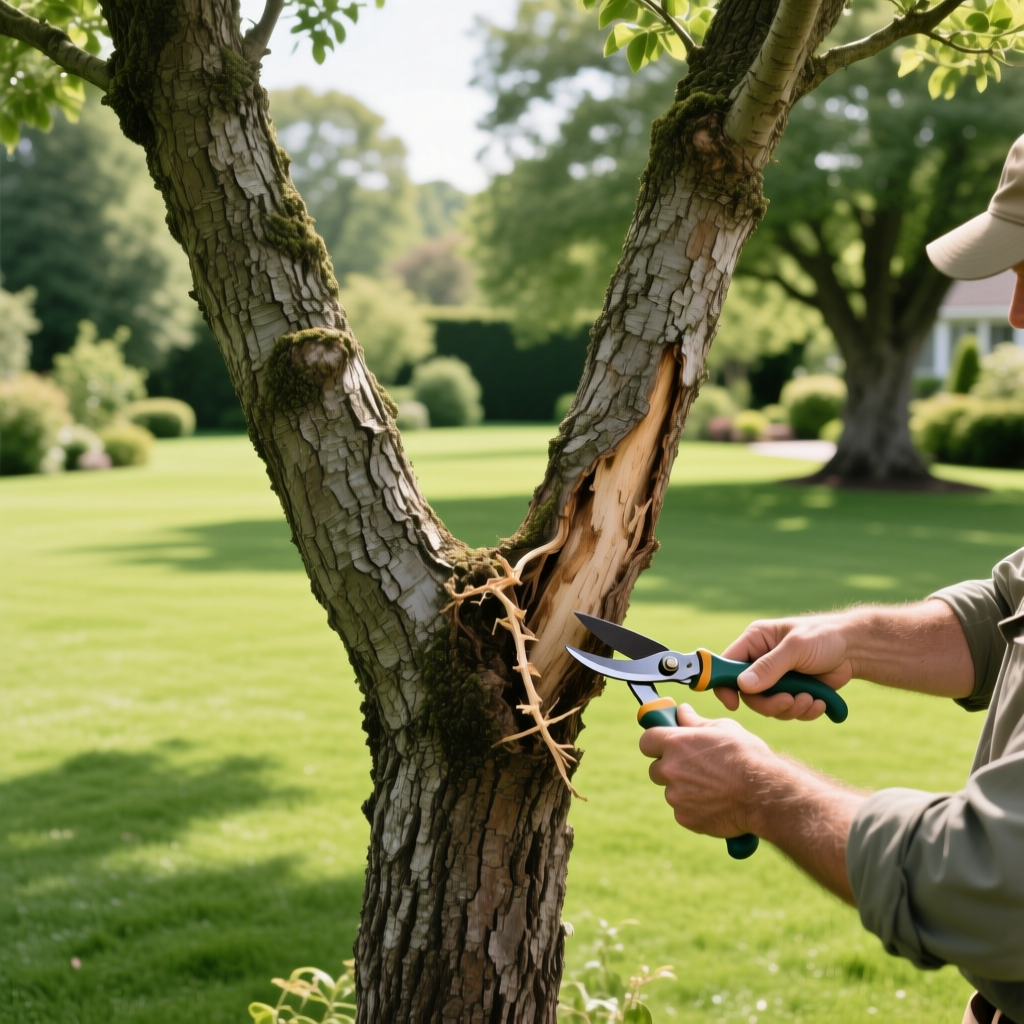
How to Prune Co-Dominant Stems to Prevent Tree Failure
James MillerPublished
How to Prune Co-Dominant Stems to Prevent Tree Failure
Every homeowner who values the beauty & safety of their landscape should understand the risks posed by co-dominant stems. These structural defects are among the leading causes of catastrophic tree failure, responsible for splitting mature trees during storms, heavy winds, & even under their own weight. When two or more main stems compete for dominance from the same point on a tree, they create a weak union that compromises the entire structure. Left unaddressed, co-dominant stems can lead to property damage, personal injury, & the loss of beloved specimen trees that took decades to grow.
The good news is that co-dominant stems can be managed effectively through proper pruning techniques, especially when identified early in a tree's life. This comprehensive guide walks you through everything you need to know about identifying co-dominant stems, understanding the risks they pose, & implementing pruning strategies that promote strong, safe tree architecture. Whether you are a homeowner managing a few backyard trees or a property caretaker overseeing an entire landscape, this guide will help you take proactive steps to protect your trees & your property. For more tips on maintaining a healthy landscape, explore our complete tree care resource center & our lawn care guides that complement proper tree management.
Understanding Co-Dominant Stems & Why They Threaten Tree Stability
Co-dominant stems occur when two or more stems of similar diameter grow upward from the same junction on a tree, competing for the role of the central leader. In a structurally sound tree, a single dominant trunk extends upward while lateral branches grow at wide, strong angles from the main stem. When co-dominant stems develop, however, the junction between them typically features a narrow, V-shaped union rather than the strong, U-shaped crotch found in healthy branch attachments.
The Anatomy of a Weak Union
The fundamental problem with co-dominant stems lies in how bark grows at the junction. As the two stems expand outward over the years, bark becomes trapped between them in a condition known as included bark. This bark acts as a wedge, preventing the wood fibers of the two stems from interlocking. Instead of forming a strong, unified structure, the junction remains a plane of weakness that becomes more dangerous as the tree grows larger & heavier.
Think of it this way: a strong branch union is like two hands clasped together with fingers interlocked. A co-dominant stem junction with included bark is like two hands pressed palm-to-palm with a sheet of paper between them. Under pressure, the second scenario fails quickly & catastrophically.
Tree Species Prone to Co-Dominant Stems
While any tree can develop co-dominant stems, certain species are particularly susceptible due to their natural growth habits. These include:
- Bradford Pear (Pyrus calleryana) — Notorious for multiple co-dominant stems & included bark, making them one of the most failure-prone ornamental trees in residential landscapes
- Red Maple (Acer rubrum) — Frequently develops competing leaders, especially when young
- Silver Maple (Acer saccharinum) — Fast growth rate exacerbates weak unions
- Boxelder (Acer negundo) — Commonly forms multi-stemmed structures
- European Beech (Fagus sylvatica) — Smooth bark makes included bark junctions particularly visible
- Linden (Tilia spp.) — Often develops co-dominant stems in urban settings
- Elm (Ulmus spp.) — Classic vase-shaped growth can mask multiple leaders
- Eucalyptus species — Fast-growing & prone to weak branch unions
If you have any of these species on your property, regular inspection for co-dominant stems should be a priority. Learn more about identifying common tree problems in our guide to common tree diseases.
How Co-Dominant Stems Differ from Normal Branching
It is important to distinguish co-dominant stems from normal lateral branches. A healthy branch is typically less than half the diameter of the trunk it grows from & attaches at a wide angle. Co-dominant stems, by contrast, are roughly equal in diameter to each other & emerge at narrow angles from the same point. They both grow upward, competing for dominance, rather than one growing upward & the other growing outward as a subordinate branch.
This distinction matters because it determines your pruning strategy. Removing a normal lateral branch requires standard pruning cuts, while addressing co-dominant stems demands a more nuanced approach that considers the long-term structural development of the entire tree.
Identifying Co-Dominant Stems: What to Look For During Tree Inspections
Regular tree inspections are the cornerstone of preventive tree care. Walking your property at least twice per year — once during the growing season & once after leaf drop — gives you the best opportunity to spot developing problems. For more on building a comprehensive property maintenance routine, check out our seasonal lawn care checklist that integrates tree inspections into your overall landscape schedule.
Visual Signs of Co-Dominant Stems
From the ground, look for these telltale indicators:
- V-shaped crotches — Narrow junctions where two stems meet, especially those less than 45 degrees
- A visible seam or ridge of bark running down the trunk from the junction, indicating included bark pushing outward
- A bulge or swelling at the union point, which signals the tree is attempting to compartmentalize the weak area
- Cracks or splits visible at the junction, which indicate active failure is already underway
- Multiple stems of similar size rising from the same point on the trunk
- Dead or decaying wood near the junction, which further weakens the connection
- Fungal growth or conks near the union, suggesting internal decay
Inspecting from Multiple Angles
Do not rely on a single viewpoint when assessing tree structure. Walk completely around the tree, examining it from every direction. Some co-dominant unions are only visible from certain angles, & a stem that appears subordinate from one side may be clearly co-dominant from another. Use binoculars to inspect junctions high in the canopy that are difficult to see from the ground.
Assessing the Risk Level
Not all co-dominant stems pose equal danger. Several factors influence the risk level:
- Height of the union — Higher junctions create longer levers, generating more force during wind events
- Diameter of the stems — Larger stems carry more weight & pose greater risk to people & property below
- Presence of included bark — Unions with visible included bark are significantly weaker than those without
- Existing cracks or decay — Any visible damage at the union dramatically increases failure probability
- Target zone — A failing stem that could land on a house, driveway, sidewalk, or play area is far more dangerous than one over an open field
- Lean of the stems — Stems that lean away from each other place constant tension on the union
If you identify co-dominant stems with included bark, visible cracks, & a high-value target below, you should consult a certified arborist immediately. Professional assessment can determine whether corrective pruning, cabling, or removal is the most appropriate response.
Pruning Strategies to Correct Co-Dominant Stems
Addressing co-dominant stems requires a thoughtful, phased approach. The goal is to establish a single dominant leader while reducing the competitive stems gradually enough that the tree can respond without excessive stress. Rushing the process by removing too much live wood at once can shock the tree, trigger excessive woundwood production, & create new structural problems.
Subordination Pruning: The Preferred Method
Subordination pruning, also called reduction pruning, is the most widely recommended technique for managing co-dominant stems in established trees. Rather than removing one stem entirely, you reduce its size & vigor so that the chosen dominant leader can assume primary structural control over time.
Here is how subordination pruning works in practice:
- Select the dominant leader — Choose the stem that is straighter, better positioned, & shows fewer signs of decay. Ideally, this stem should align with the natural growth habit of the species.
- Identify lateral branches on the subordinate stem — Locate branches on the stem you plan to reduce that can serve as new endpoints after pruning cuts are made.
- Make reduction cuts — Cut the subordinate stem back to a lateral branch that is at least one-third the diameter of the stem being removed. This lateral branch will assume the terminal role, directing growth energy away from the co-dominant union.
- Remove no more than 25 percent of the live canopy in any single growing season to avoid stressing the tree excessively.
- Repeat the process over two to three seasons — Gradual reduction allows the tree to compartmentalize wounds effectively & shift its growth pattern without shock.
Subordination pruning is particularly effective because it maintains the tree's overall canopy balance while redirecting growth. The subordinate stem continues to produce energy through photosynthesis, supporting the tree's root system & overall vigor, while the dominant leader gradually assumes structural control.
Removal Pruning: When Complete Stem Removal Is Appropriate
In some cases, complete removal of one co-dominant stem is the best option. This approach is generally appropriate when:
- The tree is young & small enough that the wound will compartmentalize quickly
- One stem is clearly defective, decayed, or damaged
- The subordinate stem is less than half the diameter of the dominant leader
- The tree species is known for rapid wound closure
When performing removal pruning, make a clean cut just outside the branch collar — the swollen area where the stem meets the trunk. Never cut flush with the trunk, as this damages the branch collar & impairs the tree's natural defense system. Similarly, avoid leaving a stub, which invites decay & prevents proper wound closure. For a detailed look at proper pruning cuts, visit our complete tree pruning guide.
Cabling & Bracing: Supplemental Support Systems
When pruning alone cannot adequately address the risk — particularly in large, mature trees where removing a co-dominant stem would create an unacceptably large wound — supplemental support systems offer an alternative or complementary strategy. Cabling involves installing flexible steel cables in the upper canopy to limit the movement of co-dominant stems during wind events. Bracing uses rigid steel rods drilled through weak unions to provide direct mechanical support.
These systems must be designed & installed by a qualified arborist following established industry standards. Cables & braces require regular inspection & eventual replacement, as hardware can wear, loosen, or become overgrown by expanding wood. Despite the ongoing maintenance, cabling & bracing can extend the safe life of a valuable tree by many years when pruning alone is insufficient.
Proper Pruning Cut Technique
Regardless of the strategy you choose, every cut must be made correctly to promote rapid wound closure & minimize decay. Follow these fundamental principles:
- Identify the branch collar — The raised area where the branch or stem meets its parent structure contains specialized cells essential for wound compartmentalization
- Identify the branch bark ridge — The raised line of bark running parallel to the branch in the crotch; never cut through this ridge
- Make three-cut removals for large stems — First, an undercut to prevent bark tearing; second, a top cut further out to remove the weight of the stem; third, a final cut just outside the branch collar
- Use sharp, clean tools — Dull or dirty tools create ragged wounds that heal slowly & may transmit disease. Learn more about maintaining your tools in our garden tool maintenance guide
- Avoid wound dressings — Research has consistently shown that paint, tar, & other sealants do not prevent decay & may actually impede wound closure by trapping moisture against the wound surface
Seasonal Timing & Best Practices for Pruning Co-Dominant Stems
The timing of your pruning work significantly affects how well the tree responds. While dead, damaged, or imminently dangerous wood can be removed at any time of year, corrective pruning for co-dominant stems is best performed during specific seasons to optimize wound closure & minimize stress.
Dormant Season Pruning: The Gold Standard
For most deciduous trees, the dormant season — late fall through late winter, after leaf drop & before bud break — is the ideal window for structural pruning. Several factors make dormant-season pruning advantageous:
- Better visibility — Without leaves obscuring the canopy, you can see the entire branch structure clearly, making it easier to identify co-dominant stems, crossing branches, & other defects
- Reduced disease risk — Many pathogens that cause wood decay are dormant or less active in cold weather, reducing the chance of infection through fresh pruning wounds
- Faster wound response — Cuts made just before the spring growth flush are compartmentalized quickly as the tree directs energy into woundwood production when growth resumes
- Less insect attraction — Fresh wounds in warm weather can attract boring insects that vector diseases; dormant-season wounds largely avoid this risk
- Reduced sap flow — Species like maples & birches bleed sap heavily when pruned in late winter or early spring; pruning earlier in dormancy minimizes this issue
Summer Pruning Considerations
Light subordination pruning can be performed during the growing season, particularly in early to mid-summer after the initial spring growth flush has hardened off. Summer pruning has the advantage of reducing the vigor of the subordinate stem more effectively than dormant pruning, since you are removing leaves that are actively producing energy. However, summer pruning also carries increased risk of disease transmission & insect infestation through open wounds.
If you must prune during summer, avoid periods of drought stress, extreme heat, or active disease outbreaks in your area. Water the tree deeply a few days before pruning to ensure it is not under moisture stress. For guidance on keeping your entire landscape healthy during hot months, read our summer watering guide.
Species-Specific Timing
Some trees have unique pruning requirements based on their biology:
- Oaks — Prune only during dormancy to prevent oak wilt transmission by sap-feeding beetles that are active in spring & summer
- Elms — Avoid pruning during the flight period of elm bark beetles to reduce Dutch elm disease risk
- Flowering trees — Prune spring-blooming species immediately after flowering to avoid removing next year's flower buds; prune summer-blooming species during dormancy
- Conifers — Most evergreen conifers can be pruned in late winter or early spring before new growth emerges; pines are best pruned during the candle stage in late spring
Establishing a Long-Term Pruning Schedule
Correcting co-dominant stems is rarely a one-time event. Young trees benefit from structural pruning every two to three years during their first fifteen to twenty years of growth. This regular attention allows you to catch & correct developing co-dominant stems while they are small, minimizing wound size & maximizing the tree's ability to respond. Once a tree has established strong architecture with a single dominant leader, structural pruning can shift to a five- to seven-year cycle focused on maintenance & monitoring.
Keeping a record of your pruning activities — including dates, cuts made, & observations about tree response — helps you track progress & plan future work. This documentation is particularly valuable if you work with a professional arborist who can reference past work when making recommendations.
Preventing Co-Dominant Stems from Developing in the First Place
While correcting existing co-dominant stems is important, preventing them from forming is far more effective & economical. Young trees that receive proper structural training develop strong architecture that serves them — & you — for a lifetime.
Selecting the Right Tree for the Right Location
Prevention starts before you even plant. Choose tree species & cultivars known for strong branching structure. Many modern cultivars have been specifically bred for improved form, including single-leader growth habits & wide branch angles. Research the mature size & growth habit of any tree before planting, & ensure adequate spacing from buildings, power lines, & other trees. Proper spacing reduces competition for light that can drive trees to develop multiple leaders as they reach for sunlight. Our guide to selecting the best trees for your yard can help you make informed choices.
Early Structural Training
The most critical window for preventing co-dominant stems is the first five to ten years after planting. During this period, inspect young trees annually & perform light pruning to maintain a single dominant leader. Specific strategies include:
- Identifying the central leader early & removing or subordinating any competing stems before they reach significant size
- Ensuring scaffold branches are spaced vertically along the trunk with at least eight to twelve inches between them, rather than emerging from the same point in a whorl
- Maintaining wide branch angles by removing or shortening branches with narrow, V-shaped attachments
- Keeping the central leader dominant by ensuring it remains the tallest, most vigorous stem in the canopy
- Limiting the length of temporary branches below the permanent scaffold so they do not compete with the leader for dominance
Proper Planting & Establishment Practices
Trees that are stressed during establishment are more likely to develop structural problems. Plant trees at the correct depth — with the root flare visible at the soil surface — in well-prepared sites with adequate drainage. Mulch around the base to conserve moisture & moderate soil temperature, but keep mulch away from the trunk to prevent rot. Water newly planted trees consistently during their first two growing seasons, & avoid heavy nitrogen fertilization that can promote rapid, weak growth. For more on establishing healthy trees, see our tree planting guide.
Monitoring After Storm Events
Storms can damage the central leader of a young tree, triggering the development of multiple competing leaders from lateral buds. After any significant weather event, inspect your trees for broken leaders or damaged branches. If the leader is broken, select the most vigorous, upright lateral branch to serve as the new leader & remove or shorten competing branches to give it a clear advantage. Prompt action after storm damage can prevent the formation of co-dominant stems that would otherwise require years of corrective pruning.
Frequently Asked Questions About Co-Dominant Stems
Can I prune co-dominant stems myself, or should I hire a professional?
The answer depends on the size of the tree, the height of the co-dominant union, & your comfort level with pruning tools. For small, young trees where the co-dominant stems are within arm's reach, a knowledgeable homeowner can perform subordination pruning using hand pruners or a small pruning saw. However, if the co-dominant stems are large — generally anything over four inches in diameter — or located high in the canopy where a ladder or climbing is required, hiring a certified arborist is strongly recommended. Large cuts made incorrectly can cause more harm than good, & working at height with sharp tools presents serious safety risks. A certified arborist can also assess whether cabling or other supplemental support is needed in addition to pruning.
How long does it take to correct co-dominant stems through subordination pruning?
Correcting established co-dominant stems typically takes two to four growing seasons, depending on the size of the stems, the age of the tree, & the species' growth rate. Each pruning session should remove no more than 25 percent of the live canopy to avoid stressing the tree. Between sessions, the tree needs time to produce woundwood around pruning cuts & redirect growth energy to the dominant leader. Patience is essential — rushing the process with aggressive cuts can trigger a flush of weakly attached water sprouts that create new structural problems. For mature trees, complete correction may not be possible, & the goal shifts to risk reduction rather than perfect structure.
Is it too late to fix co-dominant stems on a mature tree?
While it is always better to address structural issues early, mature trees with co-dominant stems can still benefit from professional intervention. Subordination pruning on a mature tree focuses on reducing the weight & wind sail of the subordinate stem rather than eliminating it entirely. This reduces the mechanical load on the weak union & lowers the probability of failure. In many cases, a combination of selective pruning & cabling provides adequate risk reduction to preserve the tree safely. However, if the union already shows significant cracking, extensive decay, or the tree has already partially failed, removal may be the only safe option. A certified arborist can perform a thorough risk assessment to determine the best course of action.
Will pruning co-dominant stems make my tree look unbalanced or ugly?
A common concern among homeowners is that structural pruning will compromise the tree's aesthetic appeal. In most cases, well-executed subordination pruning is barely noticeable from the ground after one or two growing seasons. The tree's remaining foliage quickly fills in, & the overall form often improves as the canopy becomes more balanced under a single dominant leader. Trees with co-dominant stems frequently look awkward or lopsided even before pruning, so corrective work can actually enhance their appearance. If you are concerned about aesthetics, discuss your priorities with your arborist before work begins so they can tailor their approach to balance structural improvement with visual appeal. Maintaining a beautiful landscape goes hand-in-hand with tree health — explore our lawn care resources for tips on creating a stunning yard around your healthy trees.
What should I do if a co-dominant stem has already started to split?
If you notice an active crack or split developing at a co-dominant union, treat it as an urgent safety concern. Restrict access to the area beneath & around the tree immediately, as the stem could fail at any moment — not just during storms, but even on calm days under its own weight. Contact a certified arborist for an emergency assessment. In some cases, emergency removal of the compromised stem is necessary to prevent catastrophic failure. In other situations, the arborist may be able to install emergency cabling to stabilize the split temporarily while planning a longer-term solution. Never attempt to bind or bolt a splitting stem yourself, as improper hardware installation can accelerate failure. After addressing the immediate danger, review your property's other trees for similar structural issues, & consider establishing a regular inspection schedule with a qualified professional to catch problems before they become emergencies.

